3.30.2010

JAMEY STILLINGS: Bridge At Hoover Dam Series CENTER Awards

project: the bridge at hoover dam
Photograph (c) Jamey Stillings /All Rights Reserved
click on images
to enlarge
project: the bridge at hoover dam
Photograph (c) Jamey Stillings /All Rights Reserved

project: the bridge at hoover dam
Photograph (c) Jamey Stillings /All Rights Reserved

project: the bridge at hoover dam
Photograph (c) Jamey Stillings /All Rights Reserved

CENTER (formerly the Santa Fe Center for Photography) awarded Jamey Stillings The Bridge at Hoover Dam series First Prize in the 2010 Editor’s Choice Award. Kathy Ryan, Picture Editor, The New York Times Magazine and Scott Thode, Editor-in-Chief, VII were the jurors. CENTER also awarded The Bridge at Hoover Dam series Honorable Mention in the 2010 Curator's Choice Award. The juror was Roxana Marcoci, Curator, Department of Photography, Museum of Modern Art. The Bridge At Hoover Dam Gallery

project: vanuatu
Photograph (c) Jamey Stillings
/All Rights Reserved

When my wife, Esha Chiocchio, and I first shared our photography with each other (prior to any official courtship!), she looked at the unlabeled image and asked, "Is that Vanuatu?" Turns out she had been on the same river on the island of Santos in Vanuatu a number of years before me. The world is full of mystery and synchronicity! Jamey Stillings Vanuatu Gallery

3.29.2010

PDN EMERGING 30: West Coast Exhibition

Photograph (c) Alex Prager /All Rights Reserved

Photograph (c) Deborah Hamon /All Rights Reserved

Photograph (c) Yang Yi /All Rights Reserved

Photograph (c) Brent Lewin /All Rights Reserved

Photograph (c) Andy Spyra /All Rights Reserved

Photograph (c) Brent Lewin /All Rights Reserved

Photograph (c) Elizabeth Weinberg /All Rights Reserved

Photograph (c) Estelle Hanania /All Rights Reserved

Photograph (c) Gratiane de Moustier /All Rights Reserved

Photograph (c) Alex Prager /All Rights Reserved

Photograph (c) Matthieu Gafsou /All Rights Reserved

Photograph (c) Wayne Lawrence /All Rights Reserved

Photograph (c) Sohrab Hura /All Rights Reserved

2010 PDN Emerging 30” photography exhibition in conjunction with Month of Photography Los Angeles (MOPLA) at The Icon. Photo District News (PDN) selected thirty emerging photographers most likely to make an impact on the photographic industry. View the entire "2010 PDN Emerging 30" Gallery and Interviews.
April 8- May 28
Clark | Oshin Gallery at The Icon 5450 Wilshire Blvd.L.A.

3.25.2010

JIM MARSHALL + TIMOTHY WHITE: Match Prints Opening

Match Prints: (left) Robert Plant, Los Angeles, CA, 1970 by Jim Marshall (right) Nicole Kidman, New York, NY, 2003 by Timothy White

Photography Heavyweights: Jean-Jacques Naudet (left) Author, Curator and Commissioner of Exhibitions in Arles, with (center) David Schonauer, Hachette Filipacchi Media U.S. and (right) Achard & Associates, Philippe Achard.

The Opening crowd included actress Glenn Close (center) and photographer Roxanne Lowit (far left) with Stockland Martel photo agent Emily Leonardo

Match Prints Photographer Timothy White and Glenn Close. White photographed the Oscar-nominated actress for the FX series "Damages," in which she stars

Glenn Close with Match Prints Photographer Timothy White

Exhibition film crew captures wall photographs; (top left) by Timothy White, Shirley MacLaine, Los Angeles, CA, 1991; (top right) by Jim Marshall, Shelley Winters, New York, NY, 1963

Celebrity photographer and author, Roxanne Lowit
(gotta see her website!)

MATCH PRINTS
Photographs by Jim Marshall and Timothy White
March 26 - April 24, 2010 Staley Wise Gallery NYC

"Jim Marshall, a photographer who took some of the most famous images of rock and pop musicians, including Jimi Hendrix setting his guitar aflame at the Monterey International Pop Festival and Johnny Cash at San Quentin State Prison, died on Tuesday night (March 23) in a hotel in New York. He was 74."The New York Times, March 24, 2010

3.24.2010

DAVID MAISEL: The Lake Project 38 Fundraising Raffle

The Lake Project 38
From an edition of ten 15" x 15" archival pigment prints

Photograph (c) David Maisel
/All Rights Reserved

I hope that you will consider entering this raffle. For $20, you'll have a chance to win this original signed print, as well as to help my friend Meg Patterson with her uninsured medical treatment. – David Maisel

This original, signed 15" x 15" photograph above, "The Lake Project 38",
is being auctioned to raise funds for my friend, theater director Meg Patterson, who is struggling with cancer and lacks health insurance.

This work
is part of the series, "The Lake Project," which has been published in a monograph by Nazraeli Press, and exhibited internationally. "Maisel took to the air over Owens Lake in 2001 and 2002 capturing hallucinatory scenes of color and texture that nearly conceal the fact that they are aerial views." – Nazraei Press

If you would like a chance at owning this print, please send a $20 check made out to the "Meg Patterson Cancer Treatment Fund" to: David Maisel Studio, 100 Ebbtide Avenue, suite 320, Sausalito, CA 94965.
(Please note that these are not tax deductible donations).

I will draw one of the checks randomly on April 15th, when the raffle will conclude. The winner will be announced on my Facebook page (David Maisel). Checks must be received by that date in order to be eligible for the raffle drawing. Checks received after that date will be returned. The selected person will receive the print from me by May 15. After the April 15th raffle drawing has concluded, checks will be deposited to the "Meg Patterson Cancer Treatment Fund" based in Astoria, OR 97103. To increase your chances of owning this photograph, you may send as many $20 checks as you please or donate a greater amount. All donations are greatly appreciated.

3.23.2010

STEFANO TONCHI: Appointed Editor-In-Chief of W Magazine

Stefano Tonchi at Inez van Lamsweerde, Vinoodh Matadin and Eugene van Lamsweerde's March 19th opening of Sculptographs

Big news in the editorial world today. Stefano Tonchi, the former Editor of T: The New York Times Style Magazine, has been appointed Editor-in-Chief of the unparalleled Condé Nast fashion magazine, W. Mr. Tonchi joined The New York Times as style editor for the company’s magazine in 2003. He had previously been a Fashion and Creative Director at magazines including Esquire, and the Condé Nast publications Self and L’Uomo Vogue.

"I had a really wonderful six years at the Times,” Mr. Tonchi said in today's New York Times announcement. The move was “taking a new challenge and going to a company whose priority is publishing magazines, versus, you know, a company whose priority is publishing a newspaper.”

More about Stefano featured here The Selby and here Habitually Chic.

3.20.2010

SCULPTOGRAPHS: Eugene van Lamsweerde, Inez van Lamsweerde and Vinoodh Matadin

Artists Eugene van Lamsweerde,
Inez van Lamsweerde and Vinoodh Matadin


Guests Stefano Tonchi, the newly appointed Editor-in-Chief of W Magazine and Alexander Vreeland, Founder of Kids For Kids, the Elizabeth Glaser Pediatric Aids Foundation fundraiser (President and COO, Slane & Slane).

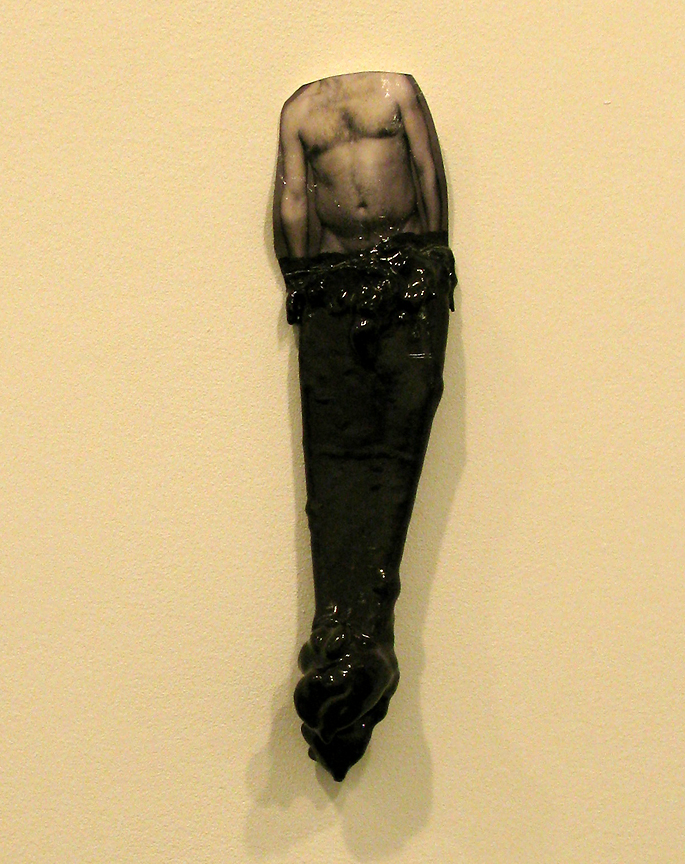
Vinoodh 2010 Photograph, wax, enamel

Root 2009 Photograph, wax, enamel

Bird of Paradise 2005
Silkscreen on canvas, mercury ball, gold and silver metal


Detail close-up of wings in Bird of Paradise 2005 (above)

Painter and sculptor, EUGENE VAN LAMSWEERDE, one of The Netherlands’ most celebrated artists, collaborated with artist/top fashion photography power couple, INEZ VAN LAMSWEERDE and VINOODH MATADIN, combining sculpture and photography in their latest exhibition of work now showing at the Andrea Rosen Gallery, NY.

SCULPTOGRAPHS
Andrea Rosen Gallery 525 W.24th St. NYC

3.19.2010

AIPAD NYC: March 19-20

Stephen L. Clark Gallery, Austin, Texas
Revelation 2004 by Sean Perry (left) Kate Breakey Wall (right)
Also Rocky Schenck, Geoff Winningham, Bill Wittliff

Monroe Gallery, Santa Fe, NM
The burned master vintage print by Bill Eppridge of
Senator Robert F. Kennedy Shot, Ambassador Hotel Kitchen, Los Angeles,
California, June 5, 1968. (description below)

Description of burned Vintage Photograph above of Senator Robert F. Kennedy Shot, Ambassador Hotel Kitchen, Los Angeles, California, June 5, 1968. Photograph by Bill Eppridge.

Photograph by Sally Mann

M + B Gallery, Los Angeles
Media Consultant Richard Mauro at AIPAD 2010.
Photograph by Erwan Frotin "Eryngium Maritimum"

Doug and Mike Starn

Scheinbaum & Russek, Santa Fe, NM
Henri Cartier-Bresson, Beaumont Newhall, William Clift,
Edward Weston, Minor White...

Henri Cartier-Bresson at Scheinbaum & Russek, Santa Fe

AIPAD Photography Exhibition and Sale
All Weekend March 19-20
Park Avenue Armory, New York City

3.14.2010

SEAN PERRY: A Conversation

Up the Ladder Down, 2007
Photograph (c) Sean Perry /All Rights Reserved

Airshow, 2008
Photograph (c) Sean Perry /All Rights Reserved

Zira's Dream, 2008
Photograph (c) Sean Perry /All Rights Reserved

Mousetrap, 2006
Photograph (c) Sean Perry /All Rights Reserved

Iron Giant, 2007
Photograph (c) Sean Perry /All Rights Reserved

This week the Stephen L. Clark Gallery is pleased to present the work of photographer SEAN PERRY at The AIPAD Photography Show, New York, in booth #314.

Fairgrounds is Perry’s love letter to the dreamscape of temporary environments and his large scale silver prints and limited edition catalog from the series will be on display. The hand-sewn catalog, designed by Jace Graf and published by Cloverleaf Press, includes 20 images gorgeously printed in tri-tone with a foreword by curator Clint Willour who writes “... the images linger in the mind; remain in the memory. There is haunting magic here.”

A conversation between Sean Perry and Gregory Wakabayashi follows:

GW: Can you describe the experience of creating the Fairgrounds images as a snapshot of your own creative process?

SP: For the Fairgrounds series, I was initially drawn to the architecture and mechanics of the machines— the idea that this is their reality, not ours. I would watch rides for hours, mark the sun travel and where things would be silhouetted and at what times. The majority of these pictures were at dusk, right when the air begins to feel cooler. I made images over multiple years at parking lot fairs, carnivals, the rodeo in Austin, Texas. After the film is exposed and developed, I make work prints and just live with the images a while. Printing them is the second chance I have at communicating the ambiance that drew me in the first time. I like photographing things, but I love printing them.

GW: In your previous work, Transitory, you photographed a variety of architectural structures: buildings, electrical towers, smoke stacks...all inanimate. But your photographs somehow brought them to life. They suggested a sense of movement within the stillness of pure existence. In Fairgrounds you turned your attention towards a subject that is all about movement—the rides, the people. Did that require you to change the way you looked at things in order to create these particular images and yet remain consistent with the aesthetic you established in your earlier work?

SP: No, I don’t think so.... I believe my subjects are often the subplot to the larger theme of light and its transformative qualities. I love the way light has the power to give and reduce mass and emotionally envelop and awaken misplaced things you already knew. The subjects I photograph are the characters that illustrate that phenomenon and story.

I believe these photographs are what happens when you close your eyes and listen...images about the sounds you see. I wanted to express the world of the machines, if you will. I showed the Fairgrounds pictures to photographer Robb Kendrick while I was working on them and he commented that it’s as if these are pictures of how the rides would wish to see themselves. I can’t do any better than that.

GW: Despite the apparent spareness and simplicity in your work, one of the things I see in it is a sense of meticulous consideration. As the viewer it makes me feel as if there is more to see than might be immediately apparent and that your own careful attention to the creation of the image inspires me to look at it with the same amount of care. Is that a fair assessment of how you approach your work?

SP: Thank you, that is the best possible ideal. What I really hope for in my audience is the willingness to feel something...to be amused, to dream, to be still. My intention being: Can I show you something that will let you forget everything you know and in that moment discover a small secret?

I feel that if I honor my part in making them, I can hope for a mutual exchange with the viewer in considering them. I have always felt the pictures belong to the viewer, the experience of making them belongs to me. Within that experience is my pursuit to make images about things that are earnest and graceful— to communicate the atmosphere of a thing beyond its physical form. To do that, I reduce everything I can and hopefully what is left for the viewer is something potent, iconic and dream-worthy.

GW: Who or what are some of the most important artistic influences on your work as a photographer?

SP: So many influences! My father was a biology teacher and carpenter, and much of my childhood imagery is rooted in science, a workshop and the desire to be a craftsman. The way Caravaggio felt light, how Albert Watson uses black and shadow detail, the tonality of Irving Penn’s prints. I was dumbfounded when I discovered Robert and Shana ParkeHarrison.

Beyond the imagery my heroes have created, I am deeply influenced and inspired by the way they live, the discipline practiced in their craft, the potential found in the simple, raw materials they choose to work with. I adore how the final artifact they make seems as natural as breathing, as if it existed all along.

GW: Do your photographs reveal anything about you as a person? Do they hide something? Or are they perhaps a place of repose, separate from your everyday life?

SP: I suppose they reveal everything...for better or worse, I just don’t have an off switch or filter—I don’t hold anything back, whatever I am is here. I’m restless. I never learned to separate myself from what I do. I’m full of yearning and the images I make don't escape my obsession between feelings of wonder and wish.

GW: I recall Miles Davis was once asked why he didn’t continue to play more ballads later in his career, to which he replied, “Because I know I am good at them.” The message being that he wanted to challenge himself. Your work from Transitory to Fairgrounds exhibits a very consistent visual aesthetic and you are clearly good at it. Do you see continuing that path for some time or are there are other visual directions you are thinking of exploring?

SP: I like to play with color and magazines have been the perfect venue for that. Jody Quon and Leana Alagia at New York magazine have given me great assignments.

I trust my love affair with light and atmosphere will always transcend my conscious decisions, regard- less of the directions I pursue. The continuing challenge for me is how to best serve the story and series I’m engaged in—to render an earnest aesthetic. Beyond Fairgrounds I am working on two New York themes, Gotham and an architectural theme that I’ve given the working title of Monolith. Are they a departure or continuation? The trick is to make them in a sense autonomous, beyond my influence.

GW: Plate number eight is named “Zira’s Dream.” Who is Zira?

SP: It’s a beautiful name, isn’t it? She was the chimpanzee scientist in Planet of the Apes. The titles in Fairgrounds are clues to where my childhood imagination began—the place where I discovered dreams. I think of nostalgia as wistful for what is past. This series isn’t about relics of what was lost, rather metaphors of what is still here, what I carry with me, what I don’t want to forget.

GREG WAKABAYASHI is an award-winning art director of Welcome Books in New York City. Among the many and varied books he has designed are titles by Richard Avedon, Amy Arbus and Douglas Kirkland.

AIPAD Booth # 314 Stephen L. Clark Gallery
March 18th-March 21 Park Avenue Armory 643 Park Ave & 67th Street

Catalog available at PhotoEye, Stephen L. Clark Gallery & Cloverleaf Press $25.00

LOUISE BOURGEOIS: AN INTERVIEW / Update: Sculptor Louise Bourgeois died at home at 98

An Interview With Louise Bourgeois
Front Cover: Photograph (c) Richard Avedon /All Rights Reserved
Back Cover: Polished Bronze Sculpture (c) Louise Bourgeois

Maman by Louise Bourgeois
Spider Sculpture outside the
Guggenheim Museum, Bilbao, Spain

Arch of Hysteria, 1993
Polished Bronze
(c) Louise Bourgeois /All Rights Reserved

Art is not about art

+ + +

New York Times Obituary

Artist and sculptor, Louise Bourgeois, born in Paris December 25, 1911, died at home May 31, 2010 at 98 years old. She began her career as a draftsman at 12, providing drawings for the missing pieces of tapestries for her families business. At 15 she studied mathematics at the Sorbonne, then began studying painting at the École du Louvre and the École des Beaux-Arts, later working as assistant to Fernand Léger. After moving to the U.S. with her American husband, art historian and Director of the Museum of Primitive Art of New York, Robert Goldwater, she studied at the Art Students League of New York.

+ + +

The following excerpts are from An Interview With Louise Bourgeois, by American Art Critic, Donald Kuspit, published under the imprint "Elizabeth Avedon Editions | Vintage Contemporary Artists" by Random House (Here):

DK: You have spoken of (your art) as encompassing the whole history of art, but I wonder if you have any special consciousness of modern art. What do you think about modern art in general? How do you see yourself in the history of modern art?

LB: I am not interested in art history, in the academies of styles, a succession of fads. Art is not about art. Art is about life, and that sums it up. This remark is made to the whole academy of artists who have attempted to derive the art of the late eighties, to try to relate it to the study of the history of art, which has nothing to do with art. It has to do with appropriation. It has to do with the attempt to prove that you can do better than the next one, and that a famous art history teacher is better than the common artist. If you are a historian, you have to have the dignity of a historian. You don't have to prove that you are better than the artist.

But I can say this. I studied in Paris in the thirties at a time when artists had the ateliers that were open to students. My favorite teachers among many were Fernand Léger, Othon Friesz, and Paul Colin. Michèle Leiris and André Breton were also part of my education. Also, I taught for a long time and was given many honorary doctorates. Flattering as it is, it has little to do with my ongoing self-expression. Also, I valued my friendships with Corbusier, Duchamp, and Miró, Arp, Brancusi and Franz Kline and Warhol. Today I value my friendships with Robert Mapplethorp and Gary Indiana.

DK: Which artists do you like?

LB: I like Francis Bacon best, because Francis Bacon has terrific problems, and he knows that he is not going to solve them, but he knows also that he can escape from day to day and stay alive, and he does that because his work gives him a kick. And also, Bacon is not self-indulgent. Some people will say, "What do you mean by that? He always paints the same picture." That's true–he always paints the same picture, because he is driven. But he is not self-indulgent. Never.
+ + +

LB: I think I know why the Museum of Modern Art did not buy my work. The truth is very difficult to speak of. There was a certain style of collecting at the Modern which had to do with...I think I should watch my words.

DK: Why? Don't watch your words. You have lived long enough to tell the truth.

LB: Well, it had to do with the trustees, with pleasing the trustees. Alfred Barr was not a trustee; he was an employee, like all the rest. The trustees had real buying power. Alfred Barr had special skills, but he was not part of the Board of Trustees. He was on the other side. The artists who succeeded in selling at the time–Calder, Mark Rothko, Ben Shahn, they were the three–pleased the trustees. You had to entertain the Board, and these Three Stooges knew how to do that, knew how to socially entertain these important people, these trustees. I did not mind that, as a woman, but I could not do it.

Women had to work like slaves in the art world, but a lot of men got to the top through their charm. And it hurt them. To be young and pretty didn't help a woman in the art world, because the social scene, and the buying scene, was in the hands of women–women who had money. They wanted to be entertained–they were lazy and sometimes stupid, and they wanted to be entertained by men of a certain age. So these charmers were what was called in the eighteenth century a pique-assiette in French, somebody who picks at your plate, who will come entertain for dinner, like a buffoon–it is a kind of profession that interests me very much. And they are picked from among artists because there is a certain prestige to being an artist, but from a professional point of view they are more entertainers than artists. They relate to the storyteller, which was a profession. The storytellers of the Middle Ages were men who went from place to place, telling their tales, and sometimes reached the top because of their acting and verbal abilities.

Because of the profession of my husband, I lived among these people. It was interesting. And because I was French and kind of discreet, they tolerated me–with my accent I was a little strange, I was not competition–and I was cute, I guess. They took me seriously on a certain level, but they refused to help me professionally. The trustees of the Museum of Modern Art were not interested in a young woman coming from Paris. They were not flattered by her attention. They were not interested in her three children. I was definitely not socially needed then. They wanted male artists, and they wanted male artists who did not say they were married. They wanted male artists who would come alone and be their charming guests. Rothko could be charming. It was a court. And the artist buffoons came to court to entertain, to charm. Now it has changed, now the younger men are in–older women and younger men.
+ + +

DK: Why do you think the Museum of Modern Art finally gave you a retrospective exhibition?


LB: It had to do with one person, that wonderful, wonderful woman, Deborah Wye. She worked very, very hard. She convinced them, she got all the information...she convinced them that I was important.

+ + +

In 1982, The Museum of Modern Art, NY, exhibited a retrospective exhibition organized by Deborah Wye. Bourgeois was 70 years old. In 2008, The Tate Modern Museum, London, organized and exhibited a major retrospective of Bourgeois’s work which traveled to the Centre Georges Pompidou, Paris and the Solomon R. Guggenheim Museum, New York. In 2009, the retrospective traveled to the Museum of Contemporary Art, Los Angeles and the Hirshhorn Museum and Sculpture Garden, Washington DC.

Louise Bourgeois, Les Fleurs, 2009 Gouache and Silkscreen on Paper,
Wooster Group Benefit Auction March 15th. Estimated value $15,000.


March 15th Wooster Group Benefit Live Auction

Artwork for auction includes Louise Bourgeois, Francesco Clemente, Chuck Close, Jasper johns, Jeff Koons and view Artists here