Showing posts with label New Mexico. Show all posts

11.27.2019

FRACTURED : photo-eye Juried Exhibition


CITIZEN 13, 2015 © CHRISTOPHER COLVILLE
(click to enlarge)

F R A C T U R E D
AN EXHIBITION CURATED AND 
PRESENTED BY PHOTO-EYE GALLERY

Photo-eye Gallery, Santa Fe, New Mexico: This year marks the 40th Anniversary of photo-eye and they are celebrating with their first-ever juried Open Call looking for photographic submissions for a gallery exhibition in Santa Fe (and online) entitled: "F R A C T U R E D." They invite the submission of photographic works exploring the concept of “fractured.” The exhibition will take place in their physical gallery and online from February 28th to May in 2020.  Read more here

Submitted photographs may come from photojournalistic or documentary projects, commercial assignments, as well as photographs made as expressive artworks. Artists are encouraged to be creative in their interpretation of the theme. Read more here

This exhibition will be juried by the photo-eye Gallery staff. The gallery is looking for new work, and submissions to the open call are also considered for future representation in our online Photographer’s Showcase. Standard artist contract applies. Read more here

Deadline to submit work: 1/12/20


11.25.2019

JONATHAN BLAUSTEIN: Extinction Party Kickstarter

 © Jonathan Blaustein

 © Jonathan Blaustein

 © Jonathan Blaustein

 © Jonathan Blaustein

 © Jonathan Blaustein

© Jonathan Blaustein
 
Images and text by Jonathan Blaustein
Published by Yoffy Press, with an essay by Kevin Kwan
A limited edition photo book about over-consumption
and its impact on the planet

Photographer, writer and educator, Jonathan Blaustein, is asking for your support to help publish his new limited edition photography book that is about to go into production with Yoffy Press in Atlanta.
Check out Jonathan's KICKSTARTER and View his Video for full details on how to support this project by purchasing a book and/or a limited edition print (images above) in the next 11 days. 
Extinction Party
www.kickstarter.com

My 2014 Interview on L'Oeil de la Photographie / The Eye of Photography with Jonathan Blaustein about this project in it's earlier stage just before an exhibition of this work opened at The Harwood Museum of Art in Taos, New Mexico:

The Eye of Photography
Jonathan Blaustein Talks To Elizabeth Avedon

“I’ve lived in cities on both coasts, and have found that the man-made landscape leads people to over-consider the power of humanity…. When you’re staring at skyscrapers all day, and traveling via underground train or high speed elevator, it’s easy to overestimate our capabilities.”– Jonathan Blaustein

Jonathan Blaustein is an artist, writer, and educator based in Taos, New Mexico. His photographs have been exhibited widely in the US, and reside in several important collections, including the Library of Congress, the Brooklyn Museum, and the Museum of Fine Arts, Houston. He also writes about photography for the New York Times Lens blog and APhotoEditor.com, and has taught at the University of New Mexico-Taos for many years.

His series, “The Value of a Dollar,” was published by the New York Times in 2010, and subsequently went viral on the Internet. Ultimately, the conceptual series was seen by millions of people around the world, creating dialogue about the manner in which food represents deeper issues of wealth, class, power and health.

Opening February 22, Blaustein‘s photographs will be part of a three person contemporary art exhibition, “The Mindless Consumption of Animals,” at the Harwood Museum of Art in Taos, New Mexico.
    
I spoke with Jonathan recently about his work and his upcoming exhibition:
  
Elizabeth Avedon: We first met several years ago during CENTER’s Review Santa Fe, while you were working on what eventually became your very successful series, “The Value of a Dollar.” Please explain your works point of view.
   
Jonathan Blaustein:
My point of view is informed by my background and my experiences, like anyone else. “The Value of a Dollar” was a project that was born out of my obsession with food, many years in the restaurant business, my conceptual art training, and my economics education.

The Great Recession was imminent, as I was shooting the project in early 2008, and I began to pay more attention to how much healthy food costs. When I started buying less fruit, berries in particular, because my income was dropping, I felt that it was something worth exploring.

Furthermore, where I live in the American West, there are semi-trucks and billboards everywhere, showing these lacquered up, shiny Fast Food hamburgers. Everywhere, we see artificial visions of what we eat. And that visual language is a huge driver for America’s obesity epidemic.

Eventually, I got the idea to go shopping for food, as a part of my artistic practice. I’d buy things, based upon their aesthetic and symbolic potential, and then measure out $1 of each item, before photographing it on my stark studio table. I wanted to make up my own visual language that examined the incredibly complex underpinning of the global economy, via a simple and clean image style.

I photographed everything without any artificial lighting, packaging, or styling, so that the food items could stand alone and speak for themselves.

EA: And you followed this series with “MINE”?

JB:
Sort of. I actually spent a year and half working on a cultural landscape project in Southern Colorado. But I had a hard time making the pictures what I wanted them to be, so I put that to the side.

In 2011, I got the idea for “MINE,” which felt like a proper follow up, once “The Value of a Dollar” had been so well received. Like a lot of artists, I wanted each project to make sense in an evolving continuum.

After commodifying my food, I wanted to take a look at another primary element of human existence: territory. I actually live on 3.5 acres of land at the base of the Rocky Mountains, and it’s filled with all sorts of nominally worthless natural resources. Rocks, trees, grass, flowers, snow, ice, and, of course, animals.

The concept of private property gives me the right to do whatever I choose with that which is “MINE.” So I decided to turn those natural artifacts into art, in my studio, and then photograph them. In that way, the process was much like “The Value of a Dollar”. I went shopping for free nature on my land, rather than food in a grocery store.
   
EA: How did that work lead to your latest project “The Mindless Consumption of Animals.”

JB:
Well, I put a lot of effort into turning “MINE” into a solo show in Santa Fe over the course of 2012. And then, once it opened, I kind of abandoned my studio. I write from home, and teach at the University in town, so I began to spend less and less time in my photo studio after the massive production of the “MINE” exhibit.

Unfortunately, my studio was pretty expensive, for a small town. So eventually, I realized I needed to give it up. It was costing too much, and I’ve got two young children. It seemed like my priorities needed a re-ordering.

The studio was filled with crap. Piles and piles of waste paper, and worthless objects that I’d accrued over 8 years time. Facing it all, it seemed so daunting.

Then it struck me that I could photograph my junk, and imbue it with value through the artistic process. So it connected perfectly with the two previous projects, which were based upon presenting my own resources, and using them to make grander statements about life in the 21st Century.

Since I was excited about mining the trash for goodies to photograph, it made the process of culling through the clutter kind of a fun game. Each day, I forced myself to take at least one full trash bag out of there, so the piles gradually shrunk.

And then I was left with a blank space, and a trove of images to cull through.
   
EA: You studied Economics and History at Duke University. What led you into Photography?
    
JB:
In retrospect, I got a decent education at Duke, but I was miserable the whole time. Eventually, I learned I had enough credits to graduate early, so I came to hang out here in Taos, where my folks had moved. During that semester, I began to explore my creativity for the first time, and felt like there was something out there for me.

After college, I worked on a couple of movie productions in New York, before deciding to move back here to the mountains. Just as I was leaving on a solo, five day, cross-country drive, I bought a few rolls of black and white film for a little point and shoot I owned, but never used.

It was just a random idea, and I still don’t exactly know where it came from. But I was hooked within minutes, and shot hundreds of images along the way. By the time I got to Texas, I jotted in a notebook that I wanted to be a photographer. That was it.

So I threw myself into it, and studied undergraduate at UNM in Albuquerque, before a stint in San Francisco. Then I went to Pratt in Brooklyn, where I got my MFA. It’s been 17 years since I picked up a camera, and I still can’t believe how it all turned out.
   
EA: What inspired you to move to New Mexico?

JB:
I was very fortunate growing up, in that my parents discovered Taos when I was still a child, and brought me here when I was 14. We came back once or twice a year, and then they built a house and moved here permanently, when I was still a teenager.

I loved it from the very beginning. I met my wife while I was in Albuquerque, and she was born and raised here. Her folks live here, as do mine, so it was a natural place to settle down and raise a family.

I’m glad I grew up in New Jersey, because the East Coast does impart a certain drive in most people. But since I came here at such a young age, it’s become home in a way that Jersey could never be. The sunshine and the landscape are most definitely addictive.

EA: Were you always so environmentally or economically concerned or has this developed since living on the land in New Mexico?

JB:
That’s a great question, Elizabeth. The answer is that my time here has informed the way I think about the manner in which humans interact with the planet. It’s inescapable, as I see a two million year old extinct volcano out one window, and the Sangre de Cristo Mountains out the other.

I’ve lived in cities on both coasts, and have found that the man-made landscape leads people to over-consider the power of humanity. It can’t be helped. When you’re staring at skyscrapers all day, and traveling via underground train or high speed elevator, it’s easy to overestimate our capabilities.

I definitely didn’t set out to make political work, or work with an environmental bent, but those themes crept in while I wasn’t looking. And then, when this exhibition opportunity arose, it gave me a chance to consider the deeper roots of my artistic practice.

EA: How did the upcoming exhibition come about?

JB:
I spend most of my time showing my work, and engaging with community outside of Taos, because our art scene is a little insular, and perhaps regional. But I struggle with that, as I’m a big believer in the power of community in general.

Early last year, the Harwood curator Jina Brenneman reached out, and said she wanted to get my work on the wall, to introduce it to Taos. It’s the best museum north of Santa Fe, by a long margin, so I was very excited. They have an amazing collection of Agnes Martin’s work, and it draws a good crowd.

Once she told me the premise of the show, and the title, “Art for a Silent Planet,” it really forced me to think about what I’ve been doing. I read the title as a metaphor for the Lorax: we speak for the trees [Dr. Seuss — ‘I am the Lorax. I speak for the trees for the trees have no tongues.’ ]

So I decided to find a through line in my work from the last six years, and lo and behold, the environmental themes were right there. As Jina pushed me to try do say something unique, I thought hard about how to best present what I’d been working on.

Eventually, I decided that as the new work was about “repurposing” my trash, I’d repurpose my older work alongside it. There will be a grid of four meat pictures from “The Value of a Dollar,” for instance, but for this show, it’s been retitled as a single piece called “Cow farts cause Global Warming.”

Subscribe to TheEyeofPhotography.com
https://loeildelaphotographie.com/en/jonathan-blaustein-talks-to-elizabeth-avedon/

http://harwoodmuseum.org/exhibitions/view/129
http://jonathanblaustein.com


Help Support this Project
Buy a gorgeous print from the images above

 Extinction Party : Jonathan Blaustein
Yoffy Press


11.14.2019

MEXICO – BEYOND THE WALL : Scheinbaum & Russek LTD, Santa Fe, New Mexico

 Manuel Álvarez Bravo (1902 - 2002)
Frida Kahlo Con Globo de Vidrio 
(In Manuel Alvarez Bravo's Studio), 1938
Gelatin silver print
Image: 9 1/2 x 7 1/2"

 Manuel Álvarez Bravo (1902 - 2002)
Senor De Papantla, 1934, printed 1995
Gelatin silver print
Image: 9 5/8 x 6 5/8”

 Ellen Auerbach (1906 - 2004)
Queretaro, Mexico, Xmas Market, 1955
Vintage gelatin silver print
Image: 5 5/8 x 8 1/4”
 

Aaron Siskind (1903 -1991)
Durango 8, 1961
Gelatin silver print
Image: 12 3/8 x 22 3/4”

 Manuel Carrillo (1906 - 1989)
Boy Watering Horses, Catemaco, 1956, Printed c. 1970s
Gelatin silver print
Image: 8 1/8 x 10 7/8”

 Mexico – Beyond the Wall
November 23, 2019 – December 28, 2019
 
Scheinbaum & Russek Ltd
369 Montezuma Avenue
Santa Fe, New Mexico

Opening Reception
Saturday, November 23rd, 2-4 pm

Ellen Auerbach (1906 – 2004)
Manuel Álvarez Bravo (1902 – 2002)
Manuel Carrillo (1906 – 1989)
Eliot Porter (1901 – 1990)
Aaron Siskind (1903 – 1991)
Paul Strand (1890 – 1976)
 

2.27.2016

CENTER : Review Santa Fe Photo Festival : November 3-6, 2016 Enter Now!

 © Image Detail Antoine Bruy 
Review Santa Fe 2016 Portfolio Reviews
Applications due March 25th!

Photo (detail) Credit Natalie Krick  

REVIEW SANTA FE PHOTO FESTIVAL
ENTRY DEADLINE: MARCH 25, 2016

The Review Santa Fe Photo Festival, NOVEMBER 3-6, 2016, is the premier juried portfolio review event in the world. Considered one of the most important events for photographers who seek career advancement, this conference and exhibition series is designed to facilitate relationships between photographers and leading industry professionals looking for new work.

Nestled in the foothills of the Sangre de Cristo Mountains, up to 100 photographers meet with up to 45 of today’s most relevant and esteemed reviewers comprised of curators, editors, publishers, gallerists and others who can offer professional development advice and opportunities. These leading photo professionals come to Santa Fe seeking out new talent, including professionals from The New Yorker, MSNBC, TIME Magazine, The Museum of Contemporary Photography, and The Library of Congress.

Submission Information:
// Please submit 15 – 20 images from a body of work
// A project statement (325 words maximum length)
// Application $45 members / $55 non-members
// Apply HERE
// Frequently Asked Questions (FAQS)
// FULL SCHOLARSHIPS AVAILABLE

Review Santa Fe 2016 Portfolio Reviews 
Check out more Awards + Grants

1.16.2016

GEORGIA O’KEEFFE: THROUGH THE LENS. Scheinbaum + Russek, Santa Fe

Eliot Porter (1901 - 1990)
Georgia O'Keeffe with Bust by Mary Callery,
Ghost Ranch, 1945
Gelatin silver print

Todd Webb (1905 - 2000)
On the Portal of O'Keeffe's Ghost Ranch House, 1962
Gelatin silver print 

Eliot Porter (1901 - 1990)
White Boulder, Black Place, New Mexico, 1945
Gelatin silver print 

Todd Webb (1905 - 2000)
Georgia O'Keeffe's Studio at the Abiquiu House, New Mexico, 1962
Dye-transfer print

 Myron Wood (1921 - 1991)
Miss O'Keeffe, Abiquiu, New Mexico, 1980
Gelatin silver print

Long recognized as one of the world’s leading artists, in her personal life she protected her privacy and maintained an air of inaccessibility and an almost reverential approach to her immediate surroundings. Scheinbaum + Russek’s Georgia O’Keeffe: Through the Lens exhibition focuses on the work of three photographers: Eliot Porter, Todd Webb and Myron Wood – all friends of Georgia O’Keeffe and all who were invited by her to photograph. Each photographer chose a different approach and in total this exhibition offers the viewer a glimpse into her private life and immediate surroundings in her home, studio and landscape.

Eliot Porter shared with O’Keeffe a love for New Mexico, it’s culture and landscape, and he, like O’Keeffe, incorporated this environment into their own art. Their deep respect for each other and life-long friendship enabled Porter to make intimate and striking portraits of O’Keeffe.  They shared an aesthetic, a life-style and a passion for living and working in New Mexico.  O’Keeffe introduced Eliot Porter to many unique sights in New Mexico that had been inspirational to her, among them the Black Place and the White Place.  Porter, in turn, shared many of his loves of the southwest with O’Keeffe by including her on several of his journeys through the Glen Canyon area. Porter had met O’Keeffe in New York while exhibiting at Alfred Stieglitz’s gallery An American Place in 1939.

Todd Webb and his wife Lucille lived in Santa Fe in the l960′s and ran a wonderful bookshop and photography gallery on Canyon Road.  Having met Stieglitz and O’Keeffe in New York, the Webb’s first came to explore New Mexico by O’Keeffe’s invitation.  Over the years of their close friendship Todd Webb was able to record O’Keeffe’s life-style and surroundings with the intimacy that only a most welcomed friend could have made.  His work explores her home, her studio and the surroundings that inspired many of her paintings.  His photographs span their thirty-year friendship, dating from 1955 to 1981.

In 1979, Georgia O’Keeffe permitted Myron Wood to photograph her home in Abiquiu and in Ghost Ranch.  New Mexico, its fierce light and big, open skies, it’s directness and toughness were qualities that O’Keeffe herself possessed.  Myron Wood has captured those qualities in his beautiful photographs that are a tribute to O’Keeffe. Wood made hundreds of pictures, of the artist herself, the people closest to her, and most especially of the house, gardens, and surrounding landscape that was so elemental to O’Keeffe’s vision.  These photographs do more than merely document the look of the house; they evoke the spirit of the place, as O’Keeffe inhabited it. (text courtesy Scheinbaum + Russek)

GEORGIA O’KEEFFE: THROUGH THE LENS
January 23rd – March 5th, 2016
Scheinbaum + Russek
369 Montezuma, #345
Santa Fe, New Mexico

2.21.2014

JONATHAN BLAUSTEIN: The Mindless Consumption of Animals

 Cow Farts Cause Global Warming
"The Mindless Consumption of Animals" 
Photographs © Jonathan Blaustein

No One's Hands Are Clean
"The Mindless Consumption of Animals" 
Photographs © Jonathan Blaustein

People Feed This To Their Children
"The Mindless Consumption of Animals"
Photographs © Jonathan Blaustein

“I've lived in cities on both coasts, and have found that the man-made landscape leads people to over-consider the power of humanity.... When you're staring at skyscrapers all day, and traveling via underground train or high speed elevator, it's easy to overestimate our capabilities.”– Jonathan Blaustein


Art for a Silent Planet: Blaustein, Elder, and Long


Become a friend of L’Oeil, and give what you can. Join us. L’Oeil de la Photographie is yours as well. http://www.loeildelaphotographie.com/en/2014/01/13/we-need-your-support

12.21.2013

CENTER: 2014 International Call For Entries


REVIEW SANTA FE: JUNE 26-29, 2014: Review Santa Fe is designed to facilitate relationships between photographers and leading industry professionals looking for new work. PROJECT LAUNCH GRANT: 2014: Project Launch is presented to an outstanding photographer working in fine art series or documentary project. ENTER NOW!

5.14.2013

JOHN DELANEY: Kazakh Golden Eagle Nomads at Photo-Eye Gallery, Santa Fe

Eagle Hunter #9, 2008 
Gelatin-Silver print. Photograph © John Delaney

Silent Watcher, 1998
 Gelatin-Silver print. Photograph © John Delaney

 The Three Horsemen, 1998
Gelatin-Silver print. Photograph © John Delaney

 John Delaney in his traveling Studio

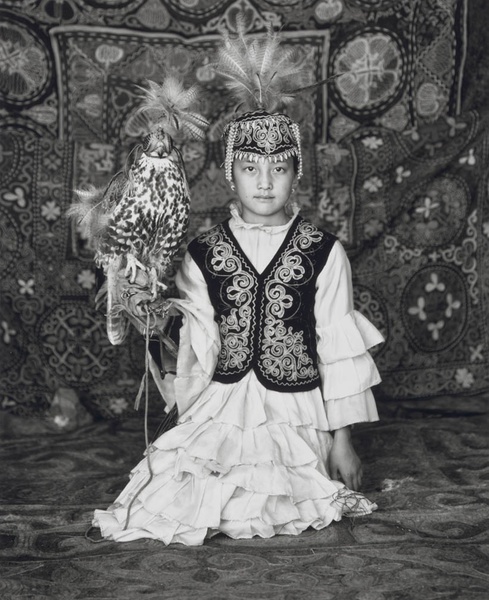
The method and style of my photography is very traditional. I travel with a large format wood view camera and a portable studio tent. My traveling studio not only controls the light but also serves as a common meeting ground in which my subjects present themselves. The goal is to create a portrait that reveals something beneath the obvious: a sense of grace, nobility, or humanity. – John Delaney

Nomad Girl w/ Falcon, 2008   
Gelatin-Silver print. Photograph © John Delaney

"Every year soon after the first snowfall these majestic men will mount their horses and head up into the mountains in search of prey. They will lose their eagles on any unsuspecting fox, rabbit, and even wolf. The Kazakhs capture their eagles while young, often directly from their  cliff side nests. They take only the female, which are larger and more aggressive than the male. The eagles stay with the hunter for about seven years, during which time man and bird live in symbiosis, bound in survival. With a wingspan of over 7 feet and talons that can easily crush bone, these majestic predators make formidable allies. In the more isolated valleys of the Altai Mountains this hunt still provides needed food and furs for harsh winters. And it has become a treasured tradition and right of passage for the Kazakh men."– John Delaney

Shot in Mongolia in 2008, John Delaney's Golden Eagle Nomads centers on the relationships between the nomadic Kazakh people and their golden eagle hunting companions. Though their nomadic lifestyle and hunting traditions date back to the 5th Century (and possibly earlier), the Kazakh's way of life is now threatened by an encroaching Western influence and globalization. Delaney's photographs capture the unique and complex symbiotic relationship between the Kazakh people and these powerful birds. Delaney was honored with the 2008 Lucie/International Photography Awards 'Discovery of the Year' for this series and was Master Printer for Richard Avedon, Irving Penn, Bruce Davidson, Patrick Demarchelier, Steven Klein, among others. His work has been exhibited both nationally and internationally.


Exhibition: May 17 – July 12
Artist Reception: June 5,  5‐7 pm 
Artist Talk: June 5, 6 pm 

376 Garcia Street • Santa Fe, NM

3.11.2013

SCHEINBAUM + RUSSEK: AIPAD Booth 307

Georgia O'Keeffe, Ghost Ranch, New Mexico, 1968
Photograph by Eliot Porter, Gelatin silver print

Retrato de lo Eterno, 1935
Photograph by Manuel Alvarez Bravo, Gelatin silver print

Scheinbaum & Russek will be exhibiting works by
Ansel Adams
Manuel Alvarez Bravo
Walter Chappell
Harry Callahan
Laura Gilpin
Yousef Karsh
André Kertész
Beaumont Newhall
Arnold Newman
Eliot Porter
Sebastião Salgado
Aaron Siskind
Alfred Stieglitz
Jerry Uelsmann
Minor White

April 4 - April 7
Park Avenue Armory, Park Avenue at 67th Street

8.13.2011

JOSEPHINE DVORKEN: A. Blessing


My Last Name is Blessing. I am A. Blessing
Photograph (c) Josephine Dvorken

Alfred and Mariette Sitting Together on the Couch
Photograph (c) Josephine Dvorken

Alfred Looking Out The Same Window
Photograph (c) Josephine Dvorken

Marriette Has Cared for People Her Whole Life
Photograph (c) Josephine Dvorken

"The first time I spotted him he was standing on a corner, wearing a brown suit and matching bowler hat. Folded in his left hand was a copy of The Wall Street Journal. He was positioned between two bank deposit boxes built into the granite wall. On the cornerstone was the building’s date, 1930. The man himself was certainly from another time and I marched straight across the street to ask if I could take his picture.

He agreed and was a natural in front of my lens. I confided to him that I had made a wish that the perfect subject would appear on this corner — someone who belonged right in the middle of the picture I wanted to take. I asked the man for his contact information.

“My last name is Blessing. I am A. Blessing.” He said with a wink and little bow. I had a feeling that Alfred had used this endearing introduction before, and it worked like a charm. I took him for ice cream and he told me about his first big failure in life… buying a gas station.

I kept in touch with Mr. Blessing and called him whenever I was exhibiting the project he was in. I quickly realized that he had difficulty with his memory. I needed to tell him the story of how we met each time we spoke. He loves that story and I love to tell it.

Alfred invited me to his house to take more pictures. This is when I met Mariette. She is from Switzerland and they have lived together in the same house for almost 45 years. She moved in shortly after his wife died to take care of the house and care for his young daughter. Though Mariette is a constant presence, I still haven’t quite figured out her relationship with Alfred. It is something less than romance but something more than that of a servant. And it is almost entirely unspoken."
– Josephine Dvorken, from A. Blessing (Blurb Books, 2011)


+ + +

Josephine Dvorken received her B.F.A. in 1994 from the University of New Mexico and her Master of Professional Studies degree from the School of Visual Arts in 2011. Her most recent project, A. Blessing, focuses on the complicated relationship between a man and his housekeeper. In 2009 she was recognized in the International Photography Book Now competition for Familiar Strangers: A Community Portrait with a solo show of this work at the Umbrella Arts Gallery in New York City. In addition to her Fine Art Projects, she accepts commissions in the New York, New Jersey and Connecticut region.

Images from A. Blessing will be included in an upcoming group exhibition, curated by Michael Foley, October 21 - Nov 12, 2011, SVA Gallery, 209 East 23rd St, NYC.

8.07.2011

TOM CHAMBERS: Dreaming In Reverse / Soñando Hacia Atrás

Presumptuous Guests / Invitados Presuntuosos
Photograph (c) Tom Chambers

Two Chairs / Dos Sillas
Photograph (c) Tom Chambers

Stuck In The Key Of C / Atrapado en la Tecla de C
Photograph (c) Tom Chambers

Glass Flower / Flor de Vidrio Photograph (c) Tom Chambers

"Twenty-five years ago I traveled freely throughout the Mexican countryside where I relished a warm, welcoming, and slow-paced style of living. I was heartened by the physical beauty of the landscape and the simple, pure lifestyles shared by both the Hispanic and indigenous people of Mexico. A sense of spirituality and magic were imbedded in their religious practices, crafts, art, dance, and literature...Sensing that little time remains to photograph the beauty of Mexico, I have created the series, Dreaming In Reverse, to express both my concern for cultural loss, as well as my appreciation for the inherent loveliness of Mexican life. Employing Magic Realism, an art genre used in the early twentieth century in Mexico, I have attempted to create images of Mexico which seem true and believable, but also perhaps improbable."– Photographer Tom Chambers

photo-eye Editions just released a portfolio of twelve pigment ink prints from this series, Dreaming In Reverse, housed in an archival anodized aluminum box is published in a limited edition of thirty with two artist’s and two printer’s proofs. The prints were produced with archival pigment inks printed on hahnemühle photo rag baryta.

Dreaming In Reverse / Soñando Hacia Atrás
Photographs by Tom Chambers

August 5 - September 25

photo-eye Gallery, Santa Fe

+ + +


States Puzzle
Photograph (c) Aline Smithson


"We live in a world full of technical distractions. I see my children gathered around their computers as though it’s a summer campfire, faces aglow, as they peer into a world of friends and fantasy, participating in a new forms of entertainment that further remove them from the childhood that I experienced...

...And it’s because of this that I have been looking at bookshelves and untouched childhood pursuits with a new eye. With great sadness, I realize that these objects will someday be obsolete, at least in their current incarnations. And like a curator of antiquities, I see them now as beautiful objects to be admired and preserved, if only on film."—Aline Smithson


6.30.2011

LAURA PRESSLEY: REVIEW SANTA FE INTERVIEW

Laura Pressley, Executive Director at CENTER

Elizabeth Avedon Talks With
Laura Pressley, Executive Director at CENTER

REVIEW SANTA FE, the 11th annual juried Portfolio Review produced by CENTER, concluded last month. The 100 Photographers, who were chosen to participate because they had created a significant project or series, met with curators, editors, publishers, and gallerists.

Elizabeth Avedon: Tell me about your selection process for Review Santa Fe.

Laura Pressley: This year’s 2011 Review Santa Fe Selection Committee included Karen Irvine, Curator and Manager of Publications, Museum of Contemporary Photography, Chicago; Alan Rapp, Alan Rapp Studio, and formerly Senior Editor at Chronicle Books; and Whitney Johnson, Director of Photography at The New Yorker Magazine.

The reason I chose these three for the Selection Committee is that they have all participated in Review Santa Fe previously and they have different perspectives from within the photographic and art Industry. With Alan Rapp, we have a perspective from the realm of Publishing; with Karen Irvine we have the Curator's perspective, Whitney Johnson provides the Editorial perspective.

Photographers submitted an Artist Statement, Résumé and 20 Images. Everyone says this but its true in that the quality of work every year gets better and better. This year there were approximately 500 entries, with an increase in International submissions. Photographers from 23 U.S. states and 13 countries, including Austria, Egypt, Hungary, Japan, Mexico and Scotland, were chosen to come to New Mexico to attend Review Santa Fe.

Review Santa Fe judging process is via a numeric system, so each juror picks their top 60 or so and each photographer then has a number in a ranking. Additionally, there is a high attrition rate at these types of events so in addition to the 100 slots there is also a Wait List. About 25% of the accepted photographers cancel due to personal reasons. So the Wait Listed photographers who are asked to attend are asked in order of their rankings.

In addition to the people who are ranked highly, we have about 17 Project Award Winners who are also here. So not only are there photographers accepted into Review Santa Fe, but there's also a high quality of work because of the Project Competition Winners, and the Project Launch Winners, as well as some of the Choice Award Winners are in attendance. So there are many photographers recognized through our other programming who have the opportunity to attend Review Santa Fe free of charge.

I feel that a major component of the awards and what they offer is the exposure and the opportunity of attending Review Santa Fe. That’s the key to building personal relationships and potential for career advancement. We also have about 15 attendees who receive partial or full scholarships. They participate for a discounted tuition or free of charge. We have the Scholarship Fund raffle this year, with all the proceeds, every dollar, benefiting the Photographer Scholarship Fund for next year.

Elizabeth Avedon: How do you Curate the Reviewer list?

Laura Pressley: One basic, simply stated guideline is that we invite a lot of curators and publishers. Why? The CENTER mission is to serve gifted and committed photographers and a lot of the participants would prefer to meet with curators and publishers. I can easily assess that in the reviewer rankings in the online lottery scheduling system. The other genres of industry professionals I invite are high-profile editors of magazines like National Geographic, The New Yorker, and Time Magazine; people that use photography really well. In addition, reviewers who support the community by creating Photography Blogs or on-line Magazines like Fraction who can give photographers exposure.

Providing exposure to people who can offer direct outcomes is an extremely valuable component to the whole weekend. In addition, we offer access to the people who are somewhat inaccessible, like the people from the Whitney and SFMoMA. Busy curators who don't typically have time to sit down with photographers and look at portfolios in their day-to-day work flow. Ultimately, we strive to create a platform for both sides of the table, Reviewers and Photographers, to be able to slow down for a weekend, be present, and focus on something we are all passionate about - Photography.

EA: How long have you worked with CENTER?


Laura Pressley: This is CENTER’s 16th year and my 10th year. After their first review event, the organization, then called the Santa Fe Center for Visual Arts, noticed how much synergy and forward momentum there was around the organization and they hired me to help them move continue and expand on that forward momentum. Prior to that, I was living in the San Francisco Bay area where I worked at the Richmond Arts Center with the after-school program for kids, and the Artist’s-In-Schools Program. There was such poverty there; I saw the great impact of these programs on this community. It was then I decided I had to work for an a mission based organization from that point on, lending my strengths to the impact that Art can have on our communities and our lives.

EA: What is your background in Photography?

Laura Pressley: I'm originally from the Chicago area. I was a Photography Major and graduated with honors from the College of Santa Fe now the Santa Fe University of Art and Design.

I moved to San Francisco for two and a half years after college and moved back to Santa Fe in 2001. I really missed this community and I missed the landscape and the light. I needed to come back to New Mexico, which happens to a lot of us here, we try to leave and we have to come back.

I needed to come back to New Mexico, I missed the landscape and the light that is so inspiring and expansive –Laura Pressley

When I came back I got involved with a program called PhotoArts Santa Fe. At the time, I worked to get their inaugural festival off the ground by providing volunteer support and other administrative support. The Santa Fe Center for Visual Arts Executive Director and staff noticed me through PhotoArts and recruited me to come on board. I met with Reid Callanan, Founder of the organization, and Director of the Santa Fe Photographic Workshops and I was hired shortly thereafter.

The organization has evolved through a few name incarnations. It was the Center for Photographic Projects, then Santa Fe Center for Visual Arts, then the Santa Fe Center for Photography. Finally, in 2006, because one of our board members had a relationship with a design firm called McKee Wallwork Cleveland, which was a national award winning agency that happens to be in Albuquerque we were gifted an identity package and campaign. That was an important milestone in our history and development.

They asked a series of questions to determine our target audience. That was an important part of their process to create that identity package. In fact, they trademarked their process as it’s a unique and successful method of creating and crafting a brand. They helped us tremendously, not only to strengthen our brand, but to really own who we are in the photo industry. Before we changed our name, we were often confused with the Santa Fe Workshops. I would have to say, “We are not the Workshops, we are a separate non-profit organization." That is not a problem anymore as I feel our brand is really strong and it's thanks to their good work.


Branding is so powerful. I think success goes hand-in-hand with creating a Personal Brand. You need to claim who you are. If you don't brand yourselves, someone else will. That holds true for organizations, businesses and photographers as well.


Everything comes back to CENTER

EA: What’s the thought process behind the design of the new CENTER logo?

Laura Pressley: The same Agency was behind the identity and the new logo. We have the light turquoise color as our home is in Santa Fe and we wanted to retain the New Mexico connection in our name. The whole idea of what the name means - to CENTER oneself - your CENTER is where Art comes from and it's a very sacred space. CENTER is also a fruitful ground where you go to create relationships, to commune, to find people of like-mind that are passionate about photography. It all comes back to CENTER, so all of the letters point towards the CENTER. That’s why the R and the E at the end is reversed. I love the whole Russian Constructivism look it evokes. Come to CENTER and thou art shall be seen. Our target audience, those gifted and committed photographers, they get it.

La Lettre de la Photographie:
About Review Santa Fe Part I / Part II