
Sara, Oahu, Hawaii 2017 © Ashly Stohl

Charlie's Handprint, Tribecca, New York 2017 © Ashly Stohl

The Days Are Long & The Years Are Short
Photographs by Ashly Stohl • Peanut Press
DAYS & YEARS
Photographs by Ashly Stohl
Foreword by Lynn Melnick
Peanut Press Books
"I take pictures of my kids, and if you’ll look closely you’ll also see me in there – my worries and fears, my attempts to correct the problems of my own childhood, my heart and my struggles.
Motherhood isn’t talked about enough in public places. Oh they say it’s the most important job in the world, but it isn’t treated that way, is it? People like it when you talk about the wonderful aspects, like hugs and fireflies in a jar, and of course that stuff makes everyone feel good. Motherhood is wonderful, but it’s also hard, and women only talk about the hard parts conspiratorially over a glass of wine, or late at night on the internet in private groups and instant messages. I want to talk about it in public because I’m tired, and when I’m tired the filter between my brain and my mouth (or keyboard) completely breaks down. Can we just talk about what it’s really like, like out in public? Sorry if it makes you uncomfortable. Actually not sorry.
In parenting circles, people often say, “the days are long and the years are short,” and for me nothing has ever felt so true. When Sara was a colicky newborn, I didn’t think I could survive a single day, and now she’s seventeen and going to college. Where did it go, all that time when the clock moved so slowly? Well some of it is in these pictures – the good, the bad and the ugly. The days I was my best, and the days I was not, and the same for my kids. It’s all there in our memories and in these pictures, The Days & Years." – Ashly Stohl
+ + +

ON DEATH • Kris Graves Projects / Humble Arts
Image: Nebula (A Portrait of Philip), Tim Pearse 2017

My Mothers Ashes © Aline Smithson 2003

Diverting Apprehension © Ellen Jantzen 2013
ON DEATH
Text: Roula Seikaly, Jon Feinstein
Design: Kris Graves • Sequence: Tia Weiss
Kris Graves Projects / Humble Arts
PARTICIPATING ARTISTS: Adrienne Defendi, Aline Smithson, Alvaro Deprit, Azin Seraj, Barbara
Diener, Cheryl St. Onge, Christine Collins, Cody Cobb, Constance
Thalken, Cook Williams, Daniel Mebarek, David Beazley, Deanne Sokolin,
Debmalya Ray Choudhuri, Diana Guerra, Edgar Martins, Elea Jeanne
Schmitter, Elena Helfrecht, Ellen Jantzen, Federico Vespignani, Jacob
Haupt, Jane Waggoner Deschner, Jason Koxvold, Jed Devine, John-David
Richardson, Jose David Valiente, Joshua Dudley Greer, Karla Guerrero,
Ken Rosenthal, Kevin Cook, Kurt Simonson, Lauren Forster, Lindley Warren
Mickunas, Liza Ambrossio, Lori Waselchuck, Louie Palu, Orestes
Gonzalez, Paolo Morales, Paul Jimenez Thulin, Preston Gannoway, Rana
Young, Riley Goodman, Sue Palmer Stone, Tabitha Soren, Tim Pearse, Tommy
Kha, Tony Chirinos
“Following Humble Arts 2018 online group show On Death, and later show, Loss, Kris Graves invited Jon Feinstein and Roula Seikaly to team up on a followup photography book, On Death. For critics and philosophers, including the late Susan Sontag and Roland Barthes, photography itself was a “kind of death,” or as Sontag put it in On Photography, a “memento mori that enables participation in another’s mortality, vulnerability, mutability.” Sure, Sontag and Barthes’ waxed wisdom is decades old, but we continue to see it transcending time and shifting attitudes towards the medium. Building on the two previous online shows, the book looks at contemporary photographic takes on the end of life, not only as it passes, but conceptually and in the metaphors entangled in the practice – how time and life arrest within a frame.” – Kris Graves Projects
+ + +

Myth of a Woman / Goðsögn um Konu
Photographs by Agnieszka Sosnowska
Text by Ingunn Snædal, Kat Kiernan
Text by Ingunn Snædal, Kat Kiernan

Goðsögn um konu / Myth of a Women Photographs by Agnieszka Sosnowska

© Agnieszka Sosnowska
Photographs by Agnieszka Sosnowska
Text by Ingunn Snædal, Kat Kiernan
Þjóðminjasafn Íslands, Reykjavík
The Icelandic landscape is beautiful, but brutally unforgiving. There is majesty in the black cliffs and glaciers, but harsh winds and long winters render them dangerous for part of the year . . . a place both alluring and treacherous, Iceland is the perfect metaphor for Agnieszka Sosnowska’s photographs about the dichotomies of womanhood. – Kat Kiernan, Myth of A Woman
The National Museum of Iceland published a selection of photographs by Agnieszka Sosnowska in conjunction with her exhibition, Goðsögn um konu / Myth of a Women. Sosnowska's intention was to interpret the poem, “Móðir mín í kví, kví,” in a
series of self-portraits shot in the East fjords of Iceland in many of
the same places from where these stories originated. The myth
tells of a woman haunted by the voice of her abandoned child
and driven to madness. Sosnowska has stated she is unable
to bear children and this painful fact had affected her sensibility. In
this way she connected with these Icelandic women and their sacrifices;
to have the ability of motherhood taken away from you by means out of
your control can be consuming. The result is a unique body of work,
using a 4X5 view camera to create these mythical images.
The book includes articles by Ingunn Snædal, poet and translator, and text by Kat Kiernan, editor and managing director of Panoptican Gallery in Boston, Massachusetts. The project received funding from the Hjálmar R. Bárðarson fund and the Icelandic Museum of Photography, Reykjavík. This 80 page book was designed by Nuno Moreira. The exhibition was curated by Elizabeth Avedon. Purchase
+ + +


Todd Hido : House Hunting
Photographs by Todd Hido
Remastered 2nd Edition
Nazraeli Press
Nazraeli Press announced a newly remastered edition of Todd Hido's iconic and highly sought-after first monograph, House Hunting. To celebrate the upcoming 20th anniversary of this important book - certainly one of the most influential and oft-cited photography monographs of our time - they have collaborated closely with the artist to achieve a new impression of the highest possible fidelity.
'Todd Hido's large color photographs of suburbia are lonely, forlorn, mysterious... and strangely comforting. Hido photographs the interior rooms of repossessed tract homes, and the outsides of similar houses at night whose habitation is suggested by the glow of a television set or unseen overhead bulb. Seldom does the similar evoke such melancholy. Yet rather than passing judgment on his anonymous subjects, Hido manages to turn the banal into something beautiful, imbuing his prints of interiors with soft pastels, and allowing the exteriors to glow in the cool evening air.’ – Nazraeli Press
'Todd Hido's large color photographs of suburbia are lonely, forlorn, mysterious... and strangely comforting. Hido photographs the interior rooms of repossessed tract homes, and the outsides of similar houses at night whose habitation is suggested by the glow of a television set or unseen overhead bulb. Seldom does the similar evoke such melancholy. Yet rather than passing judgment on his anonymous subjects, Hido manages to turn the banal into something beautiful, imbuing his prints of interiors with soft pastels, and allowing the exteriors to glow in the cool evening air.’ – Nazraeli Press
+ + +

Peuple de la Nuit.
Photographs by Ibrahima Sanlé Sory (Stanley/Barker)
Les jeunes danseurs de Sikasso Sira, 1972
‘This was shot in a popular Bobo-Dioulasso neighbourhood called Sikasso Sira, where many Malian people lived. I would imagine this was a young Malian couple dating and preparing for a dance. I would often go to that place as this white wall was a perfect scene for me to shoot dancers and lovers’

Les deux amoureux de Dogona, 1972
‘Dogona was a suburb outside of Bobo with leafy trees where lovers could meet up in the dark, but I think those teenagers wanted to show off their relationship’

Les Trois Cowboys de la Brousse, 1971
Ibrahima Sanlé Sory recalls: ‘These three guys were from a village around the Kou river valley, perhaps Faramana. They dressed up like the cowboys they’d seen in the movies – and some of them did indeed ride horses in order to tend their cattle.’
Peuple de la Nuit
Photographs by Ibrahima Sanlé Sory
Stanley / Barker
Photographs by Ibrahima Sanlé Sory
Stanley / Barker
‘Life was cheap and everyone could have a ball. You could always go out and have some fun.’
- Sanlé Sory
Peuple de la Nuit is a tribute to the people who posed with cheery abandon, for the lens of Sanlé Sory from 1960-83. While Sory spent days at his Volta Photo studio in southern Burkina Faso, his nights were spent capturing a flourishing music scene, youth culture, dance parties, weddings and portraits of his home city. When he wasn’t out looking for customers at venues such as Volta Dancing, Calebasse d’Or, Normandie or Dafra Bar, Sory would set off towards the remote villages along the Kou Valley, north West of Bobo, in his Volta Photo 2CV van, with a few lights and a homemade sound system, to set up his own Bals Poussière (dustball parties). The parties lasted until well after the sunrise, at which point the farmers and herders would head straight back to tend their fields and cattle. – Stanley/Barker
+ + +


published by T&M Projects
"In his photography, Beijing photographer LinZhipeng (aka No. 223) carves out a portrait of an alternative young Chinese generation which enjoys life with all its might, playful, arrogant, and empathetic. The photobook “Flowers and Fruits” presents a series by Zhipeng which focuses on the titular motifs of youth, beauty, energy and transience. In colorful, vibrant images, he draws comparisons between bodies and fruit, sexuality and flowers, youth and bloom." Artist @finger223 / T&M Projects @tandmprojects / Designed by Satoshi Suzuki @zuduki Purchase or Inquire
+ + +

Geomancy STANLEY/BARKER

© Michael Lundgren
Geomancy • Michael Lundgren
Photographs by Michael Lundgren
Stanley / Barker
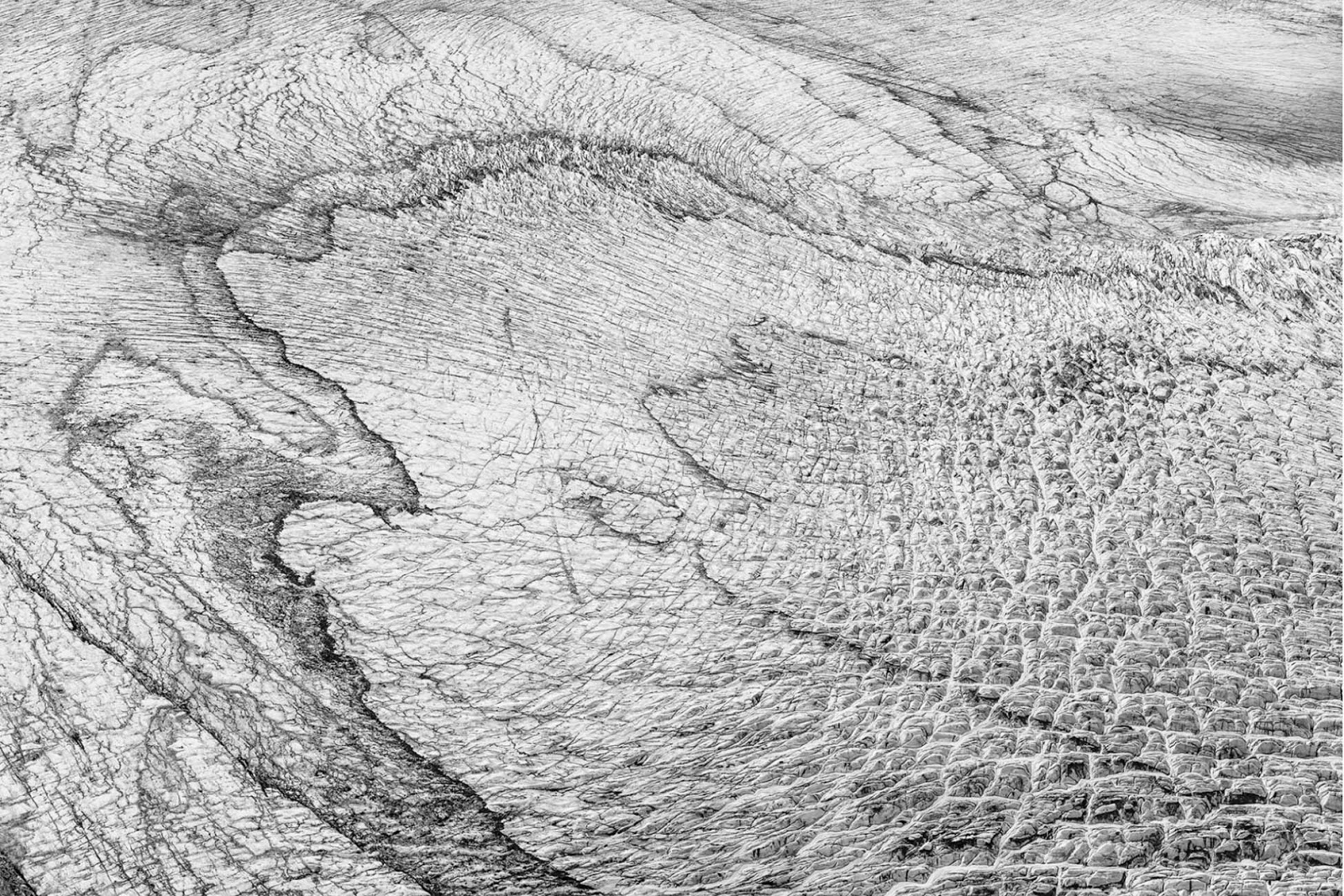
“This is not a climate peril book, but it is a natural peril book,” says Lundgren. "Michael Lundgren's darkly beautiful photographs, motivated by a perceived lack of connection between humans and nature, give the viewer a window into a mystical world where time itself seems to collapse." Oversized OTA Softback, designed by le Entente
+ + +


Photographs by Alegra Ally
Schilt Publishing
Documentary photographer and anthropologist Alegra Ally traveled to the Yamal Peninsula in Siberia to study and document the Nenets way of life. For thousands of years, indigenous Nenets have lived nomadic lifestyles herding reindeer across the Yamal Peninsula in the Russian Arctic.
“New Path” follows the Khudi family, one of 12,000 Nenets of northern arctic Russia still migrating along the same routes as their ancestors did for centuries. Lena is nine-months pregnant and the journey takes a dramatic turn as she prepares to give birth while the family needs to continue their annual winter migration in order to ensure the future of their herd of 800 reindeer.
“New Path” opens a window onto Nenets life today, highlighting the adjustments they have made to modern life, and the challenges they now face in the light of expanding resource extraction in the Arctic, globalization, and climate change – Schilt Publishing
+ + +

Through Positive Eyes Aperture

Through Positive Eyes

Through Positive Eyes is a collaborative photo-storytelling project by 130 people living with HIV and AIDS around the world.
Edited by David Gere and Gideon Mendel
Foreword by Richard Gere
Published by Aperture
Through Positive Eyes is a collaborative photo-storytelling project by 130 people living with HIV and AIDS around the world. All have participated in workshops led by South African photographer Gideon Mendel, with photo educator Crispin Hughes, and David Gere, director of the Art & Global Health Center at the University of California--Los Angeles (UCLA).
The Project chronicles a very particular moment in the epidemic, when effective treatment is available to some, not all, and when the enduring stigma associated with HIV and AIDS has become entrenched, a major roadblock to both prevention and treatment. The participants in the project have volunteered to tell their stories, in words and in photographs, empowering themselves in order to banish stigma. – Aperture
+ + +
HONORABLE MENTIONS

Circling The Mountain; folded, bound by hand, in a slipcase

August Eriksson, Galleri Axel, Stockholm

Circling The Mountain; folded, bound by hand, in a slipcase
Circling the Mountain
Photographs, Text and Design by August Eriksson
An edition of 300 signed and numbered, folded and bound by hand, in a slipcase
Shortlisted for Nordic Dummy Award:
A monk walks around Mount Hiei night after night to empty his consciousness and transform into a living Buddha. By the end, he has walked a distance equivalent to the circumference of the Earth. August Eriksson went there to walk around the same mountain and find the wandering monk. Eriksson is interested in how perception is related to movement and the possibility of finding the meaning of life through something as seemingly futile as going round in circles. Purchase
+ + +


TREASURES: Objects I've Known All My Life
Photographs and Design by Bootsy Holler
BearHeart Publishing
The photographs printed on postcards in Treasures are of simple objects from Holler’s mother’s home. “My mother has always been very particular about how she likes her things - every item has its place, every task has its way of being done. Inevitably, these things and this way have become part of my life as well.” Holler is a contemporary photographer strongly influenced by stories of family, history and place. Purchase
+ + +


Somewhere Between:
Toward the Middle Space Between Images and Words
Photographs and Poetry: Jonas Yip and Wai-lim Yip
National Taiwan University Press
Two artists, father and son, engaging in a cross-cultural, multi-generational dialogue with rhythmic, vital energy, tracing for the reader an odyssey of cultural and living complexes, explore the push-and-pull interactions between poetry's linguistic signs (seething images in the heart/mind) and photography's visual signs. We experience in this gap what American poet Ezra Pound called the “inter-recognition” between arts, “where paintings or sculptures seem, as it were, “just coming over to speech.”
Published by National Taiwan University Press, this fully bilingual book, presented in English and Chinese, collects all the photograph/poetry collaborations to date between Jonas Yip and noted scholar and poet Wai-lim Yip. This volume includes the series Paris: Dialogue, re:place, and Somewhere Between, along with the poetry inspired and written in response to those photographs. Also included are an introduction by Leo Ou-fan Lee, as well as a new essay tying it all together, by Wai-lim Yip.
+ + +





 Posts

