Showing posts with label African-American Photographers. Show all posts

7.27.2022

METRO / New York / London / Paris : An Interview with Herb Robinson by Elizabeth Avedon with Lesley Jean-Bart

METRO / New York / London / Paris, Schiffer Publishing
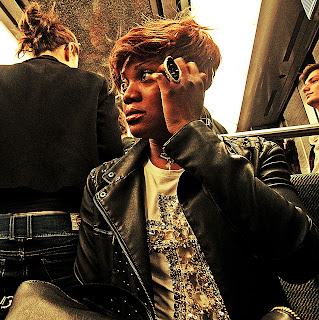
 
Paris, © Herb Robinson. 
METRO / New York / London / Paris

New York City, © Herb Robinson.
METRO / New York / London / Paris
  
“Photography for me is improvisational, it is creating something new in the moment, creativity that is disciplined, emerging in real time. A great photograph breathes, it is alive, has body, emotion, and it is timeless” – Herb Robinson

Music, Jazz in particular, has been an important influence on legendary photographer Herb Robinson’s working style. I wanted to get to know Robinson better as an artist before embarking on this journey through his new monograph,  METRO / New York / London / Paris, published by Schiffer. However, I quickly found out he does not like talking about himself and will go to any lengths to avoid doing so. Fortunately Herb’s long time friend, photographer Leslie Jean-Bart, stepped in to help by dictating his answers to my inquiries with great success. In his own words….

+  +  +
                                                        
It started early, when I was 9 years old. I was looking at and listening to the great Duke Ellington band. I was absorbing the music though I was not aware of it then. I was a good friend with the Hodges family who lived across the street from my parents at 555 Edgecombe Avenue. The building was famous for the great musicians and other prominent African-Americans living there, including Thurgood Marshall, musician and composer Count Basie, boxer Joe Louis, singer and actor Paul Robeson, among others.

My friends and I had access to seeing Mr. Hodges perform, hearing him practice in his home. I had the privilege to hear the purest, richest, beautiful alto saxophone sound that was Johnny Hodges of the Duke Ellington Band. The experience was like having the opportunity of seeing Michelangelo at work. I absorbed his sound and his tone while hearing him practice and perform. This was the period that was to form my photographic vision.

My peers were also Jazz musicians. My friends Johnny Hodges Jr. and Michael Lambert, were both Jazz drummers. I would go to their homes and sit until they finished practicing before we could go out and play. We were steeped in hearing and collecting Jazz records, like other kids collected baseball cards.

Though I was not a musician, I had access, understood, and connected to the soul of Jazz musicians. Circling back to Duke Ellington, he had a profound effect on me, though I did not realized it until I opened my first commercial studio. Ellington was the ultimate composer where each of the instruments is used to serve his purpose. In my studio I had up to 18 different light sources at my disposal to be used as needed to achieve the goal at hand. That approach came directly from Ellington’s style of orchestration. For example, as to whether he used the sweet sound of a Johnny Hodges or the rougher sound of a Paul 
Gonsalves (tenor saxophonist) or mixed the two. Ellington’s influence extends as well to my street work, where it can be found in my use of and mix of textures, tones, and highlights that are used to serve my purpose, as an extension of my voice.

My favorite pianist, Bill Evans, and his use of negative space is something that I voluntarily, and more often involuntarily, channel when I am shooting. There is a lot of use of negative space in my compositions and Bill Evans is the main source.
 
+  +  +
 
Roy DeCarava, the Director of Kamoinge in the early days of the collective, was steeped in all the Arts. From him I get the seriousness, dedication, and respect for the Arts— the timeless of Old Masters. Not just composition, but all of it.

There was not any one photographer who influenced me. The influence on my work is more from painters, more specifically Peter Paul Rubens, Caravaggio, and El Greco. The Rubens and Caravaggio influences can be found throughout METRO in the energy and movement within the frame. El Greco’s is in the way I use line in METRO. In my portraits, I go beyond the surface of what I am seeing. I know a bit about painting, but as a photographer, not as a painter.

The abstract painter Joe Overstreet (he passed away in 2019) was a wealth of information. Not only because of Joe’s own work, but also because he was able to mingle with the key artists who influenced the history of modern painting in the United States. He rubbed shoulders with Willem de Kooning, Norman Lewis and all the other modern masters during their prime, so he has a wealth of information.  I have really the privilege again, the honor to really learn from one of the living masters of painting.

As an artist, I have been inspired throughout my career by Pablo Picasso, and the person that I view as his creative equal, Miles Davis. Each of their careers was marked by their relentless drive to innovate and continually reinvent themselves, requiring a level of confidence and creativity at the highest level. Picasso and Miles knew no boundaries, defied convention, and were fearless in embracing new ideas, and then just as quickly shifting in new directions. They were undeterred by expectations that their work stay the same, possessed only by their art and rising above at an unfathomable level of creative genius. Both Picasso and Miles were masters of self-promotion, never faltering from their belief in themselves and the worth of their work; they were decades ahead of the ‘branding’ surge in advertising. Prolific beyond what appears possible in a lifetime, each piece of art was left for the world to continue to try to grasp and more fully understand in future generations.

Inspired by the lives of Picasso and Miles, I strive to move boldly in my ever-changing photography, taking risks and rejecting the need for a safety net.  I am intensely focused on freely creating art from the inside out, often startling myself by what emerges.  I am deeply fortunate to continually learn from these masters, whose genius illuminates my path.
 
+  +  +
 
It’s been a treat for me to listen to Leslie Jean-Bart discuss interviewing Herb Robinson with my questions. Going off on a tangent is really second nature to Herb’s character, and every story he tells is a small facet in his own life that results in the images he creates. Leslie described one afternoon as an example; “If Herb is talking about Art Blakey, he cannot just talk about Blakey. He has to refer to Philly Joe Jones style of playing as compared to Blakey vs. how Tony Williams was really a Rock drummer who happens to play Jazz, to Jack DeJohnette. From the drummers he will float to Jackie McLean style of saxophone playing vs. another particular Jazz saxophone player. From there possibly shift to Miles Davis's style of trumpet playing, leading to Bill Evans style of piano playing, and then shift back to Art Blakey and the other major Jazz drum players. In his eagerness to clearly present and explain the finer nuances of certain aspects of Jazz, one can often find yourself in sensory overload. I have to often then "kindly-abruptly" stop him and redirect him where I need to go. Although his eagerness is honest, I came to realize that these long detailed explanations tends to often happen when he is desperately trying to avoid talking directly about himself.”

“A question directly addressed to him can easily start a discourse on Roy DeCarava's life. No, Herb, I want to talk about you. "Well, well, Leslie", he would say, "I have to set it up first, that's the way I am". He will then start with some cryptic half answers that one has to attempt to decode while he is sliding into Jazz or so other person's life story.”

Clarifying his “Tony Williams was really a Rock drummer who happens to play Jazz,” exactly what Herb meant was that Tony Williams came along at a time when his generation was exploring the new phase of music at the time, and that was Rock. So Williams’s influence was more Rock. Williams and those of his generation were at the time in the process of leaving behind the platform set by the older Jazz generation, a platform that was more metronome and rhythmic, for the Rock platform that was harder. The same generational evolution took place with Charlie Parker and Dizzy Gillespie who played in the same band and were the inventors of Bebop 3. They both came out of playing in the Big Band, which was mellow and went into Bebop that was harder and more like Rock. The only one who did not fit into that evolutionary pattern was Miles Davis. He was a one man visionary. He did not stay into one idiom as most of his contemporaries did. Miles moved through different periods - Cool, Fusion, and so on.


To complete this look behind the images in METRO / New York / London / Paris, I asked Herb what drew him into the New York subways, the Paris Metro, and the London Underground (Tube). His reply was basically that the three cities covered in METRO played, and continue to play, a huge part in Jazz history.

Also, ideas like globalism, immigrants, immigration, and migration that were running on my mind, were all present and contained within a subway car. The subway car became an equalizer, a self contained common ground for all people regardless of their background or place of origin. It became portraits in the train.

I feel completely free to take the viewer on a journey with the camera as an instrument while using the Jazz idiom of improvisation.  The story called me and took me on a journey where it flowed.

METRO / New York / London / Paris
Photographs by Herb Robinson.
Curated and Edited by Eve Sandler. 
Schiffer Publishing, 2022

Herb Robinson is an original member of Kamoinge Workshop, the pioneering photographic collective of New York-based African-American photographers, founded in 1963 at the height of the American Civil Rights Movement. The name literally means, “A group of people working together” in Kikuyu. Robinson’s work was also part of the traveling exhibition Soul of a Nation: Art in the Age of Black Power, originating at the Tate Modern. He is represented by the Bruce Silverstein Gallery, NY.

Eve Sandler is an interdisciplinary artist, designer, writer, and activist whose work commemorates Black culture, memory, and transformation.

Leslie Jean-Bart, has walked the shoreline of Coney Island for the last 12 years, looking for the magic of light, water, and reflection, in his photographic series Reality & Imagination.

Elizabeth Avedon has been a long-time contributor to The Eye of Photography.
 
Many thanks to Jean-Jacques Naudet and Gilles Decamps for posting this interview in L'Oeil de la Photographie / The Eye of Photography, July 26, 2022.

3.02.2020

VISIONS 1020: Curated by Beuford Smith


Visions 1020 Curated by Beuford Smith
March 8 to May 2
Opening Reception: March 8, 3-6PM
Panel Discussion: Saturday, March 28, 3-6PM

Wilmer Jennings Gallery at Kenkeleba House
214 East 2nd Street at Avenue B
New York, NY 10009

Curator Beuford Smith is well known as the Founder of Césaire Photo Agency; a founding member and past president of the Kamoinge Workshop (the pioneering photographic collective of New York based African-American photographers founded in 1963 at the height of the American Civil Rights Movement); cofounder of the Black Photographer's Annual and recipient of the “Culture of Legacy” Focus Award from the Griffin Museum of Photography. 

So many great photographers included. I hope to see you there!!
 
Kenkeleba House is a non-profit art gallery dedicated to celebrating and presenting the visual aesthetic and cultural legacy of African American artists and other artists of color that have been historically overlooked by the art world establishment and cultural mainstream. Kenkeleba has been at the forefront of positive change in New York City’s East Village for more than 30 years. (212) 674-3939 | kenkeleba@msn.com

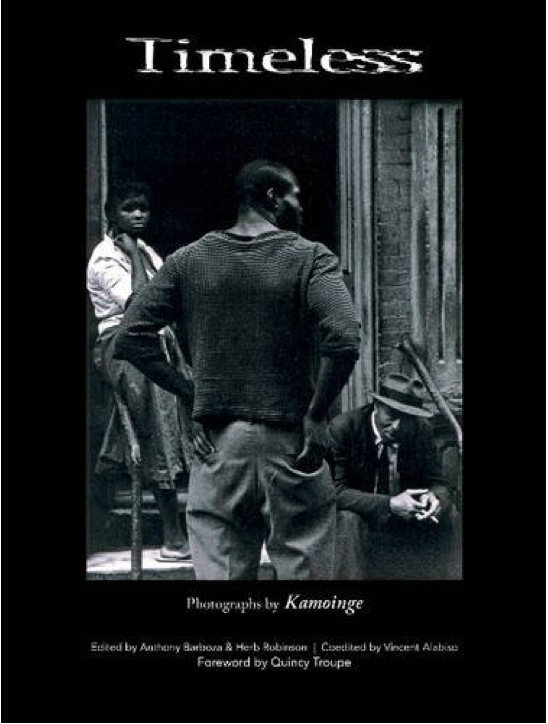
Snapshot of Curator Beuford Smith (far right) with photographers Herb Robinson and Leslie Jean-Bart. BTW: Herb Robinson was the co-editor of "Timeless: Photographs by Kamoinge" (Schiffer Publishing). Both photographers work is included in Visions 1020.

9.17.2016

KAMOINGE: "Breaking Point" at Photoville

'R.I.P. Mike Brown'
Photo by Radcliffe Roye

'American Seen'
Photo by Ming Murray Smith

'Negroes Unite'
Photo by Albert Fennar

Kamoinge at Photoville
Join the photographers of KAMOINGE Wednesday, September 21st from 4-10pm for the opening of their exhibit "Breaking Point" at Photoville in Brooklyn. The work showcasing will be forty-four photographs bringing into focus our pride, love and the state of emergency America has been in for almost sixty years.  
 
Presented by Kamoinge / United Photo Industries
Curated by Russell Frederick

Featuring KAMOINGE Photographers: Eli Reed, Russell K. Frederick, Adger Cowans, Shawn Walker, Ming Murray Smith, Albert Fennar, Daniel Dawson, Radcilffe Roye, Salimah Ali, John Pinderhughes, A.D. Minter, Frank Stewart, Gerald Cyrus, Ray Francis, Lou Draper, Herb Randall, and June DeLairre Truesdale

"On November 4, 2008, a nation divided for centuries came together to make history by electing America’s first black president. This achievement has proven to be more symbolic than substantive. The United States is at a breaking point as people of good conscience and clearer consciousness demand real change, while others mobilize to maintain a power structure that continues to produce inequality, injustice, separation and xenophobia. The African diaspora has often not been represented fairly in media, with diversity on the rise in our infrastructures, mobile technology and social media platforms expanding, opportunities to author our stories are slowly starting to increase. As the world sees more unfiltered imagery change is being demanded. While committed to the image, Kamoinge has been inspired visually by jazz, soul, rhythm & blues, reggae and rap musicians to document or create fine art that reflects the African diaspora in a dignified manner. The work exhibited in ‘Breaking Point’ brings into focus our love and the state of emergency we are living in America for almost sixty years." KAMOINGE, Inc. was founded as a collective of African-American photographers seeking artistic equality and empowerment. It works as a forum in which members view, nurture, critique and challenge each other’s work in an honest and understanding atmosphere. 

www.photoville.com/breakingpoint


1.19.2016

KAMOINGE: 50th Anniversary Book + Exhibition

 Judeen. Nigga Beach Series, Montego Bay, Jamaica, 2012
Photograph © Ruddy Roye

Students with Teacher. New York, 1990
Photograph © Toni Parks

Toukie Smith, model. New York, 1980
Photograph © Anthony Barboza 


Group photograph, "Portrait of Kamoinge, The Members, 1963–2014. September 21, 2014, photograph by Ronald Herard”: 1. Anthony Barboza (President), 2. Adger W. Cowans (Vice President), 3. Herb Robinson (Treasurer), 4. Ronald Herard, 5. Herbert Randall (Founder), 6. Collette V. Fournier, 7. John Pinderhughes, 8. Salimah Ali, 9. Ming Smith, 10. Beuford Smith (President Emeritus), 11. Russell Frederick, 12. Gerald Cyrus, 13. June Truesdale, 14. Mark Blackshear, 15. C. Daniel Dawson, 16. Shawn Walker (Founder), 17. Ruddy Roye, Framed: 18. Louis Draper (Founder)*, 19. James Ray Frances (Founder)*, 20. Steve Martin*, 21. Jerry Jack*, 22. Herman Howard*, 23. Calvin Wilson*, 24. Albert Fennar (Founder), 25. Toni Parks*, 26. Darryl Sivad, 27. Budd Williams, 28. Jimmie Mannas, 29. Eli Reed, 30. Frank Stewart (* Deceased) Members Jamel Shabazz and Leslie Jean-Bart not shown.


The release of the new book, "Timeless: Photographs by Kamoinge,” commemorates the 50th year of the oldest collaborative group of photographers in the nation. Kamoinge is a pioneering photographic collective of New York based African-American photographers, founded in 1963 at the height of the American Civil Rights Movement. The name basically means, “A group of people working together” in Kikuyu. This collection of over 280 photographs taken around the world, includes the groups history, along with insights and thoughts from Kamoinge’s 30 members, who include many of the nation’s most acclaimed photographers. With no particular sequencing by subject matter and not in chronological order, I found myself lost in a magical world of fine art photography dating from the early 1960’s though today.   

A brief history of the group begins with photographer Louis Draper (1835 – 2002), who played a principle role in founding this collective in New York in 1963 to address the under-representation of black photographers in the art world. Roy DeCarava (1919 – 2009), the first black photographer to win a Guggenheim Fellowship, was invited to be their Director. Herbert Randall, another founding member, had earlier studied photography under Harold Feinstein in 1957 before he documented Mississippi's Freedom Summer of 1964. Edward Steichen invited Roy DeCarava in 1964, who in turn invited the Kamoinge group, to exhibit at Danbury Academy of Art in Connecticut. The founding group included Draper, Albert Fennar, Ray Francis, Herbert Randall, Shawn Walker, with Roy DeCarava serving as its first director; later expanded to include several new members including Anthony Barboza, the current president and editor of this book; and Ming Smith, the first female member. Beuford Smith joined Kamoinge in 1965, and helped the group achieve non-profit status in 1998. “Timeless” includes an in-depth history by decade by the editor with excerpts from the writings of Louis Draper. 

In addition, a great exhibition, "Timeless: Photographs by Kamoinge,” is currently at the Wilmer Jenning Gallery, 219 East 2nd St (Ave. B), New York, NY. A lot of great images, too many to point out, of Harlem Jazz in the 90’s and Beuford Smith’s nude pregnant woman under the rain on a city rooftop. Through February 20, 2016.  


Book: Timeless: Photographs by Kamoinge (Schiffer Publishing) Edited by Anthony Barboza and Herb Robinson, Coedited by Vincent Alabiso, Foreword by Quincy Troupe, Essay by Deborah Willis. 288 b/w and color photos | 384 pp

Exhibition: “Timeless: Photographs by Kamoinge”  Wilmer Jennings Gallery, 219 East 2nd Street, (Avenue B x C), NYC Hours: Wed-Sat 11am-6pm thru February 20th, 2016.

12.26.2015

BEST PHOTOGRAPHY BOOKS of 2015....and Some Honorable Mentions

 click on images to enlarge
FACING CHANGE: DOCUMENTING AMERICA a collection of images by award-­winning photographers Maggie Steber, Donna Ferrato, Carlos Javier Ortiz, David Burnett, Danny Wilcox Frazier, Stanley Greene, Andrew Lichtenstein, Darcy Padilla and Lucian Perkins, authored by Leah Bendavid-Val. It includes a wealth of images and important documentary stories that tell the story of today’s America....www.facingchangeusa.org/book

+  +  +


 Bil. Sandusky, Ohio. Photograph Alec Soth

SONGBOOK by Alec Soth. Known for his haunting portraits of solitary Americans in Sleeping by the Mississippi and Broken Manual, Alec Soth has recently turned his lens toward community life in the country read more here.
+  +  + 


Mrs. Jefferson, Fort Scott, Kansas, 1950
Photograph by Gordon Parks 

GORDON PARKS: BACK TO FORT SCOTT by Karen Hass. Photographs by Gordon Parks (Steidl). The first African American photographer to be hired full time by Life magazine, Gordon Parks was often sent on assignments involving social issues that his white colleagues were not asked to cover. In 1950 he returned on one such assignment to his hometown of Fort Scott in southeastern Kansas: he was to provide photographs for a piece on segregated schools and their impact on black children...read more here
+  +  +


DETROIT: UNBROKEN DOWN Photographs: Dave Jordano; Text by Nancy Watson Barr, Dawoud Bey and Sharon Zukin (powerHouse Books). Dave Jordano returned to his hometown of Detroit to document the people who still live in what has become one of the country’s most economically challenging cities....read more here

+  +  +


CHARTH VADER Photographs by Ashly Stohl. Follow the journey of the the photographer's visually impaired son, Charth Vader, as he battles his way through childhood. Profits from this book benefit the Vision Center at Childrens Hospital Los Angeles, published by Peanut Press.

+  +  +


THE PHONE BOOK by Robert Herman (Schiffer). Known for his award winning street photography, Herman used Hipstamatic's square format to create this unique collection of iPhone photographs made while traveling across the world. The New York Times Review here

+  +  +

Black #14, as seen at The Marlborough Gallery, 2011


POULTRY SUITE: Photographs by Jean Pagliuso (Hirmer Publications). Fashion photographer Jean Pagliuso created an homage to her childhood in Southern California, where she helped her father breed and show Bantam Cochins. POULTRY SUITE showcases more than twenty breeds of chickens—from Sebrights to Spangled Hamburgs—as they have never before been seen. 

+  +  +

"Shrouds/Sudarios" haunting images of women either in agony or ecstasy—the viewer doesn’t know which until he learns that these women were forced to witness the torture of their loved ones––are printed on linen in an effect that resembles the Shroud of Turin.

"Drifting Away/Rio Abajo" images of artifacts of the hundreds of people who have “disappeared" without a trace in Columbia ––a shirt, a shoe, or a pair of eyeglasses–– are photographed in water and then suspended in glass.  

A tribute to the more than 250,000 
"disappeared" in Colombia...

MEMENTO MORI: TESTIMENT TO LIFE (George F. Thompson Publishing) Photographs and text by Columbian photographer Erika Diettes. With an Interview by Anne Wilkes Tucker. Essay by Ileana Diéguez. "MEMENTO MORI: Testament to Life" presents four bodies of work in two volumes in a transparent slipcase. The first volume contains installation shots of the work in cathedrals, churches, museums, exhibitions, and memorials in Latin America, Europe, Australia, and the United States. The second volume contains the plates of the three series: Drifting Away/Rio Abajo, Relics/Relicarios, Shrouds/Sudarios.
+  +  +

 Photograph by Ming Murray Smith


TIMELESS: PHOTOGRAPHS BY KAMOINGE Edited by Anthony Barboza and Herb Robinson, Coedited by Vincent Alabiso, Foreword by Quincy Troup (Schiffer). Kamoinge is the oldest collaborative group of photographers in the nation, a pioneering Photographic Collective of NY-based African-American Photographers founded in 1963 at the height of the American Civil Rights Movement. Roy DeCarava was their first Director. To commemorate it’s 50th year, this book includes over 280 stunning photos interspersed with insights and thoughts from Kamoinge’s 30 members, who include many of the nation’s most acclaimed photographers; Anthony Barboza, Adger W. Cowans, Salimah Ali, Mark Lee Blackshear, Spencer Anthony Burnett, Gerald Cyrus, C. Daniel Dawson, Albert Fennar, Collette Fournier, Russell K. Frederick, Jerry Jack, Wayne Lawrence, Ming Murray Smith, Toni Parks, John Pinderhughes, Radcliffe Roye, Herbert Randall, Eli Reed, Herb Robinson, June DeLairre Truesdale, Jamel Shabazz, Frank Stewart, Shawn Walker, Budd Williams.

+  +  +


INDECENT EXPOSURES: Eadweard Muybridge's "Animal Locomotion” Nudes" by Sarah Gordon (Yale University Press). Photographer Eadweard Muybridge (1830–1904) presented his iconic Animal Locomotion series in 1887. He made thousands of photographs of humans and animals in motion, including more than 300 plates of nude men and women engaged in activities such as swinging a baseball bat, playing leapfrog, and performing housework—an astonishing fact given the period’s standards of propriety. This book includes many lesser-known photographs published for the first time.

+  +  +


JULIA MARGARET CAMERON: Photographs to Electrify You with Delight and Startle the World by Curator Marta Weiss (MACK Books). Julia Margaret Cameron (1815–79) was one of the most important and innovative photographers of the 19th century. Criticized in her lifetime for her unconventional techniques, she is now celebrated as a pioneering portraitist. 2015 marks the 150th anniversary of her first museum exhibition – the only one in her lifetime – held at the Victoria and Albert Museum in 1865. Drawing on the V&A’s significant collection, which includes photographs acquired directly from Cameron and letters she wrote to the museum’s founding director, Curator Marta Weiss tells the story of Cameron’s artistic development. She presents, for the first time, a group of photographs recently revealed to have belonged to Cameron’s friend and mentor the artist G.F. Watts. This discovery sheds light on previously unacknowledged aspects of Cameron’s experimental approach.
+  +  +

 A is for Angels


In her new book, ALPHABET by Debbie Fleming Caffery (Fall Line Press), inspired by her grandchildren created a children’s book disguised as an art book (or vice versa). Caffery, one of my favorite photographers, extraordinary photographs are full of shadows and secrets. In this book she chose 26 black and white photographs of her work to illustrate the letters of the alphabet; creating some new images for the book, while pulling others from her extensive archive. This collection will warm both your eye and your heart. 

+  +  +


 Fur from Daughter
Photograph © Aline Smithson

SELF + OTHERS: PORTRAIT AS AUTOBIOGRAPHY Photographs by Aline Smithson (Magenta Foundation) Aline Smithson's first monograph includes photographs spanning over twenty years. A gorgeous must-have photography book, with a foreword by Paula Tognarelli, Executive Director and Curator at the Griffin Museum of Photography; an introduction by Karen Sinsheimer, Curator of Photography at the Santa Barbara Museum of Art; and some very interesting, revealing text from the photographer about her photographic series, opens each chapter.

+  +  +


Joni Sternbach/Courtesy of Rick Wester Fine Art

Joni Sternbach: Surf Site Tin Type (Damiani) texts by noted photo critic and historian Lyle Rexer, curator April M. Watson, and Chris Malloy and Johnny Abegg, both well-known surfers and filmmakers. Over the past decade Brooklyn-based photographer Joni Sternbach has traveled around the world, creating tintype portraits of contemporary surfers using the nineteenth-century wet-plate collodion process. Stunning in their detail, these one-of-a-kind images evoke the romance and adventure of surfing, and the bold individualism of the men and women who live to ride the waves. 

+  +  +


THE WATCHERS: Photographs by Haley Morris-Cafiero, Text by Amanda de Cadenet (The Magenta Foundation). Haley Morris-Cafiero has travelled the world to capture how people judge one another. Working with an assistant, she photographs herself in various locations being leered at, laughed at or ignored by people on the street. Each frame is chosen based on the strangers in the background, if they have a critical or questioning look, or if there is a gesture in their body language. By reversing the gaze back on the strangers, the collection begins a conversation about nonverbal interaction and the view society has on body image.

 +  +  +


EVERY BREATHE WE DREW: Photographs by Jess T. Dugan; Text by curator Amy Galpin; interview by Dawoud Bey, (Daylight Books). Over the past decade, Jess T. Dugan (born 1986) has created intimate portraits that engage with issues of identity, sexuality, gender and community. Her first book, Every Breath We Drew, compiles color portraits of the artist and others….read more here

+  +  +
Honorable Mentions


Irving Penn "Beyond Beauty” by Curator Merry A. Foresta (Yale University Press). Drawing from the extensive holdings of the Smithsonian American Art Museum, including a major gift from The Irving Penn Foundation, this magnificent catalogue compiles 161 of Penn’s iconic images, including a number of unpublished works.
 +  +  +

That Day: Pictures in the American West. Photographs by Laura Wilson; Essay by Curator John Rohrbach (Yale University Press). Wilson’s subjects range from legendary West Texas cattle ranches to impoverished Plains Indian reservations to lavish border-town cotillions. Also featured are compelling portraits of artists who are associated with the region, including Donald Judd, Ed Ruscha, and Sam Shepard.
+  +  + 


COSPLAY IN AMERICA, Volume 2 by Ejen Chuang. Cosplay in America V2 takes a reader on a visual journey through the culture of cosplay in the United States. Photographer Ejen Chuang spent two years visiting 20 cities to gather images for this book... read more here

+  +  + 


FINDING HOME: SHELTER DOGS AND THEIR STORIES by Traer Scott (Princeton Architectural Press). Scott began photographing these dogs in 2005 as a volunteer at animal shelters. Her first book, Shelter Dogs, was a runaway success, and in this follow-up, Scott introduces a new collection of canine subjects, each with indomitable character and spirit: