
Jerry Dantzic: Billie Holiday at Sugar Hill
Thames + Hudson, 2017
Thames + Hudson, 2017

In 1957, New York photojournalist Jerry Dantzic spent time with the iconic singer Billie Holiday during a week-long run of performances at the Newark, New Jersey, nightclub Sugar Hill. The resulting images offer a rare behind-the-scenes glimpse of Billie with her family, friends, and and performing. The years and the struggles seem to vanish when she sings; her face lights up. Later that same year, Dantzic photographed her in color at the second New York Jazz Festival at Randall’s Island. Only a handful of the photographs in the book have ever been published. Jerry Dantzic: Billie Holiday at Sugar Hill, a gorgeous coffee table book with 100 photos; Text by Grayson Dantzic and Introduction by Zadie Smith.

by Kahn + Selesnick, Candela Books, 2017

by Kahn + Selesnick, Candela Books, 2017
Against a backdrop of ecological decline, this memoir/travelogue follows an itinerant theatrical troupe, Truppe Fledermaus, as they stage absurdist performances in various locations including Europe, America, and Japan. The book, whose physical design format is modeled on Ukiyo-e series such as Hiroshige’s One Hundred Views of Edo, contains photographs of the Truppe, their travels, and their performances with corresponding text narrating the images. It is the author’s preference to have the pages of the book be loose and non-linear so that readers can explore the images and story in any order they prefer. By Kahn + Selesnick; 104 unbound pages in a band and slipcase.

Published by Eye + Inc. (2017)
 Nydia Blas : The Girls Who Spun Gold. Ithaca, N.Y. 2016

For the first time in 30 years, since Jeanne Moutoussamy-Ashe’s 1986 book, “Viewfinders: Black Women Photographers,” a book celebrates black women photographers! "Mfon: Women Photographers of the African Diaspora”
published photographs by 100 black women of African descent ranging in age from 13 to 91. Co-editors, the award winning documentary photographer, Laylah Amatullah Barrayn and critically acclaimed, award winning visual artist, Adama Delphine Fawundu, selected the
photographs. With an Introduction by Dr. Deborah Willis, MacArthur Fellow and Chair of the Dept. of Photography + Imaging at the Tisch School of the Arts at NYU; as well as essays written by women scholars, journalists and artists.


MAC'S Grand Hornu, 2017

LaToya Ruby Frazier, Maria C.'s hands holding a family photograph showing her mother brother, and herself as a child.
Photographer LaToya Ruby Frazier grew up in Braddock, PA, a borough in the American Rust Belt ravaged by the steel-industry crisis that hit the US during the Reagan administration. In this former bastion of the steel industry, the artist was raised in her Afro-American family, whose story she told in The Notion of Family. Her 2016 residency at Grand-Hornu allowed her to pursue her work on postindustrial society in Belgium, turning her camera to the Borinage, a mining region whose intense activity in the 19th century was diminished by a series of crises that led to the closure of the last mine in 1976. Testimonies gathered by Frazier from the former miners and their families have resulted in And from the Coaltips a Tree Will Rise, an extensive collection of portraits, landscapes and still lifes.

Kehrer Verlag, 2017

Kehrer Verlag, 2017
"Ken Hermann’s images are pathways, connecting us to micro worlds and challenging us to rethink ideas of photographic representation. Passionate about individuals and their unique histories, he explores the fragile balance between people and their environment, between tradition and modernity. Hermann’s photography seamlessly weaves cultural and political content, blending documentary and cinematic portraiture. "
Flower Man is a personal portrait project made in the Malik Ghat Flower Market in Kolkata....It’s a beautiful and at the same time very stressful place—the market is one of the biggest flower markets in Asia and is very busy. There are a lot of superstitions and religious beliefs surrounding flowers in India. For example, I wasn’t able to photograph some of the flower sellers because their flowers were holy, and they would lose their “power” if photographed. —Ken Hermann
I was first introduced to Danish photographer Ken Hermann at the 2017 Landskrona Foto Festival Portfolio Reviews after viewing many of his photographs in National Geographic magazine. Check out his other brilliant series here: KenHermann.dk

Radius Books, 2017

Debi Cornwall is a conceptual documentary artist who returned to visual expression in 2014 after a 12-year career as a wrongful conviction lawyer. Welcome to Camp America is a vivid aglimpse into the U.S. Naval Station in Guantánamo Bay, Cuba, (known as “Gitmo”) and its growing diaspora, through photographs, once-classified government documents, and first-person accounts. Welcome to Camp America reflects three bodies of work, including: Gitmo at Home, Gitmo at Play, showing residential and leisure spaces of both prisoners and guards; Gitmo on Sale, depicting the commodification of American military power through gift-shop souvenirs; and Beyond Gitmo, investigating life after detention with 14 men once held as accused terrorists, now cleared and freed, living in nine countries, from Albania to Qatar. Environmental portraits in the free world replicate conditions of military regulation photography at Guantánamo Bay: no faces are shown. With unique construction in English and Arabic, the book seeks common ground while asking provocative questions about compromises made between humanity and fear in the post-9/11 era.

powerHouse Books, 2017

powerHouse Books, 2017
I met photographer Francesco Mastalia at the 2016 annual "New York Portfolio Review" sponsored by the New York Times Lens Blog and the City University of New York’s (CUNY) Graduate School of Journalism. He has traveled the world photographing tribal, religious, spiritual, and indigenous people. Yoga: The Secret of Life is his photo-documentary about the spiritual and physical journey of yoga. Through photographs and text this fine art book explores the personal experiences of 108 of today’s leading practitioners and how this ancient practice has transformed their mind, body, and spirit. The photographs are taken on glass plates using the wet collodion process, a photographic technique dating back to the 1850s. With the use of a large format wooden camera and antique brass lens, glass plates are hand coated to produce one of a kind ambrotype images. The collodion process transcends us to another place, another time. When light and chemistry collide we enter a mysterious world where art and science meet and the alchemy reveals itself. 224 pages include world renowned yogis Radhanath Swami, Sharon Gannon, David Life, Gurmukh Kaur Khasla, Sri Dharma Mittra, Krishna Das, Tao-Porchon Lynch, Shiva Rea, Rod Stryker, Seane Corn and Rodney Yee.

A Self-Portrait Through The Eyes of My Lovers
b.frank books, Zurich 2017

A Self-Portrait Through The Eyes of My Lovers
I met Swedish-born photographer Jenny Rova at the 2017 Landskrona Foto Festival Portfolio Reviews where she won Honorable Mention for the Best Portfolio of the Year 2017. I was blown away by two of her series. The first is Älskling A Self-Portrait Through The Eyes of My Lovers, published by b.frank books, Zurich 2017
"My intention was to make a self-portrait made by other people. I was asking my ex boyfriends and lovers to give me all the pictures they took of me during our relationship. The pictures I got were from a twenty-five years period of time. The first photo was when I was nineteen, the last one this year when I’m forty-five. The series contains fifty-five photographs and has nine different authors. I’m presenting the pictures in a chronological order. The work can be seen as biographical work, telling about a part of my life, but it’s also an indirect portrait of the photographer, the partner behind the camera. An aspect that is interesting to me is the special way of looking at each other when you are in love. These pictures can be seen as an attempt capture closeness and attraction between two people within a photograph.”
"My intention was to make a self-portrait made by other people. I was asking my ex boyfriends and lovers to give me all the pictures they took of me during our relationship. The pictures I got were from a twenty-five years period of time. The first photo was when I was nineteen, the last one this year when I’m forty-five. The series contains fifty-five photographs and has nine different authors. I’m presenting the pictures in a chronological order. The work can be seen as biographical work, telling about a part of my life, but it’s also an indirect portrait of the photographer, the partner behind the camera. An aspect that is interesting to me is the special way of looking at each other when you are in love. These pictures can be seen as an attempt capture closeness and attraction between two people within a photograph.”

I Would Also Like To Be : A Work On Jealousy
b.frank books, Zurich
b.frank books, Zurich

"For his 40th birthday she invited him on a trip to Venice"
From: I would Also Like To Be - A Work On Jealousy
(photocollage)
From: I would Also Like To Be - A Work On Jealousy
(photocollage)
The second series is I Would Also Like To Be : A Work On Jealousy, is my favorite just for the sheer courage it took to create and publish this work. We may all have experienced jealousy seeing our former partner enjoying themselves in their new relationship. Rova has taken this jealousy to a whole new level collaging her face into her former boyfriends facebook photographs with his new girlfriend. Absolutely love this.
Roma explains: "I’m following and spying on my ex-boyfriend and his new girlfriend. I pursue them on Facebook, downloading all the pictures they have been uploading there of themselves and each other. I’m placing myself in the new girlfriend’s position, imitating her pose, expression and dressing myself in the same outfit. I’m photographing myself in the same light as in the picture of them. The figure of me I glue onto the original picture, covering the girlfriend. In this way I build a dream life of my own on top of theirs. During the process of taking the new girlfriend’s poses, I’m once again, briefly a part of my ex-love’s life and I can imagine how it would be to be her.”

Schilt Publishing, 2017

© Justine Tjallinks
LensCulture's first book, The Best of LensCulture, Vol 1, features contemporary photographers from all over the world, discovered during four of LensCulture’s annual competitions. Not only are these photographers geographically diverse, but their work encompasses many different genres. "The range of work in this book is wide and diverse—from portraits to street photography, photojournalism, personal stories, documentary, fine art, fictional narratives, poetic beauty and abstraction. Their images will take you on a tour of the world and introduce you to people, cultures, historic events and the wonders of nature.” 288 pages, 200 color and black-and-white photos. A must-see of current emerging and established contemporary photography.

Remnants, Photographs of the Lower East Side
Radius Books, 2017

Remnants, Photographs of the Lower East Side
Radius Books, 2017
Throughout its history, New York’s Lower East Side has reflected the cultural demographics of the city. David Scheinbaum and Janet Russek started photographing the area in 1999, and have chronicled a time of extraordinary transformation. Undergoing rapid gentrification into a “hipster” neighborhood, the future of the Lower East Side is now unclear. In 2008, the National Trust for Historic Preservation added the neighborhood to its list of America’s Most Endangered Places, and many believe the cultural institutions and ideologies that established the Lower East Side are disappearing forever. With this book, Remnants, Photographs of the Lower East Side, Scheinbaum and Russek capture remnants of history through their intimate portraits of traditional businesses, places of worship, people, and the old world architecture that have defined the Lower East Side for generations. 120 images.

Tamyras Editions, 2017

Tamyras Editions, 2017

Tamyras Editions, 2017
Far from controversy and any political affiliation, this photography book is a true reflection of the faith of an entire community. French-Lebanese photographer Patrick Baz offers us the result of over two years of work, Christians of Lebanon, Rites & Rituals, during which he traveled across the country to document the beliefs and rituals of the Christians of Lebanon. French and English.
"After putting an end to a long career as an international war photographer, I went back to my roots, to Lebanon, in order to recharge. As I returned home, the whole region was in turmoil over the massacre of Christians and different minorities at the hands of Islamic groups. During random conversations, I kept getting asked the same questions that seemed to be gnawing at the members of the Christian community: “Will we stay here? Will they throw us out? Will they persecute us?” They looked to me, as if I, a former war correspondent who had travelled to dangerous territories, held all the answers. I was also surprised by the community’s increasingly visible identity, and the abundance of its ostentatious signs. Crosses and statues of Levantine saints erected on hills to mark the territory, religious processions in public spaces, holy pictures and crucifixes adorning building lobbies, vehicles and mountains roads."
"I never intended to take a historical or thematic approach to the subject, but rather a visual and humane one, devoid of judgement. I just captured what I saw. I came back from this journey with convictions, assertions, surprises, and breakthroughs. I invite you all to share them with me.”– Patrick Baz

Editions Bessard, 2017

Editions Bessard, 2017
I met photographer Anna Ehrenstein at the at 2017 Landskrona Foto Festival Portfolio Reviews in Landskrona Sweden. She was the winner of both the Best Portfolio Award, as well as the Artproof Grant Sweden. Her project Tales of Lipstick and Virtue blurs the line between truth and fiction in a narration which deals with the topics of gender, class, self representation, racial prejudices, post-colonialism….As a young woman, born and raised in Germany with Albanian origin, reaction on representation and self image and their cultural differences have always played a major role in Ehrenstein's life. "Due to the fact that I will never genuinely be part of either German or the Albanian society, I found my voice in the meta-position of an observer. The question of whether or not, especially in the post-communistic context of Albania, visual and sexual self-determination as well as femininity are empowering young women globally plays a key role in this body of work. The communist cry for ‘necessity’ and the feminist cry for ‘naturalness’ contrast with the human desire for experimentation, self- expression and speculation." Limited Edition + Signed C Print.

Silas Finch, 2017

Silas Finch, 2017
Brooklyn-based photographer Cole Barash's latest work documents the tiny community on Grimsey, an island north of Iceland where roughly 90 people live, a lush patch of green encased in cliffs. 57 full color plates. Beautifully packaged and printed as only Silas Finch does so well with a cloth wrapped hardcover and french fold dust jacket printed on uncoated stock.

Silas Finch, 2017

Daily, In A Nimble Sea : Barry Stone
Silas Finch, 2017
Silas Finch, 2017
Barry Stone's "DAILY, IN A NIMBLE SEA, is an anagram of “BAILEY ISLAND, MAINE,” where a tiny stretch of coastline is incessantly transformed by the interactions of fog, sun, and tides. When the tide goes out, a rocky field of seaweed is revealed. To walk across it is to traverse the ocean floor in the open air. It is a magical place, and for seven summers I have watched my girls grow and change against this backdrop. Photographs put a feeble defense against the passage of time: the still image halts the waves from breaking, only to paradoxically heighten our awareness of their inevitable movement forward." 37 color plates printed on matte paper. Cloth-wrapped hardcover with photographic tip-in, beautifully printed and packages as all Silas Finch books are made. Check out their several other titles: Silas Finch
~ FULL DISCLOSURE ~
Saving two of my favorites for last, I have to disclose I had a hand in each. However, I would still have chosen them as 2 of my top choices in any case!


Dornith Doherty and her view camera,
Svalbard, near the North Pole
Svalbard, near the North Pole

A Digital Chromogenic Lenticular Photograph (26.5 x 47.5") Doherty told me, “This is a collage made of about 4,000 seeds. The colors shift from
green to blue, referring to the cryogenic process and the impossibility
of stopping time in living materials. I wanted to make visible the
number of seeds it takes to save a species."

Dornith Doherty: Archiving Eden
Schilt Publications, 2017
Schilt Publications, 2017
"Many of Archiving Eden's
images radiate a spiritual dimension, emanating wordlessly like
hieroglyphs from nature, seeming to reflect life itself from within the
seed. Using x-ray technology, Doherty was able to peer into the
infinitely delicate structures of seeds and plantlets not visible to the
human eye." – Elizabeth Avedon
Archiving Eden begins with photographer Dornith Doherty documenting the primordial wilderness surrounding the Svalbard Global Seed Vault, leading us on a powerful journey in wonder at the elegant grandeur across a vast inhospitable, desolate landscape. Located on an island that is the northernmost place in the world, she takes us onto the icy surfaces around the glacial bay and airport, right up to the entrance door to the Vault, a frozen, silent space holding back the weight of the world.
Archiving Eden explores the role of seed banks and their preservation efforts in the face of climate change, the extinction of natural species, and decreased agricultural diversity. Serving as a global botanical backup system, these institutions assure the opportunity for the reintroduction of species should a catastrophic event or civil strife affect a key ecosystem somewhere in the world."
Archiving Eden explores the role of seed banks and their preservation efforts in the face of climate change, the extinction of natural species, and decreased agricultural diversity. Serving as a global botanical backup system, these institutions assure the opportunity for the reintroduction of species should a catastrophic event or civil strife affect a key ecosystem somewhere in the world."
In 2012, Dornith Doherty was awarded a Guggenheim Foundation Fellowship. Archiving Eden was published by Maarten Schilt, designed by Victor Levie, with an essay by Elizabeth Avedon. An Exhibition of this work is currently at the Amon Carter Museum of American Art through January 14, 2018, Fort Worth, Texas!


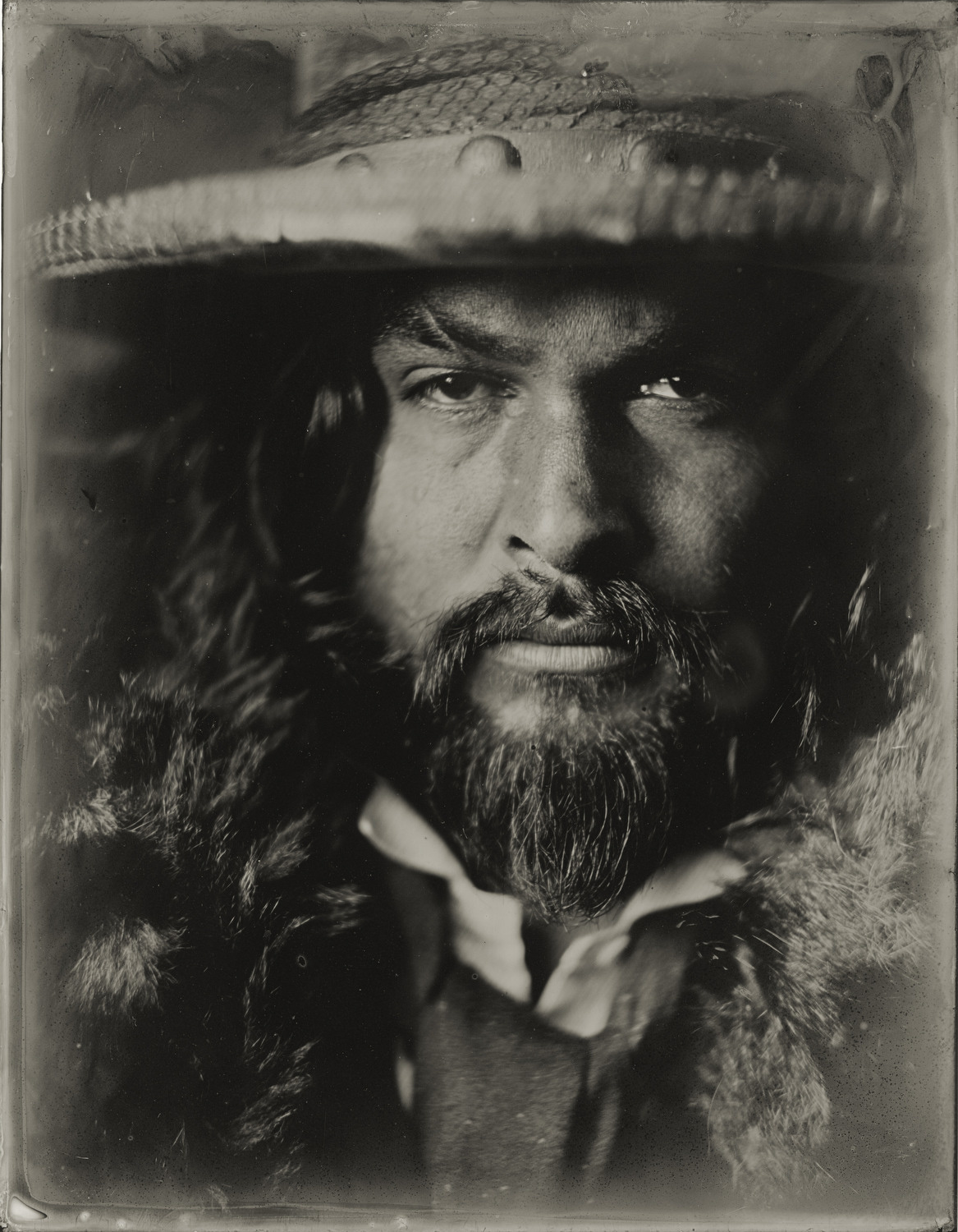
Jason Momoa wrote the Introduction
“So we beat on, boats against the current, borne back ceaselessly into the past.”― F. Scott Fitzgerald, The Great Gatsby
A review of Victoria Will's : Borne Back is excerpted from The Washington Post’s column, In Sight, written by Nick Kirkpatrick (December 19, 2017):
"At the Sundance Film Festival, photographer Victoria Will had just minutes with some of Hollywood’s most famous actors and directors — arguably, some of the most photographed people in the world — but she chose a process that at its core is imperfect: tintype. The 19th century wet-plate photography process predates film. There are no negatives, no large digital files or multiple frames, and no do-overs. Each image is one of a kind."
“I love that when you make a tintype you are making a thing, a physical photographic object — one that you can hold and experience in a different way,” Victoria Will told The Washington Post’s In Sight. “But I also love the finicky nature of the chemistry. Each plate is one of a kind. In the digital age these two aspects of the medium really inspire me.”
On one of the last pages of the book is a quote from Walker Evans: “The eye traffics in feelings, not in thoughts.” When asked, Will said it sums up what she loves and why she is so drawn to photography. “A successful image for me is one that makes you feel. It needs to touch you in some way,” she said. “I think unconsciously, and clearly articulated by Evans here, photographers are moved by emotion. That’s what is actually pushing the shutter.”
"At the Sundance Film Festival, photographer Victoria Will had just minutes with some of Hollywood’s most famous actors and directors — arguably, some of the most photographed people in the world — but she chose a process that at its core is imperfect: tintype. The 19th century wet-plate photography process predates film. There are no negatives, no large digital files or multiple frames, and no do-overs. Each image is one of a kind."
“I love that when you make a tintype you are making a thing, a physical photographic object — one that you can hold and experience in a different way,” Victoria Will told The Washington Post’s In Sight. “But I also love the finicky nature of the chemistry. Each plate is one of a kind. In the digital age these two aspects of the medium really inspire me.”
On one of the last pages of the book is a quote from Walker Evans: “The eye traffics in feelings, not in thoughts.” When asked, Will said it sums up what she loves and why she is so drawn to photography. “A successful image for me is one that makes you feel. It needs to touch you in some way,” she said. “I think unconsciously, and clearly articulated by Evans here, photographers are moved by emotion. That’s what is actually pushing the shutter.”
Will’s monograph Borne Back is published by Ashly Leonard Stohl and David Carol of Peanut Press; with a Foreword by Jason Momoa (Pride of the Gypsies...Aquaman); Book design by Elizabeth Avedon; Pre-production by Joe Chanin and Printed at Meridian Printing. Available in a hardbound trade edition or a limited edition featuring a signed trade edition and one of three signed and numbered prints. Order it here: Peanut Press




 Posts
Posts

