Showing posts with label Human Trafficking. Show all posts

11.01.2017

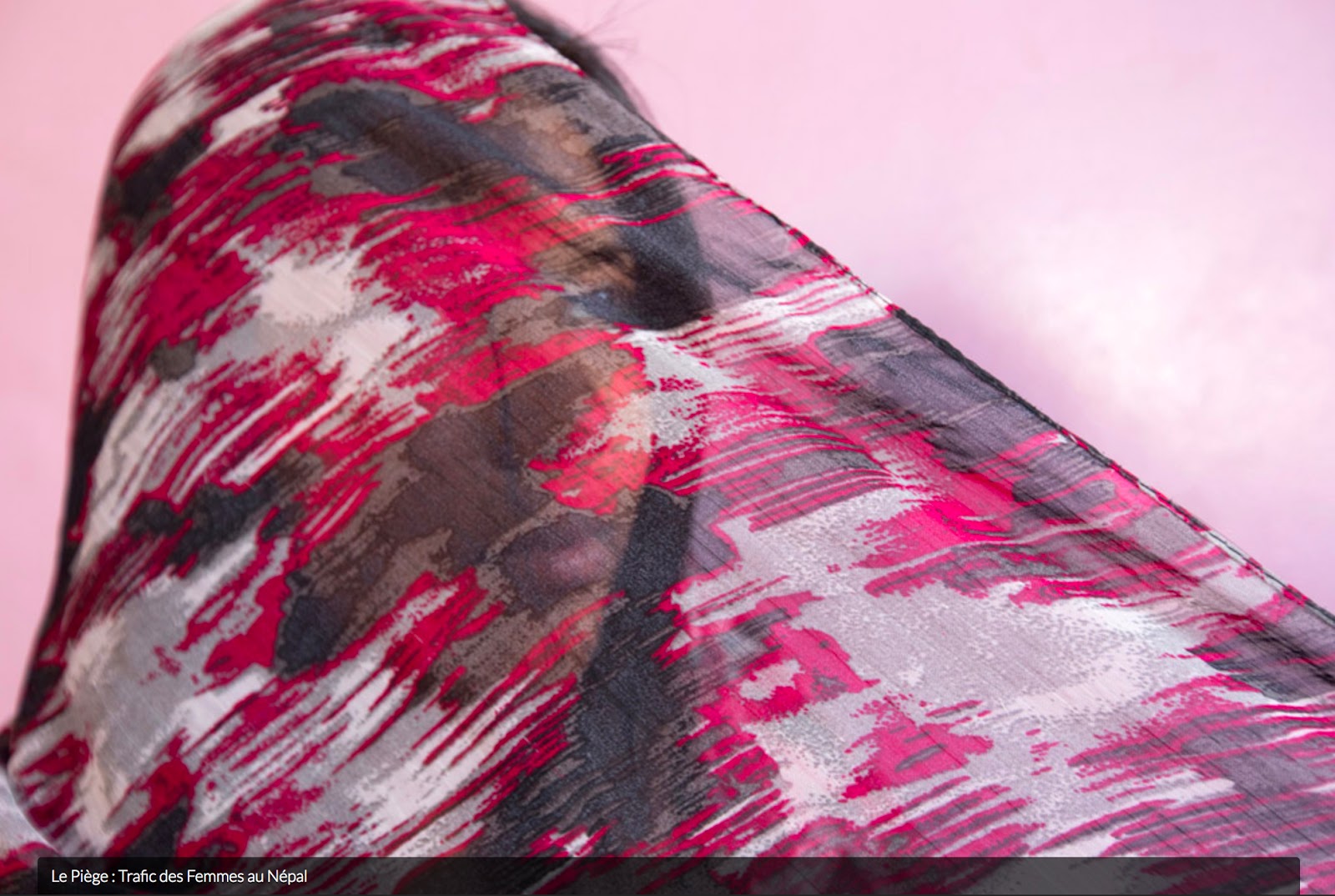
THE TRAFFICKING OF WOMEN IN NEPAL: Exhibition by Lizzie Sadin, Laureate of the 2017 8th Carmignac Photojournalism Award

 Photograph by Lizzie Sadin

Photograph by Lizzie Sadin

Photograph by Lizzie Sadin

 Photograph by Lizzie Sadin

Lizzie Sadin won the 8th Carmignac Photojournalism Award devoted to "Modern Day Slavery Among Women.” I was extremely honored to be on the jury.

+  +  +

Following a July 2016 call for applications by the Fondation Carmignac, the jury, presided over by Monique Villa, CEO of the Thomson Reuters Foundation and Founder of Trust Women, chose to give a voice to Nepalese women by selecting Lizzie Sadin’s project. After four months of reporting in the field between February and May 2017, the photojournalist has brought back a deeply moving testimony on gender-based human trafficking and how rooted it is in Nepalese society. An exhibition of this work opened October 20, 2017 at the Hôtel de l’Industrie, 4 place Saint-Germain-des-Près -75006 Paris, with an accompanying monograph.

After a devastating earthquake that killed 9,000 people and displaced 650,000 others in 2015, the daily life of many Nepalese was shattered. Unemployment and the extremely precarious living conditions have given rise to more and more traffickers every day.

To Lizzie Sadin, this trafficking, based on the sale and forced prostitution of women and girls by “friends” or even family members, is carried out not just for economic reasons, but also for cultural reasons. It affects a woman’s fundamental rights: the right to get a proper education, the right to control her own destiny, the right to live without fear of acts of physical or psychological violence inflicted by her own husband, the right not to be sold …An entire belief system that needs reversing: one that, in Nepal, defines women as being inferior to men.

The International Labour Organisation (ILO) estimates that there are more than 2.5 million victims of modern day slavery, and women make up the majority of this number. According to Amnesty International, women represent 80% of the victims of human trafficking, of whom nearly 50% are minors. The types of exploitation are numerous: sexual, forced labour, domestic slavery…

Women are all the more vulnerable in situations where they have little protection. The countries of South and South-East Asia as well as those of Central Europe and the ex-USSR are the principal purveyors of these modernday slaves. Although abduction is the most common route into slavery, women are also sold by their own families or entrapped into joining the networks of traffickers.

Armed conflicts exacerbate discriminatory and violent behaviour towards women. In Lebanon, Jordan and Turkey, numerous camps of Syrian refugees have emerged. These refugees provide easy prey for networks on the lookout for ‘merchandise’. In Nigeria, in the Darfur region of western Sudan and in the Democratic Republic of Congo,  women and girls are subject to abductions carried out to provide their kidnappers with sexual or domestic slaves.

+  +  +

Many thanks to Edouard Carmignac, President of The Fondation Carmignac; as well as to Emeric Glayse, Director of the Carmignac Photojournalism Award at Fondation Carmignac. The jury, chaired by Monique Villa, CEO of the Thomson Reuters Foundation and Founder of Trust Women, comprised of Elizabeth Avedon, independent curator specialized in photography • Francesca Fabiani, Photography Special Projects, Department for Contemporary Art and Architecture, Ministry of Culture, Italy • Thierry Grillet, Chief Curator of Bibliothèque Nationale de France (BNF) • Olivier Laurent, Editor-in-chief of Time Lightbox (now at the Washington Post) • Elisabeth Quin, journalist, writer and Arte TV Presenter (28 Minutes) • Narciso Contreras, laureate of the 7th edition of the Carmignac Award'

LIZZIE SADIN : EXHIBITION
The Trafficking of Women in Nepal
Laureate of the 8th Carmignac Photojournalism Award
October 20, 2017 to  November 12, 2017
Hôtel de l’Industrie, Paris
with an accompanying Monograph
Text courtesy of The Fondation Carmignac

11.16.2016

NARCISO CONTRERAS "Libya: A Human Marketplace" Fondation Carmignac | SKIRA

Narciso Contreras "Libya : A Human Marketplace"
Publishers Fondation Carmignac | Editions SKIRA

(click on images to enlarge)

Narciso Contreras  Sabha, March 2016
The corpses of illegal sub-Saharan migrants lie in the morgue of Sabha City, after having been collected from the streets and the desert during previous days.

Narciso Contreras  Zawiyah, May 2016
A group of sub-Saharan illegal migrants and refugees is crowded into one section of the Zawiyah detention center, a warehouse-like facility holding as many as two thousand detainees at any time, making it the largest of it's type on Libyan soil. The center serves as a distribution facility in the human trafficking supply chain, and from here inmates are resold to other militias on the west coast of Libya.

Narciso Contreras  Tajoura, May 2016
Sub-Saharan illegal migrants and refugees on the Tajoura shore after having been arrested in the Mediterranean Sea by the Libyan coastguard. 

Narciso Contreras  Surman, June 2016
Illegal female migrants queue in the prison yard as they are loaded on to buses to be transferred to another detention center, after having been sold by the militia group ruling the Surman detention center in the west of Libya.

+  +  +

I just received a powerful new monograph from the Fondation Carmignac on the theme of Libya by Mexican photographer, Narciso Contreras, the 7th Laureate of the Carmignac Photojournalism Award. It is an elegantly designed and produced book co-published by Fondation Carmignac with Editions Skira, Paris and printed in Belgium. The overall book, beautifully typeset on magnificent paper, belies the dangerous situations Contreras put himself in to bring us this ongoing chronicle documenting the brutal reality of human trafficking as he traveled through the complex tribal society of post-Gaddafi Libya from February to June 2016.

"Contreras lays bare an unfolding humanitarian crisis in which illegal migrants, refugees and asylum seekers are at the mercy of militias who exploit them for financial gain. Held in detention centres for illegal migrants, they are subjected to inhumane conditions. He weaves a compelling narrative to show how, instead of being a place of transit for migrants on their way to Europe, Libya has actually become a trafficking market where people are bought and sold on a daily basis. He provides us with a glimpse of the complex and horrifying context migrants are faced with."

 Narciso Contreras,
7th Laureate of the Carmignac Photojournalism Award
"Libya: A Human Marketplace"
Texts by Narciso Contreras and Ela Stapley
Hard Cover, 102 pages, English+French
ISBN 978-2-37074-043-4

Production: Fondation Carmignac, Direction: Gaia Donzet, Carmignac Photojournalism Award Gestion, Direction: Emeric Glayse, Communications manager: Valentine Dolla, Photo Editors: Patrick Baz, Narciso Contreras, Text: Ela Stapley, Photography & Investigation: Narciso Contreras, Publisher: EDITIONS SKIRA, Senior Editor: Nathalie Prat-Couadau, Editorial Coordination: María Laura Ribadeneira

+  +  +

In 2009, the Fondation Carmignac launched the Carmignac Photojournalism Award with the aim to support, each year, a photojournalist in undertaking a photographic and investigative assignment exploring a theme or an area of the world at the centre of geostrategic conflicts. Selected by an international jury, the Laureate receives 50,000 EUR that enable him/her to spend time into the field, as well as a fully-financed monograph and a touring exhibition of the project.

Created in 2000 by Edouard Carmignac and directed by Gaïa Donzet, the Fondation Carmignac has three strands: the corporate collection comprising nearly 250 contemporary works of art, the annual Carmignac Photojournalism Award led by Emeric Glayse, and the Foundation's project to open an exhibition space and a sculpture park to the public on the preserved site of Porquerolles (Var). Edouard Carmignac’s desire to share his passion for contemporary art, promote freedom of expression and increase awareness of contemporary world issues led him to the creation of this Foundation.

Upcoming Carmignac Photojournalism Award exhibition: Saatchi Gallery, London, May 16–June 16, 2017