Showing posts with label Human Rights. Show all posts

3.12.2018

LOUIE PALU : Front Towards Enemy

Front Towards Enemy, Yoffy Press
Documentary Photographer Louie Palu' Deconstructed Book

 Front Towards Enemy
Zhari District, Kandahar Province, Afghanistan - An Afghan soldier eats grapes during a patrol in Pashmul in Zhari District, Kandahar Province, Afghanistan. Jul 12, 2008 © Louie Palu/ZUMA Press

 Front Towards Enemy
A US soldier illuminates the legs of a comrade critically injured by an improvised explosive device attack at night on their armored vehicle for the flight medic flying with the 101st Airborne Combat Aviation Brigade who is organizing the evacuation of the wounded via a MEDEVAC helicopter to Kandahar Airfield, Kandahar, Afghanistan. © Louie Palu/ZUMA Press/New America Foundation


 Front Towards Enemy
U.S. Marine Lcpl. Damon "Commie" Connell age 20 who is part of Alpha Company of the 24th Marine Expeditionary Unit (MEU) Battle Landing Team (BLT) 1/6, after a patrol in Garmsir District, Helmand Province, Afghanistan at Forward Operating Base Apache North. Located in Southern Helmand Province, Garmsir has been a haven for insurgents for the last several years. Earlier this year the Marines cleared the area after a period of heavy fighting. Damon is from Las Vegas NV and this is his first tour of Afghanistan. © Louie Palu


"Front Towards Enemy is a deconstructed photobook showcasing the distinctly different ways award-winning photographer Louie Palu documented the war in Afghanistan over the course of five years. The power of Palu's images extend beyond one specific conflict to make a statement about the chaos of war and the ways media influences our perception of armed conflicts." – Yoffy Press

I usually don't like to view unbound books. They generally seem cooked up by the book designer trying to make a design statement, regardless of its effect on the photography. However, in the case of Front Towards Enemy, the mastery of documentary photographer and film maker Louie Palu's powerful images bring a cohesive message to this 'deconstucted' book – and I am appreciating each and every individual portion.

Front Towards Enemy begins with a cardboard slipcase with four components: an accordion fold image set, large almost 9x12" soldier portrait cards you can frame or display individually (I've taped mine in a row staring at me on the wall), a newsprint publication, and a staple-bound zine. The entire publication can also exist as a pop-up exhibition and comes with a diagram and instructions. 
As a huge fan of Mr. Palu's work, I am in awe of this collection and highly recommend it to all!

FRONT TOWARDS ENEMY
Photographs by Louie Palu
Essay by Rebecca Senf 
60 images in total
Edition of 750
Front Towards Enemy
Photographs © Louie Palu

 Front Towards Enemy
Photographs © Louie Palu

 Front Towards Enemy
Included is a cardboard slipcase with four components: an accordion fold image set, large almost 9x12" soldier portrait cards, a newsprint publication, and a staple-bound zine.
 
Front Towards Enemy
A diagram and instructions for a pop-up exhibition

Louie Palu, is a 2016-17 John Simon Guggenheim Foundation Fellow and a Harry Ransom Center Research Fellow in the Humanities at the University of Texas at Austin.

Louie is an award winning documentary photographer and filmmaker whose work has appeared in festivals, publications, exhibitions and collections internationally. He is the recipient of numerous awards including two Pulitzer Center on Crisis Reporting Grants, 2011-12 Bernard L Schwartz Fellowship with the New America Foundation and Milton Rogovin Fellowship at the University of Arizona. He is well known for his work which examines social political issues such as human rights, conflict and poverty. Read more Here 

11.01.2017

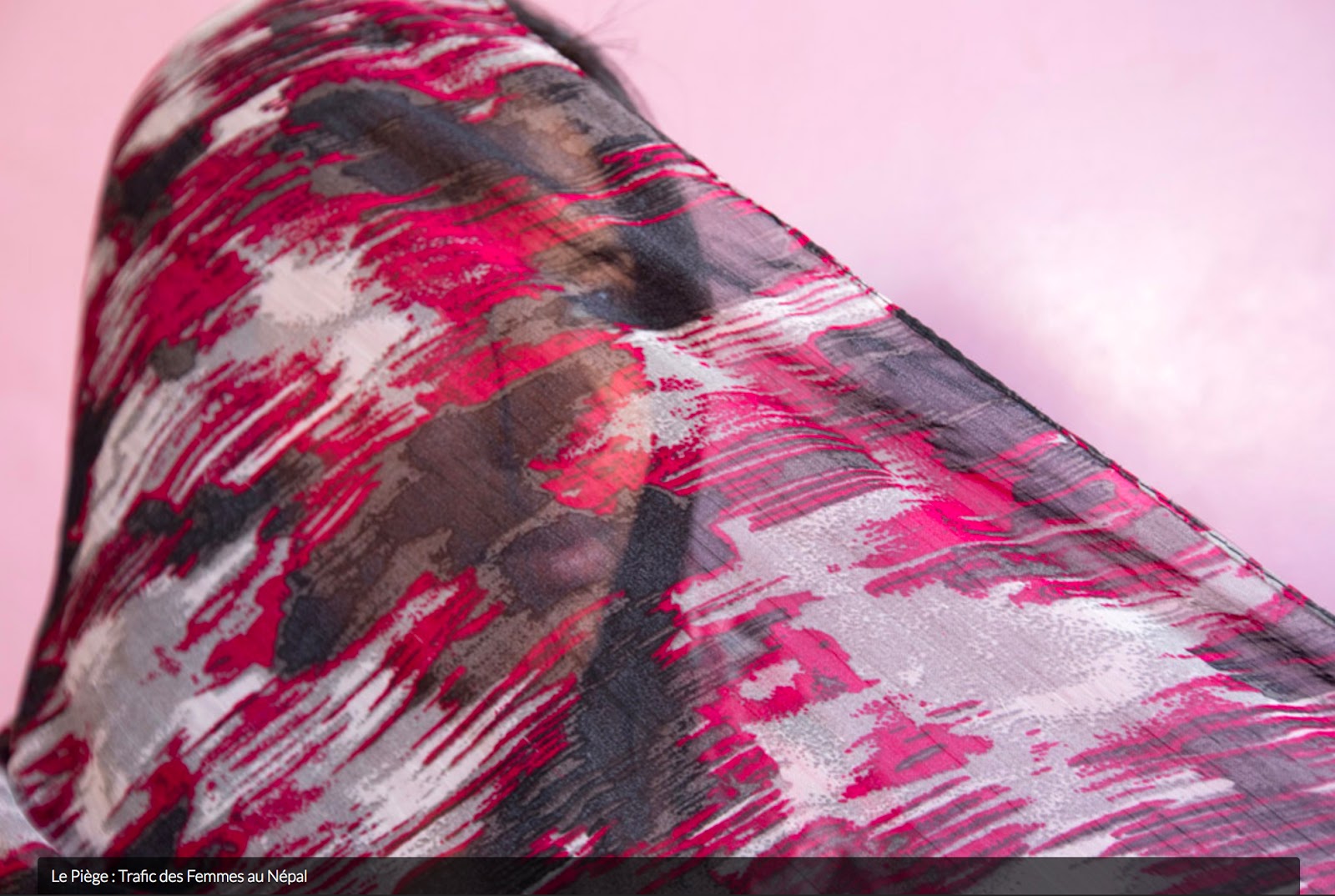
THE TRAFFICKING OF WOMEN IN NEPAL: Exhibition by Lizzie Sadin, Laureate of the 2017 8th Carmignac Photojournalism Award

 Photograph by Lizzie Sadin

Photograph by Lizzie Sadin

Photograph by Lizzie Sadin

 Photograph by Lizzie Sadin

Lizzie Sadin won the 8th Carmignac Photojournalism Award devoted to "Modern Day Slavery Among Women.” I was extremely honored to be on the jury.

+  +  +

Following a July 2016 call for applications by the Fondation Carmignac, the jury, presided over by Monique Villa, CEO of the Thomson Reuters Foundation and Founder of Trust Women, chose to give a voice to Nepalese women by selecting Lizzie Sadin’s project. After four months of reporting in the field between February and May 2017, the photojournalist has brought back a deeply moving testimony on gender-based human trafficking and how rooted it is in Nepalese society. An exhibition of this work opened October 20, 2017 at the Hôtel de l’Industrie, 4 place Saint-Germain-des-Près -75006 Paris, with an accompanying monograph.

After a devastating earthquake that killed 9,000 people and displaced 650,000 others in 2015, the daily life of many Nepalese was shattered. Unemployment and the extremely precarious living conditions have given rise to more and more traffickers every day.

To Lizzie Sadin, this trafficking, based on the sale and forced prostitution of women and girls by “friends” or even family members, is carried out not just for economic reasons, but also for cultural reasons. It affects a woman’s fundamental rights: the right to get a proper education, the right to control her own destiny, the right to live without fear of acts of physical or psychological violence inflicted by her own husband, the right not to be sold …An entire belief system that needs reversing: one that, in Nepal, defines women as being inferior to men.

The International Labour Organisation (ILO) estimates that there are more than 2.5 million victims of modern day slavery, and women make up the majority of this number. According to Amnesty International, women represent 80% of the victims of human trafficking, of whom nearly 50% are minors. The types of exploitation are numerous: sexual, forced labour, domestic slavery…

Women are all the more vulnerable in situations where they have little protection. The countries of South and South-East Asia as well as those of Central Europe and the ex-USSR are the principal purveyors of these modernday slaves. Although abduction is the most common route into slavery, women are also sold by their own families or entrapped into joining the networks of traffickers.

Armed conflicts exacerbate discriminatory and violent behaviour towards women. In Lebanon, Jordan and Turkey, numerous camps of Syrian refugees have emerged. These refugees provide easy prey for networks on the lookout for ‘merchandise’. In Nigeria, in the Darfur region of western Sudan and in the Democratic Republic of Congo,  women and girls are subject to abductions carried out to provide their kidnappers with sexual or domestic slaves.

+  +  +

Many thanks to Edouard Carmignac, President of The Fondation Carmignac; as well as to Emeric Glayse, Director of the Carmignac Photojournalism Award at Fondation Carmignac. The jury, chaired by Monique Villa, CEO of the Thomson Reuters Foundation and Founder of Trust Women, comprised of Elizabeth Avedon, independent curator specialized in photography • Francesca Fabiani, Photography Special Projects, Department for Contemporary Art and Architecture, Ministry of Culture, Italy • Thierry Grillet, Chief Curator of Bibliothèque Nationale de France (BNF) • Olivier Laurent, Editor-in-chief of Time Lightbox (now at the Washington Post) • Elisabeth Quin, journalist, writer and Arte TV Presenter (28 Minutes) • Narciso Contreras, laureate of the 7th edition of the Carmignac Award'

LIZZIE SADIN : EXHIBITION
The Trafficking of Women in Nepal
Laureate of the 8th Carmignac Photojournalism Award
October 20, 2017 to  November 12, 2017
Hôtel de l’Industrie, Paris
with an accompanying Monograph
Text courtesy of The Fondation Carmignac

10.07.2012

ERIKA DIETTES: Sudarios

SUDARIOS: Exhibition
Photographs (c) Erika Diettes

SUDARIOS: Exhibition
Photographs (c) Erika Diettes

SUDARIOS: Exhibition
Photographs (c) Erika Diettes

 SUDARIOS: Exhibition
Photographs (c) Erika Diettes

"The rivers of Colombia are the world´s largest graveyard."

I first met Colombian photographer Erika Diettes several years ago when she was exhibiting her very moving project SILENCIOS. Silencios was an ambitious project Erika compiled of portraits and testimonials of the Jewish population in Colombia that had survived the concentration camps of Nazi Germany during World War II. Please read more and view photographs of Erika's human rights projects on her website.  

Capilla de Los Remedios
Santo Domingo, República Dominicana
September 4 - 30, 2012

 DRIFTING AWAY: Clothing of the Disappeared
Photographs (c) Erika Diettes

Clothing of the Disappeared
Photographs (c) Erika Diettes

In DRIFTING AWAY my intention is to draw attention to the victims of forced disappearances of the Colombian armed conflict. The project is a response to a number of press reports and news broadcasts which explain how the paramilitaries and the guerrillas torture people, mutilate them and make them disappear by throwing their bodies into a river. This is the source of the saying "the rivers of Colombia are the world´s largest graveyard".

To create an expression of this horrible situation, I decided to submerge pieces of clothing or personal objects of the victims in turbulent water, and then photograph them. I print these photographs on glass to convey the feeling of the ethereal and fragile character of life in those parts of our country.

These very large glass photographs are then displayed upright in the ground, like translucent tombstones in a cemetery. This way people can walk in and around them, and begin to experience the grief of loss. It has been very difficult for the families of the disappeared to feel the healing power of grief, especially since there is often no certainty whether one of the disappeared is actually dead or alive.

I started in Bogotá by looking for clothing or objects belonging to people who had disappeared. Then I continued my search in other areas of conflict, including Eastern Antioquia, Caquetá and Medellín, amongst other places.

During these macabre visits I was able to talk to the families of the victims, who are indeed the voice of all Colombia, clamouring not only for the respect for life, but also for the right to be able to bury their dead. — Erika Diettes


10.21.2009

ERIKA DIETTES: Drifting Away


Clothing of the Disappeared
Photographs (c) Erika Diettes
/All Rights Reserved


"The rivers of Colombia are the world´s largest graveyard."

In DRIFTING AWAY my intention is to draw attention to the victims of forced disappearances of the Colombian armed conflict. The project is a response to a number of press reports and news broadcasts which explain how the paramilitaries and the guerrillas torture people, mutilate them and make them disappear by throwing their bodies into a river. This is the source of the saying "the rivers of Colombia are the world´s largest graveyard".

To create an expression of this horrible situation, I decided to submerge pieces of clothing or personal objects of the victims in turbulent water, and then photograph them. I print these photographs on glass to convey the feeling of the ethereal and fragile character of life in those parts of our country.

These very large glass photographs are then displayed upright in the ground, like translucent tombstones in a cemetery. This way people can walk in and around them, and begin to experience the grief of loss. It has been very difficult for the families of the disappeared to feel the healing power of grief, especially since there is often no certainty whether one of the disappeared is actually dead or alive.

I started in Bogotá by looking for clothing or objects belonging to people who had disappeared. Then I continued my search in other areas of conflict, including Eastern Antioquia, Caquetá and Medellín, amongst other places.

During these macabre visits I was able to talk to the families of the victims, who are indeed the voice of all Colombia, clamouring not only for the respect for life, but also for the right to be able to bury their dead. — Erika Diettes

+ + +

I first met Colombian photographer Erika Diettes several years ago when she was exhibiting her very moving project SILENCIOS. Silencios was an ambitious project Erika compiled of portraits and testimonials of the Jewish population in Colombia that had survived the concentration camps of Nazi Germany during World War II. Please read more and view photographs of Erika's human rights projects on her website.  


2012 Update:
SUDARIOS + Capilla de Los Remedios
Santo Domingo. República Dominicana + Sep 4 - 30, 2012


Oct 22-25, 2009 • Exhibition: Drifting Away
Newark Arts Council Building • 744 Broad St • 6th floor • Newark NJ 07102
View Gallery Installation

9.30.2009

MOVING WALLS 16: OSI Exhibit

Zalmaï's The Human Cost of the War On Terror in Afghanistan

Chinafrica photographs of Paolo Woods in Moving Walls 16 exhibit

Chinafrica photographs of Paolo Woods

MOVING WALLS 16 includes the work of six photographers - Benjamin Lowy Iraq/Perspectives, Eugene Richards War Is Personal, Stefano De Luigi Liberia's Child Soldiers: Recovering Innocence, Tomas van Houtryve Nepal: A "People's War" Topples the God King, Paolo Woods Chinafrica and Zalmaï Promises and Lies:The Human Cost of the War On Terror in Afghanistan - who cover a range of social justice and human rights issues of significance to the Open Society Institute. These photographs were selected by a 16 person committee that included Susan Meiselas and Stuart Alexander as curator's of the exhibition. September 30, 2009-May 21, 2010. Open Society Institute, 400 West 59th St, NYC. This exhibition will travel to Washington, D.C. in the future. On-line Exhibition.