Showing posts with label Hiroshi Watanabe. Show all posts

5.18.2019

KWAIDAN: Stories and Studies of Strange Things by Lafcadio Hearn. Illustrated with Photographs by Hiroshi Watanabe

  “The Story of Mimi-Nashi (Earless) Hoichi”
KWAIDAN: Stories and Studies of Strange Things
Photograph © Hiroshi Watanabe

“The Story of Aoyagi”
KWAIDAN: Stories and Studies of Strange Things
Photograph © Hiroshi Watanabe

 “The Story of O-tei”
KWAIDAN: Stories and Studies of Strange Things
Photograph © Hiroshi Watanabe

“The Dream of Akinosuke”
KWAIDAN: Stories and Studies of Strange Things
Photograph © Hiroshi Watanabe

Photo illustrated by Hiroshi Watanabe. Limited Edition with a silver gelatin print from 1 of the 4 photos above, in an edition of 25. Cased in slip case.

+  +  +

KWAIDAN: Stories and Studies of Strange Things presents the complete text of Hearn’s classic 1903 book of Japanese ghost stories, collected during travels in his adopted homeland and presented in English for consumption by Western audiences. This edition pairs the original stories with twenty-eight photographs from celebrated photographer Hiroshi Watanabe, as well as an introduction from horror expert Paul Murray. Watanabe’s photographs provide illumination and illustration for these eerie tales. This new edition of a classic text is likely to appeal to worldwide fans of Japanese folklore, supernatural stories, and contemporary photography.


+  +  + 

 A Limited Edition of 25 / $250. in U.S.
Slip-cased with a silver gelatin print from one of the 
4 photographs above.
In the US order directly from Hiroshi Watanabe : 
contact@hiroshiwatanabe.com 

In the UK order from Beyond Words / £200.00
https://www.beyondwords.co.uk/kwaidan-limited-edition

+  +  +

 Making of KWAIDAN “The Story of Mimi-Nashi Hoichi”
Buddhist spell is written over Hoichi’s body while 
the spell checker dictates for accuracy of the scriptures.
 
Making of KWAIDAN “The Story of Aoyagi”

Kwaidan: Stories and Studies of Strange Things is a new edition book of short classic Japanese ghost stories written by Lafcadio Hearn over a century ago. Hearn (1850-1904) was an Irishman who was born in Greece, grew up in Ireland, and emigrated to the US where he became a writer. He later moved to Japan and married a Japanese woman, had children, and became a professor. He traveled all around in Japan with his wife and heard many strange traditional folklore stories. Kwaidan is a collection of those short stories that he wrote in English for western population. He died in Japan soon after the publication of Kwaidan. Those stories are now visually revitalized by accompanying photographs by award winning photographer Hiroshi Watanabe, who has lovingly brought this edition into print for the Unicorn Publishing Group.

Hiroshi Watanabe was born in Japan. He graduated from Department of Photography at Nihon University in 1975. He moved to Los Angeles after graduation and became involved in the production of TV commercials for Japan. He later established his own production company and produced numerous commercials. He received an MBA degree from UCLA Business School in 1993. In 1995 his passion for photography rekindled, and since then he has traveled worldwide extensively photographing what he finds intriguing at that moment and place. In 2000 he closed the production company in order to devote himself entirely to the art. Since then, his work has been published and exhibited around the world, and he received numerous awards. His work is in the permanent collections of many art museums such as Philadelphia Museum of Art, Houston Museum of Fine Arts, George Eastman House, Santa Barbara Museum of Art, J. Paul Getty Museum, San Jose Museum of Art, New Mexico Museum of Art, North Carolina Museum of Art, Los Angeles County Museum of Art. In 2016, He received the Pollock-Krasner Foundation Grant.


by Lafcadio Hearn and Hiroshi Watanabe

144 pages with 28 Photographs by Hiroshi Watanabe
$32.00 Hardback, trade edition
Unicorn Publishing Group

9.04.2015

PRESALE // FOSSILS OF LIGHT + TIME

 fossils of light + time
Bones, 25 Cooper Square, New York City © Sean Perry

 fossils of light + time
Murder of Birds #9 © Jason Paul Roberts

The Detroit Center For Contemporary Photography is proud to announce a presale for fossils of light + time, a limited edition photographic publication curated by Elizabeth Avedon. Black and white photographs were submitted reflecting the spirit of a beautiful and seductive quote by Daido Moriyama, "If you were to ask me to define a photograph in a few words, I would say it is “a fossil of light and time.” Selected artists include Hiroshi Watanabe, Sean Perry, David J. Carol, Susan May Tell, Jaime Permuth and many more. 

There are only 70 copies available for purchase so make sure to reserve yours today.  

fossils of light + time
ONLY 70 copies available!
$48 + shipping ($6 in US/ $12 for international)
Limited Edition of 250
Smyth Sewn
Perfect Bound
12" x 8.75"
50 pages
Foil Stamped Cover

Front Cover: Bones, 25 Cooper Square, New York City by Sean Perry
Back Cover: Murder of Birds #9 by Jason Paul Roberts
 
 Selected Artists
Hiroshi Watanabe, Susan May Tell, Sean Perry, David J. Carol, Jaime Permuth, Jason Florio, Samantha Geballe, Laurent Girard, Donna Rosser, Michael Kirchoff, Traer Scott, Alexandra Huddleston, Danielle Kelly, Michael Shapiro, Anna Agoston, William King, Kathryn Mussallem, Ima Mfon, Henny Gylfa, Francisco Diaz and Deb Young, Michael Magers, Lauren Orchowski, Michael Bach, Dante Guthrie, Ellie Ivanova, Roy Feldman, Ray Carns, Zoran Milosavljevic, Christian Blevins-Morrison, Mark Fisher, Paul Shelasky, Rolando Diaz, Katja Heinemann, Mike Callaghan, Jonas Yip, Marina Black, Yukari Chikura, Adrienne Norman and Jason Paul Roberts.

9.25.2014

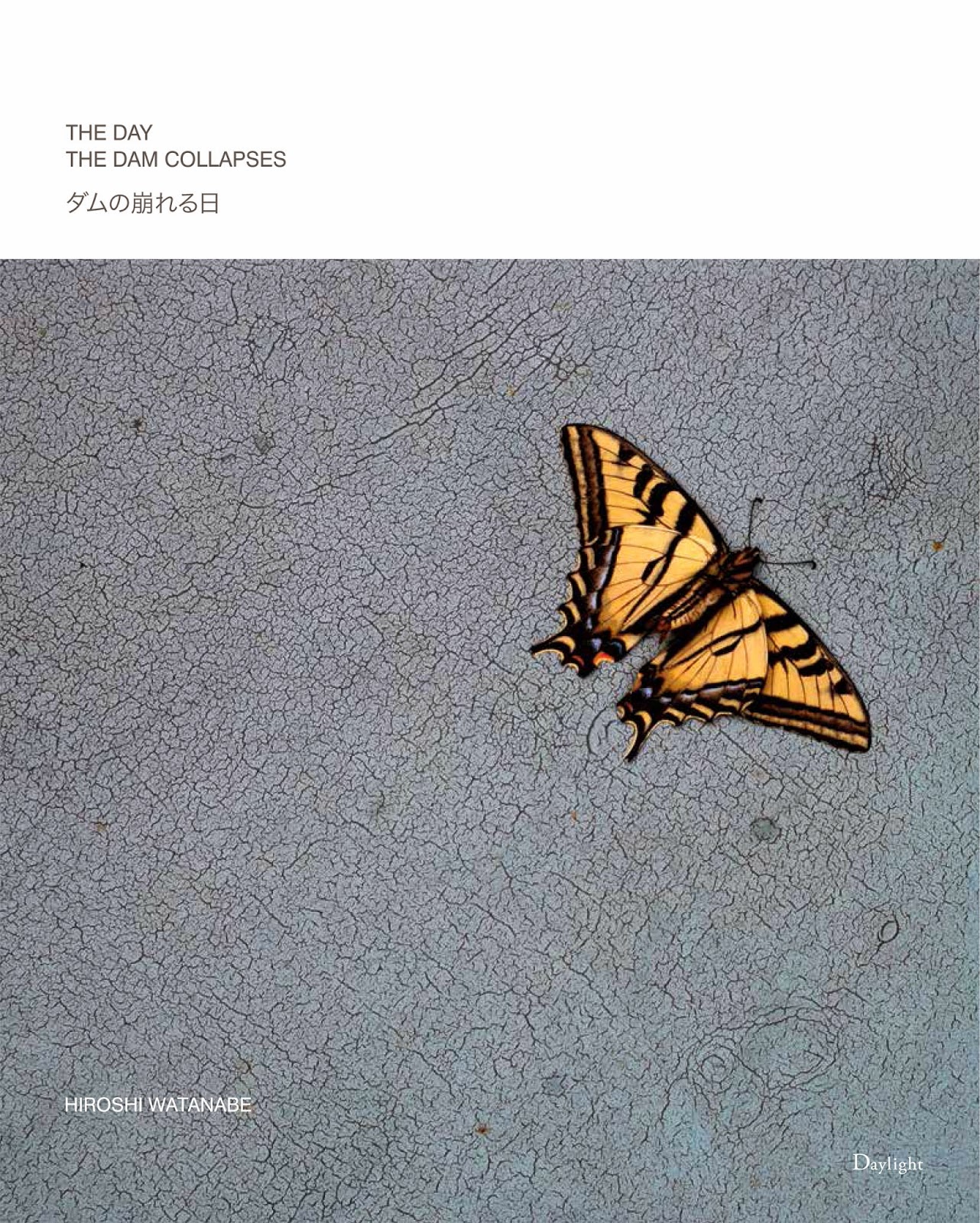
A LETTER TO HIROSHI WATANABE about his new book "The Day The Dam Collapses"

“The Day The Dam Collapses”
Daylight Books, 2014 © Hiroshi Watanabe

Dear Hiroshi,

I received your beautiful book, "The Day The Dam Collapses." I'm moved by both the images and the text. Actually I'm floored by the text. I relate to it in every way. You have put into words what everyone ignores each day while trying to control their lives and the lives of others around them. It is beyond Zen, even beyond Dharma taunting the principles of cosmic order.

I’ve always been drawn to your work beginning with your book, Findings. Then I discovered your theatrical images of traditional Noh Masks of the Naito Clan, Ena Bunraku puppets, Kabuki Players (I'm crazy about Marina Ema and Kazusa Ito), and later, Suo Sarumawashi, the "Monkey Dancing" portraits. You took a different turn in your series "Love Point,” photographing artificial Japanese Sex Dolls as models, along with almost identical live models. 

And now, the images in your new book balance somewhere between the real world and images pulled to form a single kigo. What is meant to be your point of view in this work?

Hiroshi Watanabe: I have been struggling to write my thoughts on the topic. Writing is always hard for me, but this time is harder. I am not sure if I put words together correctly.

If I have to say succinctly what my point of view is in this book, it will be simply, “there is no point.” I don't know what the truth is for sure, and you probably don't know it for sure, either. But I am thinking about it, and thus I am curious. That is why I keep looking and I keep photographing. For me, fact/reality comes first and my point of view later. This approach of mine is probably the opposite of most artists'. Most artists start with ideas, convictions, or sometimes by divine afflatus, to create something. They have the talent and they have the intelligence; they have the goals and they lead others to the artists' visions. They use art to convince others of their points of views. But I sometimes wonder--isn't reality (things happening outside) much more surprising and more creative than one can conjure up in his/her mind? Isn't the outside world more interesting and intriguing than their closed "originality"?

EA: What came first; your text, or your images?

HW: In my work, images always come first. I photograph what I am intrigued by--things that puzzle me and make me curious. Then I gather what I photographed and start thinking about the images--why I photographed them--why they are important to me, and so on..... then I edit them and put together a body of work. Only after that, I start working on text. It is always a struggle for me and I do it only to the extent that is necessary.

EA: What is your "artist statement" for this work?

HW: Here is a small section of the text from the book:
 
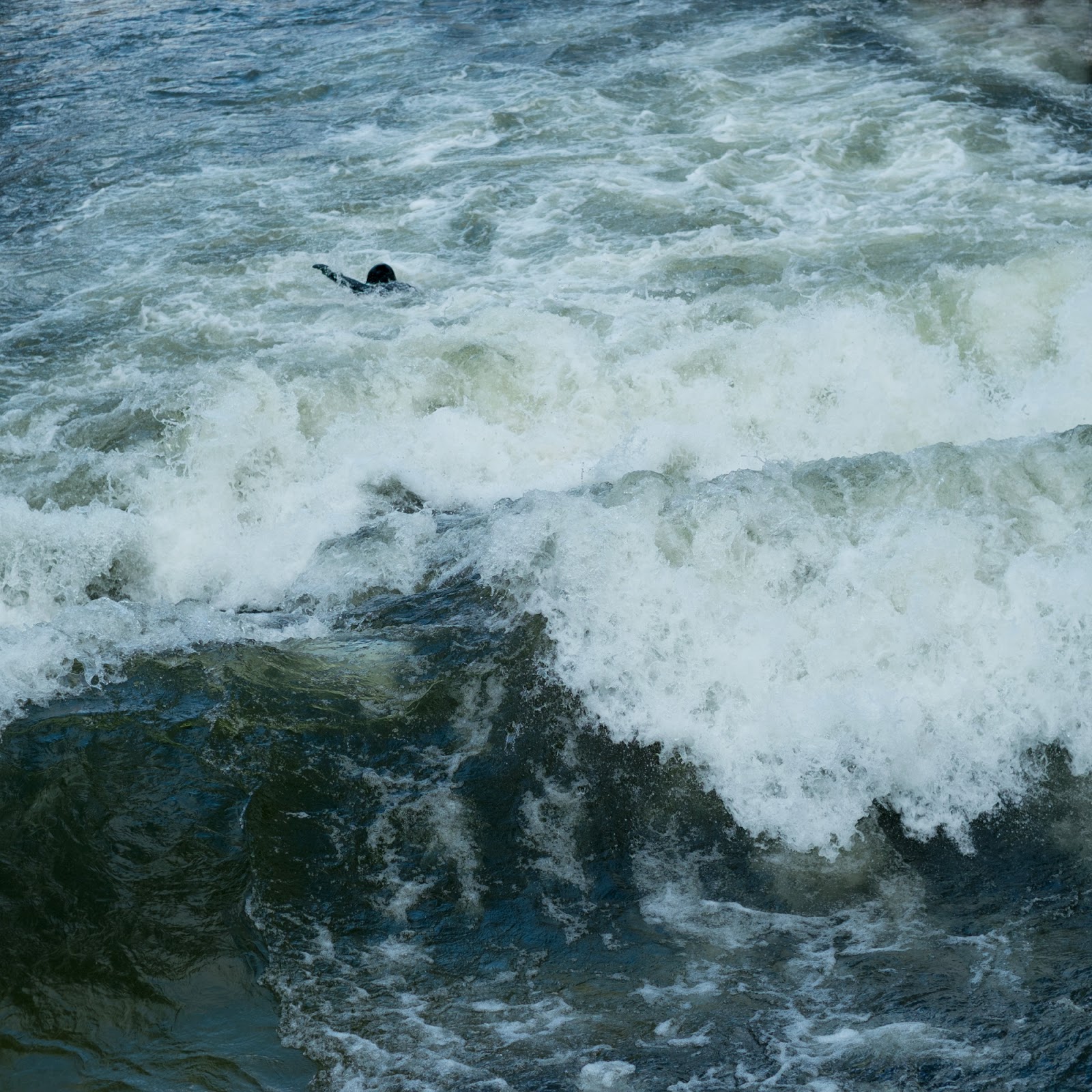
Disaster movies, like the ones with infernos, big earthquakes, or the arrival of aliens, often begin with depictions of normal daily life. For instance, we watch a mother trying to wake up a child, who resists getting up but then runs to school without having breakfast, while the mother shakes her head as her husband ignores the whole episode with his face buried in the newspaper. These mundane scenes are usually avoided in other types of movies, but they bear importance in disaster movies. The viewers know that what they are watching is a disaster movie, and so they sense these mundane scenes are in fact preludes to the terrible and unusual thing that will happen to the people on the screen.
What is important here is the fact that while the audience anticipates it, the movie characters do not know they may be involved in a huge, horrible disaster. The audience is in a sense like prophets looking down from above the clouds on the people who are living peacefully only because they are not aware of what is about to happen.
The truth is, we are all living like the characters in a disaster movie. We know we may some day face a disaster or a terrible event, but we keep living calmly because we do not know exactly what might occur and when it would be....”

“...someday I will be swallowed by the rush of the water from the broken dam and die happily, without knowing the true meaning of my life.” 

–Watanabe, Hiroshi. The Day the Dam Collapses. Daylight Books, Fall, 2014

EA: Have your children influenced your observations in your life?

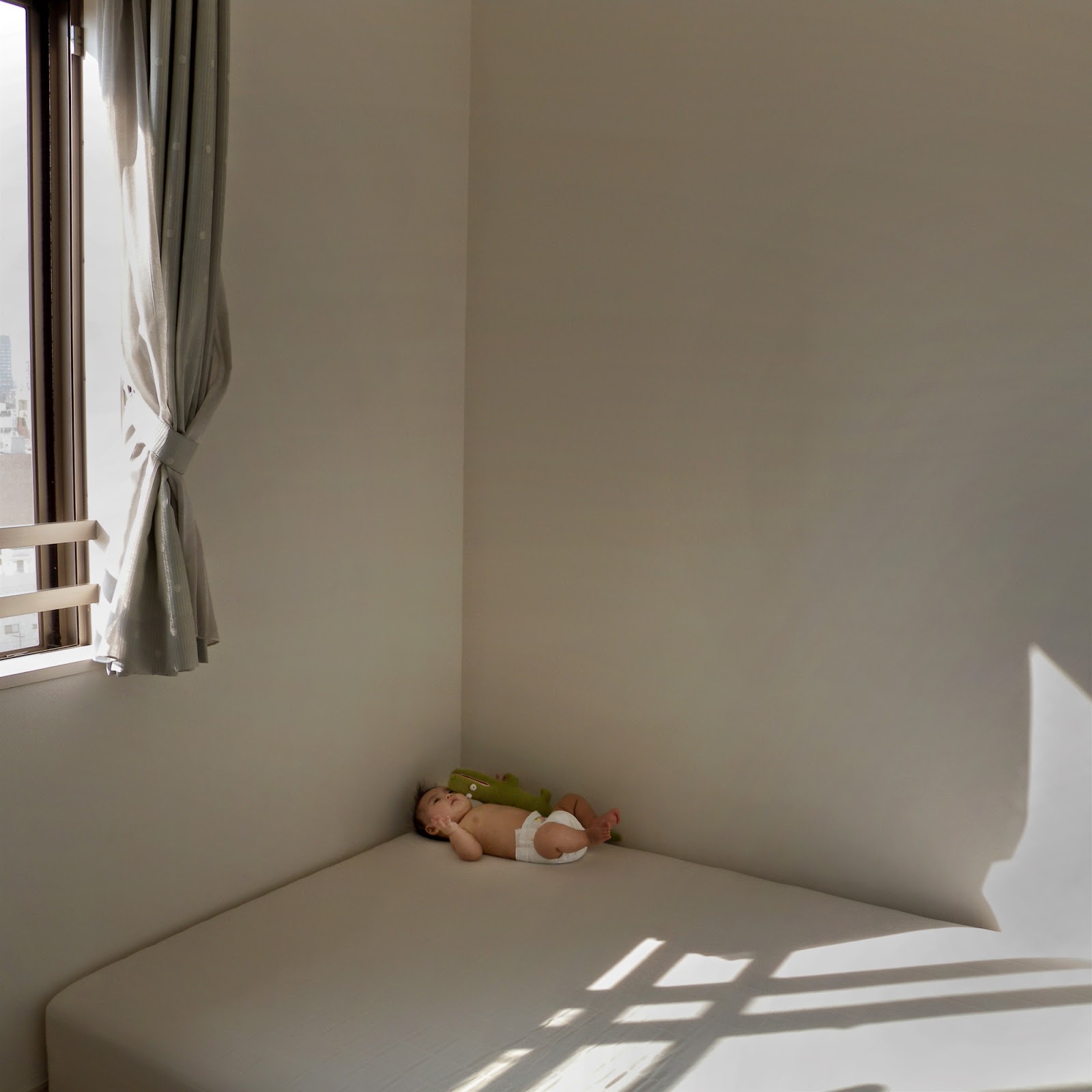
HW: I am almost hesitant to say this because it is such a cliché, but it is true that children teach parents much more than parents do children. Children are curious about everything around them and they see small details that we don't see. This morning, my son stopped on the way to school, squatted down, and kept staring at a half-dried dying worm on the sidewalk until I told him that we had to go. I would never have noticed it if he didn't make me stop and look. This sort of things happens all the time. In my book, there are many small lives dead or dying. I think I started noticing them because he opened my eyes.

EA: How did this book - as a whole - come about?

HW: Initially I did not mean to start this body of work. After my son was born 6 years ago, I could not carry my usual camera, a Hasselblad.  Instead, I had to carry the baby along with diapers and bottles when we went out. I was also asked to take family pictures. So, I started to carry a small digital camera. And I stopped looking around for some time. But then I started to see things and I could not resist to photograph them.  So, I used what I had--a small digital camera to record what I saw. For five years, I took pictures of things, without much intention, that I could not ignore.  I saw and photographed many small lives, dead or dying.  Later I found these images on my computer in between my happy pictures of my happy life. I gathered them and I started to think why I took those pictures. That was how it came about.

EA: You once told me over the phone when I worked at photo-eye Gallery that you were either inspired by or influenced by Richard Avedon's photographs. 

HW: I remember talking about Richard Avedon with you. I’m not exaggerating if I say he is the biggest reason I got into photography. When I was in high school I saw the movie "Blow up" by Michelangelo Antonioni. The photographer in that movie was supposed to be modeled after David Bailey. I was young and I thought it was "cool" to be a fashion photographer. With that reason and with my way of avoiding the rigor of studying, I told my parents that I wanted to study photography in a university in Tokyo.

Richard Avedon was the most famous and coolest fashion photographer at that time, and I dreamed to be someone like him. That is why I came to U.S. (although I went to L.A. instead of N.Y.). Years passed and I happened to be in N.Y. around the year 2000 when the Whitney Museum was doing a big exhibition of Richard Avedon's work. There I saw his portrait work very closely and was amazed by the impact of those photographs. For the first time I felt like I was facing and staring at those famous people in person, as if I was just an inch away. Skin, wrinkles, eyeballs, hair, and expressions were there to see.

Strangely we always try not to see people's faces much when we stand in front of them. It is not nice to stare at people. That is what we were taught. So, being able to stare at faces for a long time was a big surprise for me. With photography we can do that. Photography helps us to find, look, and study.

EA: Hiroshi, once again it was great talking with you. Thank you for your time. 

All the best, Elizabeth.

 Photograph © Hiroshi Watanabe

 Photograph © Hiroshi Watanabe
 
 Photograph © Hiroshi Watanabe

Photograph © Hiroshi Watanabe

  The Day the Dam Collapses by Hiroshi Watanabe

Daylight Books / Tosei-sha, Japan


Photograph © Hiroshi Watanabe

Photograph © Hiroshi Watanabe

Photograph © Hiroshi Watanabe

The Day the Dam Collapses, By Hiroshi Watanabe
Daylight Books, 2014. 88 pp., 66 color illustrations, 7½x9½"
Published in conjunction with Tosei-sha Publishing Co., Japan


7.01.2014

SEAN PERRY: Critical Mass 2014

 "Surfland" photolucida, 2009
08.07.04 #1 Abbey
Photograph © Joni Sternbach

"Findings" photolucida, 2005
White Terns, Midway Atoll, 2000 
Photograph © Hiroshi Watanabe

On the Wonder of Asymmetry, Part One

I am quite fond of the phrase asymmetric opportunity – parlance divined from a curious fascination with the renegade spirits who define finance. I am particularly inspired by the adroit Paul Tudor Jones, to look for and capitalize upon these succulent rarities whenever one can.

Critical Mass is part of photolucida, an outstandingly run arts nonprofit based in Portland, Oregon. It's directed by the lovely Laura Moya and has a fantastic board and group of contributors. I will save the photolucida reviews for another time, today I want to tell you about Critical Mass.

You submit a 10 image portfolio with associated information to a pre-screening review committee of 25 jurors. They select 200 of the best portfolios and that is then sent to over 200 reviewers/jurors. Yes, 200! From the curated 200, the Top 50 are announced and awards are selected including a monograph. I have a sweet (and scarce) collection of titles from past winners, including Camille Seaman, Joni Sternbach and Hiroshi Watanabe. Another inspired detail, when you participate you receive a copy of their book even if you don't make the Top 50.

"The Last Iceberg" photolucida, 2006
Stranded Iceberg I, Cape Bird, Antarctica 2006
Photograph © Camille Seaman

I encourage the perusal of outstanding Reviewers, even if you feel your project is not yet ripe to apply. The Picture Review alumni use these calls as a little black book – it is a great way to know who does what, where and prepare for a time when perhaps you are ready.

My past submissions proved helpful in many ways, including tangible benefits to my career path and relationships. Also the important practice of presenting new work. I would love to win the book prize (of course!) but in truth, that's not the reason for doing this.

Potentially 225+ legit reviews of your work for $75.00. If you make the top 200, you have to pony-up to move forward. I believe $200.00, which works out to $1.22 per review/contact.

So beautifully asymmetric. You will find no better example in photography calls today asking the risk of little, in exchange for generous passage and potential. July 16th is the deadline to enter, I wish you all luck and triumph.
Registration for Critical Mass 2014 is open until July 16th, 2014
Sean Perry Photographs

12.29.2011

HAPPY NEW YEAR: From Around The World!!!

Paris in December, Eiffel Tower, 2011

Bon Noel from Paris

Happy New Year!!! On the Spanish Steps, Rome, 2011
Photograph © Tod Papageorge

Merry, Merry!!! Santa in Venice, California, 2011
Photograph © Tod Papageorge

Christmas Day. Khyongla Rato Rinpoche, New Delhi, 2011
Photograph © Nicholas Vreeland

Christmas Morning, 2011. First Light over the Rincon Mountains, Tucson
Photograph © Mary Virginia Swanson


Happy Dreams For The Future
Deer Carved by Tokushige, Heart Mountain, Wyoming, 2011
Photograph ©Hiroshi Watanabe

Best wishes to friends near and far,
and hope that your holiday season is filled with joy!


9.11.2011

HIROSHI WATANABE: 9/11 Remembrance

Ellis Island 2, New York  
Photograph donated by Hiroshi Watanabe


Contributing Artists: Bob Dylan, Pink Floyd, John Legend, Alanis Morissette, Dido, A. R. Rahman, Johnny Cash, Simon & Garfunkel, John Lennon, Jem, Vusi Mahlasela, Dave Matthews, Tim Reynolds, Stevie Wonder, Eva Cassidy, Cindy Lauper, Sarah McLachlan, Tori Amos, Nanci Griffith, Leonard Bernstein, New York Philharmonic, Suzzy & Maggie Roche, Patty Griffin, Nina Simone. 100% of profits go to the 9/11 Memorial. Available on iTunes, AmazonMP3 www.tenyearsonalbum.com (album link no longer seems to be worrying)

2.11.2011

HIROSHI WATANABE: Love Point

Mariko 2
Photograph (c) Hiroshi Watanabe /All Rights Reserved


Japanese Edition "Love Point" (Tosei, 2010)


 La Lettre de la Photographie 2.11.2011
(Sorry, this link no longer exists)

"I took the photograph of a bar, Love Point, a few years earlier in Japan. I liked the sign and its design. I used it on the cover in order to confuse the readers. When the show opened in Japan, a newspaper article appeared saying that the show is about a real place in Japan where men play with real women and dolls. For me, the work is a kind of mind game. I hope I was able to intrigue."– Hiroshi Watanabe

+ + +

Japanese-born, California based photographer, Hiroshi Watanabe, has become an important force in photography over the past several years, with a growing list of monographs, artist's books, exhibitions and awards to his credit. He's known for his beautiful theatrical portraits of traditional Noh Masks of the Naito Clan and Kabuki Players (Hiroshi Watanabe, La Lettre de la Photographie, Jan 17, 2011)


La Lettre de la Photographie 1.17.2011
(Sorry, this link no longer exists) 

....though here he has taken a slightly different turn, photographing artificial Japanese Sex Dolls as models, along with almost identical live models. The portraits are titled out of fictional characters in an accompanying short story by novelist Richard Curtis Hauschild and all reside in a fictional place, Love Point.

"The dolls are very expensive sex dolls (about $5,000). They are human size with real joint movements, soft skin, and weigh just like a woman. As in US and Europe, there are people in Japan who live and sleep with these dolls in lieu of wife or girlfriend. US dolls are more realistic in a way, but Japanese dolls are cuter and adorable (my opinion)."

"After I photographed the dolls, I photographed real human models dressed similarly. I wanted to puzzle and confuse what is real and what is not. Of course, one can tell the difference once he/she knows there are both. I could have made them more same and thus indistinguishable if I manipulated the images digitally, buytI kept them as they are on the film. I wanted to raise a question about perfectly (and easily) manipulated digital images that we see now everywhere."

Love Point” was a collaboration of many. Hiroo Okawa of 4woods created the dolls which gave Watanabe's photographs their mysterious charm, along with the work of make-up artist, Kyoko Owada, stylist Hiromi Chiba, and models, Mariko Masu and Hiroko Sato. Richard Curtis Hauschild, “Bulldog”, wrote a strikingly original short story with the inspiration he received after looking at Hiroshi Watanabe's photographs. Kunihiro Takahashi of Toseisha belief in the work prompted an “I will publish it” response on the spot when shown the photographs, with book design by Satsuki Ishikawa. And more recently, Chris Pichler of Nazraeli Press, published the U.S. version, One Picture Book #66: Love Point (Nazraeli Press, 2011). – Elizabeth Avedon, La Lettre de la Photographie

+ + +


9.16.2009

HIROSHI WATANABE: Kabuki Players

  Marina Ema & Kazusa Ito, Matsuo KabukiPhotograph (c) 2003 Hiroshi Watanabe

Chikako Suga, Matsuo KabukiPhotograph (c) 2003 Hiroshi Watanabe

 Maiko Takaku, Matsuo Kabuki
Photograph (c) 2003 Hiroshi Watanabe

Rikuto Tada, Matsuo Kabuki
Photograph (c) 2003 Hiroshi Watanabe

Update: 2015

HIROSHI WATANABE  

+  +  +
 
photo-eye Gallery
Santa Fe

+  +  +
 
HIROSHI WATANABE
September 11 - October 31, 2009
CATHERINE EDELMAN GALLERY, CHICAGO
Hiroshi Watanabe Books + Hiroshi Watanabe Website

3.10.2009

HIROSHI WATANABE

Coliseo Gallo de Oro 2. (c) Hiroshi Watanabe

"A current that underlies my work is the concept of preservation. I make every effort to be a faithful visual recorder of the world around me, a world in flux that, at very least in my mind, deserves preservation, and that I constantly seek to expand"

HIROSHI WATANABE is a California-based Japanese photographer. Born in Sapporo, Watanabe graduated from Nihon University in photography in 1975 and moved to Los Angeles, where he worked producing television commercials. He obtained an MBA from UCLA in 1993, but two years later his earlier interest in photography revived; from 2000 he has worked full time at photography.


Watanabe's first published book was I See Angels Every Day, monochrome portraits of the patients and other scenes within San Lázaro psychiatric hospital in Quito, Ecuador. This won the 2007 Photo City Sagamihara award for Japanese professional photographers. In 2007 Watanabe won a Critical Mass award from Photolucida that allowed publication of his monograph Findings.


Hiroshi Watanabe is One of 8 winners in the current Hearst 8 X 10 Photography Biennial.
8 X 10
Exhibition : April 1-Sept. 2009 The Alexey Brodovitch and Hearst Gallery, Hearst Tower Galleries, 300 West 57th Street, NY, NY www.hearst8x10.com


Hiroshi Watanabe's photograph Vietnam War Memorial, Washington DC is included in George Eastman House Exhibition Seeing Ourselves through 2010. Podcast by George Eastman House: “SEEING OURSELVES”


Hiroshi Watanabe's Upcoming Exhibitions

June 18 –September 05, 2009 “Hot Fun in the Summertime” (Group Show)Bonni Benrubi Gallery 41 E. 57th Street 13th Floor, New York, NY 10022

July 1 – December 31, 2009 “Ideology in Paradise” Friends' Center, Angkor Hospital for Children, Siem Reap, Cambodia. Angkor Hospital for Children sponsored by Friends Without A Border is a Pediatric Hospital providing free treatment and care to the children in the Siem Reap area. Please donate to the Angkor Hospital for Children.

September 5 – October 28, 2009 "American Leitmotiv" (b&w photographs of the US) AD-Galerie, route de la Gare,1, 1272 Genolier, VD, Switzerland

Web: www.hiroshiwatanabe.com