Showing posts with label Photography Book. Show all posts

1.02.2025

Robert Frank in Dialogue : Life Dances On - Best Books 2024

Life Dances On : Robert Frank in Dialogue

"An in-depth exploration of the last six decades of work from the iconic photographer and filmmaker, with a special focus on his ceaseless experimentation and artistic collaborations"

"Having completed the selection of images for his landmark photobook The Americans (1958), Frank, ever the restless artist, embarked on a path of creative exploration that lasted six decades, until his death in 2019. Across mediums, in photography, film, video, and books, his distinctly personal work reckoned with the death of loved ones and the passage of time. In collaborations with writers, musicians, publishers, and other artists, he also reflected on his role in a community of artists and neighbors, both in New York City and Cape Breton, Nova Scotia, where he and his wife, the artist June Leaf, moved in 1970." 

"Life Dances On: Robert Frank in Dialogue, the first solo exhibition of Frank’s work at The Museum of Modern Art, presented on the occasion of Frank’s centennial, asks us to look beyond the role in which Frank is typically cast—as an observant outsider turning his lens on his adopted country—and see him as a deeply reflective artist who understood that meaning is often made out of our relationships with others." – text courtesy of MoMA

Edited by Lucy Gallun. With contributions by Kaitlin Booher and Sarah Greenough. 192 pp.; 150 illus. 
 

11.25.2019

JONATHAN BLAUSTEIN: Extinction Party Kickstarter

 © Jonathan Blaustein

 © Jonathan Blaustein

 © Jonathan Blaustein

 © Jonathan Blaustein

 © Jonathan Blaustein

© Jonathan Blaustein
 
Images and text by Jonathan Blaustein
Published by Yoffy Press, with an essay by Kevin Kwan
A limited edition photo book about over-consumption
and its impact on the planet

Photographer, writer and educator, Jonathan Blaustein, is asking for your support to help publish his new limited edition photography book that is about to go into production with Yoffy Press in Atlanta.
Check out Jonathan's KICKSTARTER and View his Video for full details on how to support this project by purchasing a book and/or a limited edition print (images above) in the next 11 days. 
Extinction Party
www.kickstarter.com

My 2014 Interview on L'Oeil de la Photographie / The Eye of Photography with Jonathan Blaustein about this project in it's earlier stage just before an exhibition of this work opened at The Harwood Museum of Art in Taos, New Mexico:

The Eye of Photography
Jonathan Blaustein Talks To Elizabeth Avedon

“I’ve lived in cities on both coasts, and have found that the man-made landscape leads people to over-consider the power of humanity…. When you’re staring at skyscrapers all day, and traveling via underground train or high speed elevator, it’s easy to overestimate our capabilities.”– Jonathan Blaustein

Jonathan Blaustein is an artist, writer, and educator based in Taos, New Mexico. His photographs have been exhibited widely in the US, and reside in several important collections, including the Library of Congress, the Brooklyn Museum, and the Museum of Fine Arts, Houston. He also writes about photography for the New York Times Lens blog and APhotoEditor.com, and has taught at the University of New Mexico-Taos for many years.

His series, “The Value of a Dollar,” was published by the New York Times in 2010, and subsequently went viral on the Internet. Ultimately, the conceptual series was seen by millions of people around the world, creating dialogue about the manner in which food represents deeper issues of wealth, class, power and health.

Opening February 22, Blaustein‘s photographs will be part of a three person contemporary art exhibition, “The Mindless Consumption of Animals,” at the Harwood Museum of Art in Taos, New Mexico.
    
I spoke with Jonathan recently about his work and his upcoming exhibition:
  
Elizabeth Avedon: We first met several years ago during CENTER’s Review Santa Fe, while you were working on what eventually became your very successful series, “The Value of a Dollar.” Please explain your works point of view.
   
Jonathan Blaustein:
My point of view is informed by my background and my experiences, like anyone else. “The Value of a Dollar” was a project that was born out of my obsession with food, many years in the restaurant business, my conceptual art training, and my economics education.

The Great Recession was imminent, as I was shooting the project in early 2008, and I began to pay more attention to how much healthy food costs. When I started buying less fruit, berries in particular, because my income was dropping, I felt that it was something worth exploring.

Furthermore, where I live in the American West, there are semi-trucks and billboards everywhere, showing these lacquered up, shiny Fast Food hamburgers. Everywhere, we see artificial visions of what we eat. And that visual language is a huge driver for America’s obesity epidemic.

Eventually, I got the idea to go shopping for food, as a part of my artistic practice. I’d buy things, based upon their aesthetic and symbolic potential, and then measure out $1 of each item, before photographing it on my stark studio table. I wanted to make up my own visual language that examined the incredibly complex underpinning of the global economy, via a simple and clean image style.

I photographed everything without any artificial lighting, packaging, or styling, so that the food items could stand alone and speak for themselves.

EA: And you followed this series with “MINE”?

JB:
Sort of. I actually spent a year and half working on a cultural landscape project in Southern Colorado. But I had a hard time making the pictures what I wanted them to be, so I put that to the side.

In 2011, I got the idea for “MINE,” which felt like a proper follow up, once “The Value of a Dollar” had been so well received. Like a lot of artists, I wanted each project to make sense in an evolving continuum.

After commodifying my food, I wanted to take a look at another primary element of human existence: territory. I actually live on 3.5 acres of land at the base of the Rocky Mountains, and it’s filled with all sorts of nominally worthless natural resources. Rocks, trees, grass, flowers, snow, ice, and, of course, animals.

The concept of private property gives me the right to do whatever I choose with that which is “MINE.” So I decided to turn those natural artifacts into art, in my studio, and then photograph them. In that way, the process was much like “The Value of a Dollar”. I went shopping for free nature on my land, rather than food in a grocery store.
   
EA: How did that work lead to your latest project “The Mindless Consumption of Animals.”

JB:
Well, I put a lot of effort into turning “MINE” into a solo show in Santa Fe over the course of 2012. And then, once it opened, I kind of abandoned my studio. I write from home, and teach at the University in town, so I began to spend less and less time in my photo studio after the massive production of the “MINE” exhibit.

Unfortunately, my studio was pretty expensive, for a small town. So eventually, I realized I needed to give it up. It was costing too much, and I’ve got two young children. It seemed like my priorities needed a re-ordering.

The studio was filled with crap. Piles and piles of waste paper, and worthless objects that I’d accrued over 8 years time. Facing it all, it seemed so daunting.

Then it struck me that I could photograph my junk, and imbue it with value through the artistic process. So it connected perfectly with the two previous projects, which were based upon presenting my own resources, and using them to make grander statements about life in the 21st Century.

Since I was excited about mining the trash for goodies to photograph, it made the process of culling through the clutter kind of a fun game. Each day, I forced myself to take at least one full trash bag out of there, so the piles gradually shrunk.

And then I was left with a blank space, and a trove of images to cull through.
   
EA: You studied Economics and History at Duke University. What led you into Photography?
    
JB:
In retrospect, I got a decent education at Duke, but I was miserable the whole time. Eventually, I learned I had enough credits to graduate early, so I came to hang out here in Taos, where my folks had moved. During that semester, I began to explore my creativity for the first time, and felt like there was something out there for me.

After college, I worked on a couple of movie productions in New York, before deciding to move back here to the mountains. Just as I was leaving on a solo, five day, cross-country drive, I bought a few rolls of black and white film for a little point and shoot I owned, but never used.

It was just a random idea, and I still don’t exactly know where it came from. But I was hooked within minutes, and shot hundreds of images along the way. By the time I got to Texas, I jotted in a notebook that I wanted to be a photographer. That was it.

So I threw myself into it, and studied undergraduate at UNM in Albuquerque, before a stint in San Francisco. Then I went to Pratt in Brooklyn, where I got my MFA. It’s been 17 years since I picked up a camera, and I still can’t believe how it all turned out.
   
EA: What inspired you to move to New Mexico?

JB:
I was very fortunate growing up, in that my parents discovered Taos when I was still a child, and brought me here when I was 14. We came back once or twice a year, and then they built a house and moved here permanently, when I was still a teenager.

I loved it from the very beginning. I met my wife while I was in Albuquerque, and she was born and raised here. Her folks live here, as do mine, so it was a natural place to settle down and raise a family.

I’m glad I grew up in New Jersey, because the East Coast does impart a certain drive in most people. But since I came here at such a young age, it’s become home in a way that Jersey could never be. The sunshine and the landscape are most definitely addictive.

EA: Were you always so environmentally or economically concerned or has this developed since living on the land in New Mexico?

JB:
That’s a great question, Elizabeth. The answer is that my time here has informed the way I think about the manner in which humans interact with the planet. It’s inescapable, as I see a two million year old extinct volcano out one window, and the Sangre de Cristo Mountains out the other.

I’ve lived in cities on both coasts, and have found that the man-made landscape leads people to over-consider the power of humanity. It can’t be helped. When you’re staring at skyscrapers all day, and traveling via underground train or high speed elevator, it’s easy to overestimate our capabilities.

I definitely didn’t set out to make political work, or work with an environmental bent, but those themes crept in while I wasn’t looking. And then, when this exhibition opportunity arose, it gave me a chance to consider the deeper roots of my artistic practice.

EA: How did the upcoming exhibition come about?

JB:
I spend most of my time showing my work, and engaging with community outside of Taos, because our art scene is a little insular, and perhaps regional. But I struggle with that, as I’m a big believer in the power of community in general.

Early last year, the Harwood curator Jina Brenneman reached out, and said she wanted to get my work on the wall, to introduce it to Taos. It’s the best museum north of Santa Fe, by a long margin, so I was very excited. They have an amazing collection of Agnes Martin’s work, and it draws a good crowd.

Once she told me the premise of the show, and the title, “Art for a Silent Planet,” it really forced me to think about what I’ve been doing. I read the title as a metaphor for the Lorax: we speak for the trees [Dr. Seuss — ‘I am the Lorax. I speak for the trees for the trees have no tongues.’ ]

So I decided to find a through line in my work from the last six years, and lo and behold, the environmental themes were right there. As Jina pushed me to try do say something unique, I thought hard about how to best present what I’d been working on.

Eventually, I decided that as the new work was about “repurposing” my trash, I’d repurpose my older work alongside it. There will be a grid of four meat pictures from “The Value of a Dollar,” for instance, but for this show, it’s been retitled as a single piece called “Cow farts cause Global Warming.”

Subscribe to TheEyeofPhotography.com
https://loeildelaphotographie.com/en/jonathan-blaustein-talks-to-elizabeth-avedon/

http://harwoodmuseum.org/exhibitions/view/129
http://jonathanblaustein.com


Help Support this Project
Buy a gorgeous print from the images above

 Extinction Party : Jonathan Blaustein
Yoffy Press


6.09.2018

SHERI LYNN BEHR: BeSeeingYou at The Griffin Museum of Photography

Photography Without Permission
Photograph © Sheri Lynn Behr

Announcements
Photographs © Sheri Lynn Behr

"BeSeeingYou"
Sheri Lynn Behr's upcoming book!

BeSeeingYou
Sheri Lynn Behr
June 14 – July 15, 2018

Reception: June 14, 2018 7-8:30 PM
Gallery Talk: June 14, 2018 6:15 PM

The Griffin Museum of Photography
67 Shore Road , Winchester, Ma 

Sheri Lynn Behr’s work deals with photography without permission and our surveillance society. Her photographs have been widely exhibited, at spaces including the Amon Carter Museum of American Art, The Griffin Museum of Photography, and The Center for Fine Art Photography. They also appear in American, international and on-line publications, including Harper’s Magazine, Slate: Behold blog, People’s Photography (China), and The Boston Globe. In 2012 she received a Fellowship in Photography from the New Jersey State Council on the Arts. A shout out to Griffin Museum Director, Paula Tognarelli, always ahead of our time. And thanks to the Puffin Foundation for funding this exhibit.


3.25.2016

SUSAN S. BANK: Piercing The Darkness

Monograph Piercing The Darkness 
Photographs by Susan S. Bank

Photograph © Susan S. Bank

Photograph © Susan S. Bank

Photograph © Susan S. Bank

Piercing the Darkness 
Photographs by Susan S. Bank
Preface by Susan S. Bank
Essay Waiting for the Invisible by John T. Hill
Susan S. Bank

9.04.2015

PRESALE // FOSSILS OF LIGHT + TIME

 fossils of light + time
Bones, 25 Cooper Square, New York City © Sean Perry

 fossils of light + time
Murder of Birds #9 © Jason Paul Roberts

The Detroit Center For Contemporary Photography is proud to announce a presale for fossils of light + time, a limited edition photographic publication curated by Elizabeth Avedon. Black and white photographs were submitted reflecting the spirit of a beautiful and seductive quote by Daido Moriyama, "If you were to ask me to define a photograph in a few words, I would say it is “a fossil of light and time.” Selected artists include Hiroshi Watanabe, Sean Perry, David J. Carol, Susan May Tell, Jaime Permuth and many more. 

There are only 70 copies available for purchase so make sure to reserve yours today.  

fossils of light + time
ONLY 70 copies available!
$48 + shipping ($6 in US/ $12 for international)
Limited Edition of 250
Smyth Sewn
Perfect Bound
12" x 8.75"
50 pages
Foil Stamped Cover

Front Cover: Bones, 25 Cooper Square, New York City by Sean Perry
Back Cover: Murder of Birds #9 by Jason Paul Roberts
 
 Selected Artists
Hiroshi Watanabe, Susan May Tell, Sean Perry, David J. Carol, Jaime Permuth, Jason Florio, Samantha Geballe, Laurent Girard, Donna Rosser, Michael Kirchoff, Traer Scott, Alexandra Huddleston, Danielle Kelly, Michael Shapiro, Anna Agoston, William King, Kathryn Mussallem, Ima Mfon, Henny Gylfa, Francisco Diaz and Deb Young, Michael Magers, Lauren Orchowski, Michael Bach, Dante Guthrie, Ellie Ivanova, Roy Feldman, Ray Carns, Zoran Milosavljevic, Christian Blevins-Morrison, Mark Fisher, Paul Shelasky, Rolando Diaz, Katja Heinemann, Mike Callaghan, Jonas Yip, Marina Black, Yukari Chikura, Adrienne Norman and Jason Paul Roberts.

7.16.2015

MYLES LITTLE: Privilege in a Time of Global Inequality | Book + Documentary Exhibition

A man floats in the 57th-floor swimming pool of the Marina Bay Sands Hotel, with the skyline of the Singapore financial district behind him. 2013 Photograph: Paolo Woods; Gabriele Galimberti--INSTITUTE

'Opéra de Monte-Carlo, Monte Carlo, Monaco' 2009
Photograph © David Leventi

Pheasants are laid out on a hunter's pickup truck in the UK. 2011 
Photograph © Ben Quinton

'Paradise Now Nr. 18' 2008
Photograph © Peter Bialobrzeski

+  +  +

If you are concerned that the top 1% of the world owns 50% of all wealth, then this is the photo book for you!

+  +  +

Myles Little is an award-winning photo editor at TIME magazine with extensive experience in print, web and curation. He has produced documentary photography by Tomas van Houtryve and Peter van Agtmael; photo illustrations by Chris Buck and Alexander Crispin; portraits by Laura Pannack and Paolo Verzone; and still-lifes by Jamie Chung and Grant Cornett.

Outside of TIME, Little curated an exhibit of documentary photography about wealth inequality. After two years of work, it's traveling to 5 countries and counting (China, UAE, Nigeria, Bosnia and Wales). Included are some of the best photographers in the world, like Christopher Anderson, Nina Berman, Michael Light and David Chancellor. Nobel Prize-winning economist, Joseph Stiglitz, is writing an essay for the book; and Geoff Dyer, National Book Critics Circle Award-winning author, is also writing an essay. The 5 exhibitions are fully funded.


Recently, a major European publisher named Hatje Cantz has offered to make a book with the work. But, as is often the case with publishing these days, he will need to contribute part of the funding to cover the costs of production, so he launched a Kickstarter campaign to help make that happen. Read the facts about inequality; review the Rewards for your support; and read the extensive list of the best documentary photographers included here.


In exchange for your support, you will receive various rewards including two of my favorite images:

4x6" Postcard with
Jesse Chehak's 'Hollywood, California' printed on the front

'Harvard University' 2006 (only avail in 5x7")
Photograph © by Shane Lavalette

GLOBAL EXHIBITION SCHEDULE
Pingyao International Photography Festival, Pingyao, China, September 9-15, 2015 / East Wing Gallery, Dubai, UAE, September 25 - October 25, 2015 / LagosPhoto (Satellite Exhibit), Lagos, Nigeria, October 17 - November 21, 2015 / Fotografija Godine BIH Festival, Sarajevo, Bosnia and Herzegovina, January 29-31, 2016 / The Eye – International Photography Festival, Aberystwyth, Wales, September 30 - October 2, 2016

5.29.2015

SARAH MALAKOFF: Second Nature + Photolucida + The Photoville Fence

Untitled Interior (deer couch), 2010
Photograph @ Sarah Malakoff

Untitled Interior (telescopes), 2011
Photograph @ Sarah Malakoff

Untitled Interior (fur wall), 2012
Photograph @ Sarah Malakoff

“Sarah Malakoff’s large-format photographs of domestic interiors appear at once familiar and strange. In her exquisite and psychologically resonant images, the rooms become both a refuge from and a reinvention of the world outside. As Linda Benedict-Jones writes in her introduction to Malakoff's book "Second Nature" published by Charta, “.....we walk through rooms large and small where brightly patterned curtains and dark wood paneling take over, as canoes become coffee tables and living rooms accommodate tree trunks....Each space is carefully transcribed in the warm vocabulary of contemporary color photographs, creating an ensemble greater than the sum of its parts.” Boundaries between inside and outside, shelter and vulnerability, the real and the imagined all become blurred. Malakoff’s formally precise compositions set the stage for viewers to imagine the characters that reside within.” I was fortunate to meet Sarah Malakoff at the 2015 Photolucida Portfolio Review in Portland, Orego. You can view her work this summer in Brooklyn on Photoville's 2015 FENCE.

"Second Nature" by Sarah Malakoff 
(Publisher: Charta)


4.17.2015

MALCOLM LIGHTNER: MILE O' MUD Kickstarter Campaign

Mile O' Mud
Photographs (c) Malcolm Lightner


"I've been delighted by Malcolm Lightner's 'Mile O' Mud' series for several years now. His photographs capture the country culture surrounding Florida's Swamp Buggy races. I can almost hear the racing engines propelling the swamp buggies through the mud with a chorus of cicadas singing along the banks. These photographs bring out the southern roots in me – gators and pistols, mud wrestling and beauty pageants, Budweiser and BBQ – images full of my favorite rednecks and they are proud of it. Southern charm at its best."– Elizabeth Avedon


THE PROJECT: Before embarking on my “MILE O' MUD” project in October 2002, my encounters with the swamp buggy races consisted of a few abbreviated visits to the track as a child, with my mother, who was not interested in the races but in locating my father, who had gone missing for several days.

I began to photograph swamp buggy racing to pay homage to my family heritage and to document what I consider to be a rare slice of Americana. On my first visit to the track, I drove into the parking lot of the Florida Sports Park, heard the engines of the buggies roar, and witnessed the great plumes of water trailing behind the boat-dragster hybrids. I could feel the vibrations from the raw horsepower pound against my chest, and it almost took my breath away. I thought to myself that this was going to be fun! The races occur three weekends out of the year, and I managed to make the trip at least once a year from 2002 to 2013 except 2005, when the races were cancelled due to Hurricane Wilma.

In my own mind, this project felt like time travel. I experienced firsthand the people and culture that were a large part of my parents’ life that I never witnessed but that felt somehow defining. Initially, it was the buggies themselves that attracted me, though I soon began to discover endless narrative possibilities and connections among the drivers, spectators and enthusiasts. I unveiled family connections that I did not know existed and heard numerous stories about my father, who had the reputation of a hard worker in the plastering and construction community. He was an all-around tough guy, someone you would not want to mess with.

I came to understand Swamp Buggy Racing as a metaphor for life’s daily struggles and the innate drive to overcome obstacles against great odds while trying to maintain a sense of humor and grace. The races demonstrated to me the All-American desire to compete to win as well as the power of family and community.

MILE O' MUD BY MALCOLM LIGHTNER
KICKSTARTER 


Introduction by Padgett Powell and Essay by Malcolm Lightner. Clothbound Hardcover, 12.125 x 11.875 inches (landscape), 136 pages. Photographs: approx. 86 in color. PowerHouse Books: November 2016

KALPESH LATHIGRA: Lost in the Wilderness

Lost in the Wilderness
Photographs (c) Kalpesh Lathigra


As you drive across the midwest of America, one is in awe of the vast endless landscape. If the land could speak, it would be a poem of people who once roamed free but were broken by the greed of others. During the period of 1860 -1890, the Native American people were the victims of genocide.

The US Government at the time broke treaty after treaty with the various tribes. Their land was forcibly taken in what became known as the Indian Wars. The First Nations, from the Navajos, Cheyenne, Apache, Cherokee and Sioux were forced on to reservations where the quality of arable land was poor and the once numerous herds of buffalo had been decimated.

As a child I played Cowboys and Indians. I was told i had to be the Indian because my cultural heritage was from India. As children we don't question the games we play or the slow burn affect on our consciousness of what we absorb through popular culture, film, music, books and photography.

My work for a long time has focused on forgotten communities. On the insistence of a good friend I read Dee Brown's classic, Bury My Heart at Wounded Knee and Ian Frazier's On the Rez. Both books inspired me to visit Pine Ridge Reservation, the dictated home of the Oglala Lakota Sioux Nation. Across the Great Plains I felt a belonging I cannot describe in words. The land has a raw beauty where one becomes lost in the wilderness of the soul.

Over the years I made numerous visits to Pine Ridge and the Lakota welcomed me into their lives telling me stories of their past, present and their hopes for the future.

These photographs are a poem through the land. Each one has a story to tell.


2.08.2015

ALINE SMITHSON: And the Magenta Foundation Kickstarter Campaign!


Award winning photographer Aline Smithson generously promotes and supports the work of other photographers and photo professionals daily on her award winning journal, LENSCRATCH; as well as giving workshops at the Los Angeles Center of Photography and jurying exhibitions and portfolio reviews around the country. Now Smithson's first monograph, a twenty-year retrospective of her portrait work, Self and Others: Portrait as Autobiography, will be published by The Magenta Foundation this Fall.


"I have always felt that the act of creating a portrait is equally a reflection of the artist and the sitter. I tend to work with people I know--family, friends, and neighbors, so that the process is in fact, autobiographical.  I am not only telling their story, but also telling my own. I still shoot film and work for the most part, with a mid century Rolleiflex. I like the slowed down nature of shooting film and the sense of history and methodology it brings to my art making." – Aline Smithson


I am thrilled to announce the Kickstarter campaign created to raise funds for the publication of award-winning photographer Aline Smithson's first monograph, Self and Others: Portrait as Autobiography, by the Magenta Foundation in the Fall of 2015.

"This will be the first published monograph of Aline Smithson's portrait photographs spanning over twenty years. Self and Others: Portrait as Autobiography is an almost 20 year culmination of portrait photographs captured by award-winning photographer Aline Smithson. Beginning with her early forays into black and white work, produced as darkroom silver gelatin prints, she photographed the world around her considering the poignancy of childhood and the pathos of aging and relationships. The book continues with her hand painted photographs featuring her defining series, Arrangement in Green and Black: Portrait of the Photographer's Mother, where she combines humor and family to create a universal expression of motherhood. The book is completed by her color projects that revisit beauty, the essence of childhood, and an examination of created realities. Aline brings a background in painting and fashion to her images, but at the heart of her work is her ability to recognize the inner self of her subjects. The photographer considers all her portraits a reflection of herself and the stories she wants to tell, and in that way, she has created a visual language that is her own unique autobiography." –The Magenta Foundation


"Hello friends! I am so excited to announce my first monograph, Self and Others: Portrait as Autobiography, and share my Kickstarter campaign created to raise funds for publication. The book will be published by the Magenta Foundation in Fall of 2015. I could really use your support to make this book a reality." Watch the Kickstarter video here


Read about Aline Smithson's series, Arrangement in Green and Black: Portrait of the Photographer's Mother, here on L'Oeil de la Photography.

10.27.2014

CHRIS ANTHONY: Seas Without A Shore

Hippocampus 18
Photograph © Chris Anthony

Ladybird
Photograph © Chris Anthony

Hippocampus 17
Photograph © Chris Anthony

Annabel Lee
Photograph © Chris Anthony

Informed by the prose and imagery of Edgar Allen Poe, Chris Anthony’s “Seas Without A Shore” includes wet plate collodion prints along with color photographs. Part mystic, part conjurer, vaudeville ringmaster and antique portraitist, Chris Anthony is a rare artist. His ability to set both simple and elaborate stages creates elegant enigmas throughout his work that allow the viewer to witness something of a different reality while exploring themes of solitude, hope and survival.

Anthony was born in Sweden, now lives and works in Los Angeles. His work implements the wet plate collodion process beautifully along with using 150 year old lenses. His vision takes us to a selective and sophisticated level of image making with fictional narratives from the bizarre to the banal.

“Making the masks, and many of the props and costumes is a big part of the process and it helps me define this unique and demented little world I live and shoot in. The mysteries of the sea is certainly a big part of the subject matter in these pictures with color images of survivors braving waves and currents, perhaps the result of a future world where ocean tides will wash away the planet’s coastlines.”
Nov 15, 2014 – Jan 12, 2015
Seas Without A Shore
 Limited Edition Cover with Slipcase

 Seas Without A Shore
The Book

SEAS – CHECK OUT THE BOOK HERE

Thanks to SPOT PHOTO for text and images

9.25.2014

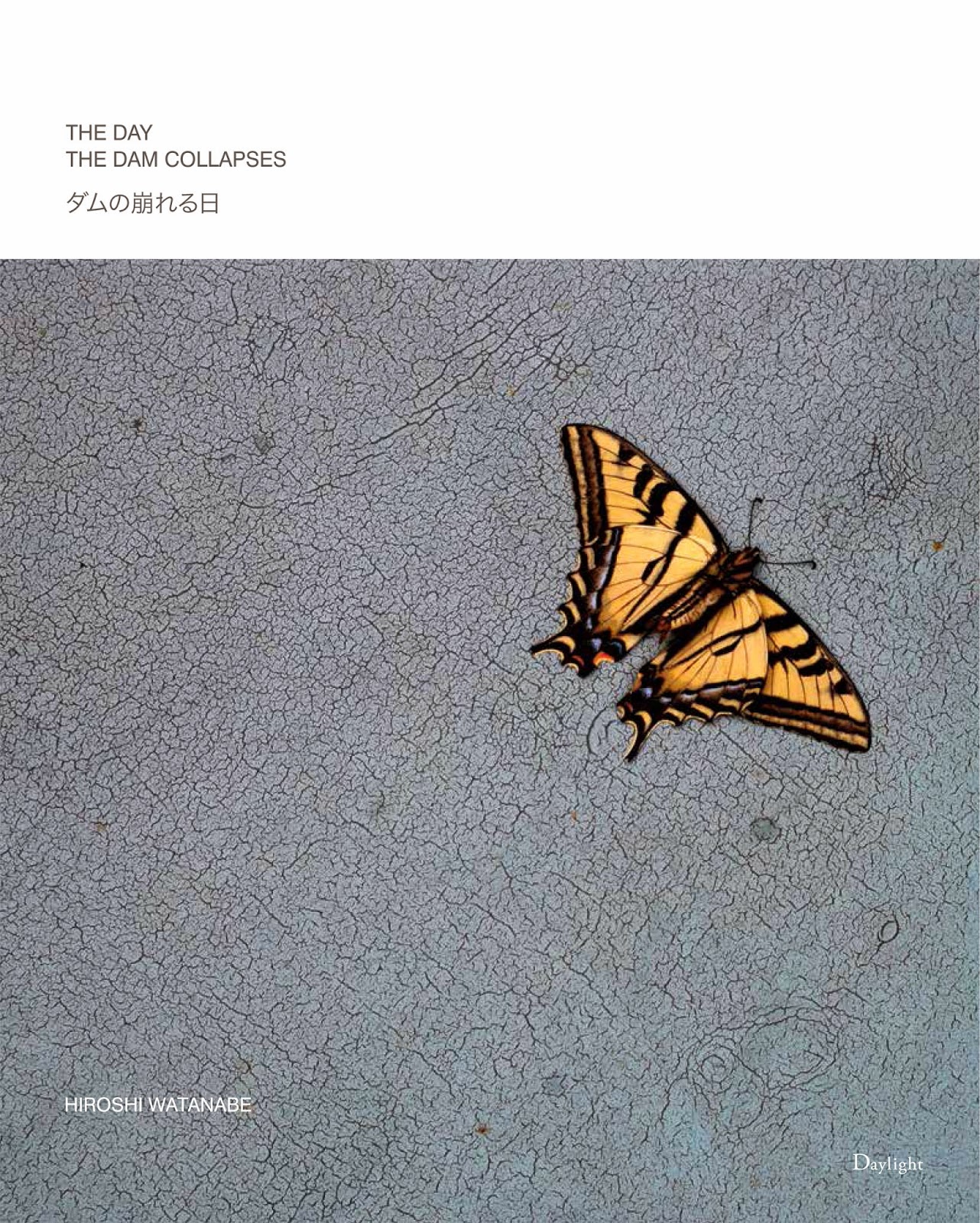
A LETTER TO HIROSHI WATANABE about his new book "The Day The Dam Collapses"

“The Day The Dam Collapses”
Daylight Books, 2014 © Hiroshi Watanabe

Dear Hiroshi,

I received your beautiful book, "The Day The Dam Collapses." I'm moved by both the images and the text. Actually I'm floored by the text. I relate to it in every way. You have put into words what everyone ignores each day while trying to control their lives and the lives of others around them. It is beyond Zen, even beyond Dharma taunting the principles of cosmic order.

I’ve always been drawn to your work beginning with your book, Findings. Then I discovered your theatrical images of traditional Noh Masks of the Naito Clan, Ena Bunraku puppets, Kabuki Players (I'm crazy about Marina Ema and Kazusa Ito), and later, Suo Sarumawashi, the "Monkey Dancing" portraits. You took a different turn in your series "Love Point,” photographing artificial Japanese Sex Dolls as models, along with almost identical live models. 

And now, the images in your new book balance somewhere between the real world and images pulled to form a single kigo. What is meant to be your point of view in this work?

Hiroshi Watanabe: I have been struggling to write my thoughts on the topic. Writing is always hard for me, but this time is harder. I am not sure if I put words together correctly.

If I have to say succinctly what my point of view is in this book, it will be simply, “there is no point.” I don't know what the truth is for sure, and you probably don't know it for sure, either. But I am thinking about it, and thus I am curious. That is why I keep looking and I keep photographing. For me, fact/reality comes first and my point of view later. This approach of mine is probably the opposite of most artists'. Most artists start with ideas, convictions, or sometimes by divine afflatus, to create something. They have the talent and they have the intelligence; they have the goals and they lead others to the artists' visions. They use art to convince others of their points of views. But I sometimes wonder--isn't reality (things happening outside) much more surprising and more creative than one can conjure up in his/her mind? Isn't the outside world more interesting and intriguing than their closed "originality"?

EA: What came first; your text, or your images?

HW: In my work, images always come first. I photograph what I am intrigued by--things that puzzle me and make me curious. Then I gather what I photographed and start thinking about the images--why I photographed them--why they are important to me, and so on..... then I edit them and put together a body of work. Only after that, I start working on text. It is always a struggle for me and I do it only to the extent that is necessary.

EA: What is your "artist statement" for this work?

HW: Here is a small section of the text from the book:
 
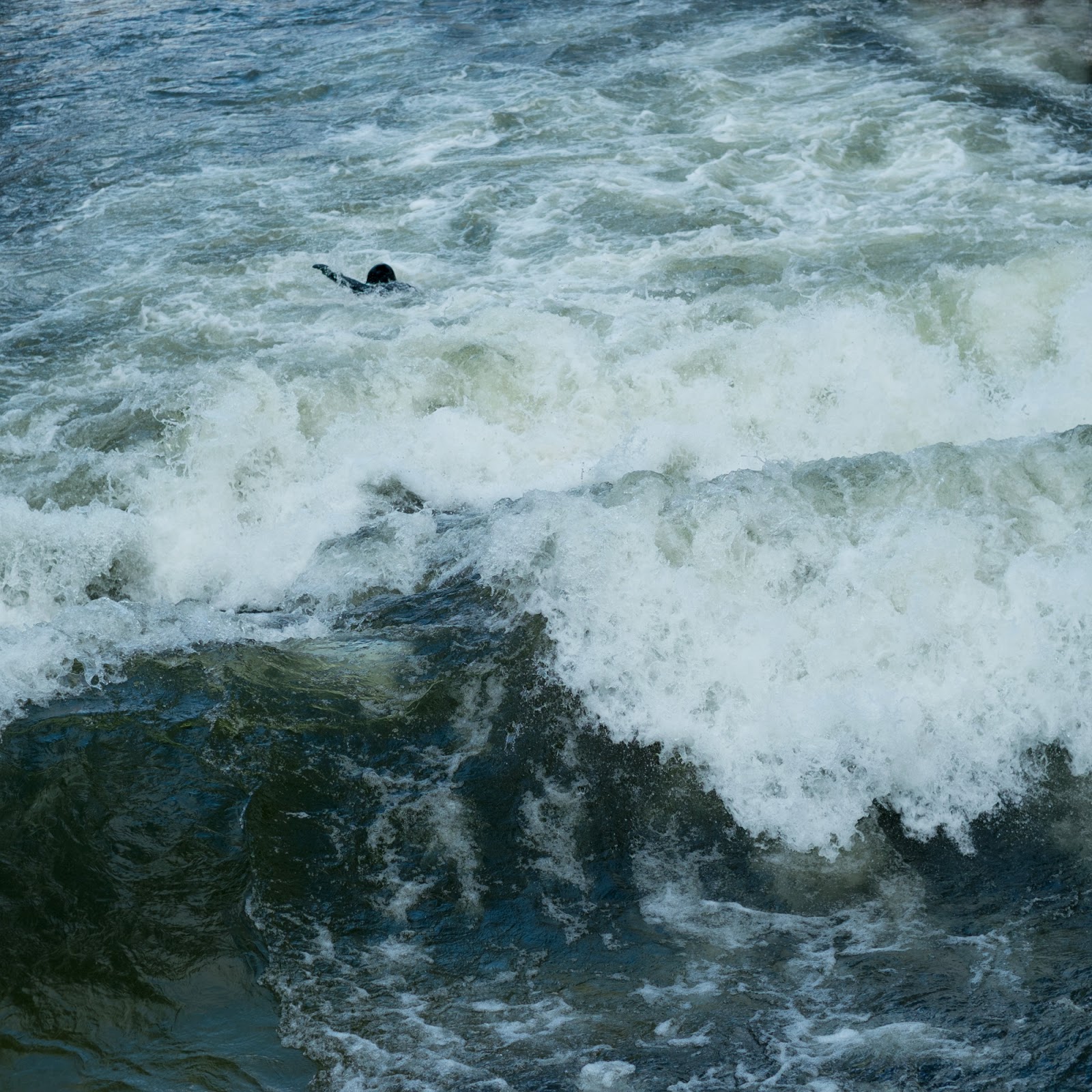
“Disaster movies, like the ones with infernos, big earthquakes, or the arrival of aliens, often begin with depictions of normal daily life. For instance, we watch a mother trying to wake up a child, who resists getting up but then runs to school without having breakfast, while the mother shakes her head as her husband ignores the whole episode with his face buried in the newspaper. These mundane scenes are usually avoided in other types of movies, but they bear importance in disaster movies. The viewers know that what they are watching is a disaster movie, and so they sense these mundane scenes are in fact preludes to the terrible and unusual thing that will happen to the people on the screen.
What is important here is the fact that while the audience anticipates it, the movie characters do not know they may be involved in a huge, horrible disaster. The audience is in a sense like prophets looking down from above the clouds on the people who are living peacefully only because they are not aware of what is about to happen.
The truth is, we are all living like the characters in a disaster movie. We know we may some day face a disaster or a terrible event, but we keep living calmly because we do not know exactly what might occur and when it would be....”

“...someday I will be swallowed by the rush of the water from the broken dam and die happily, without knowing the true meaning of my life.” 

–Watanabe, Hiroshi. The Day the Dam Collapses. Daylight Books, Fall, 2014

EA: Have your children influenced your observations in your life?

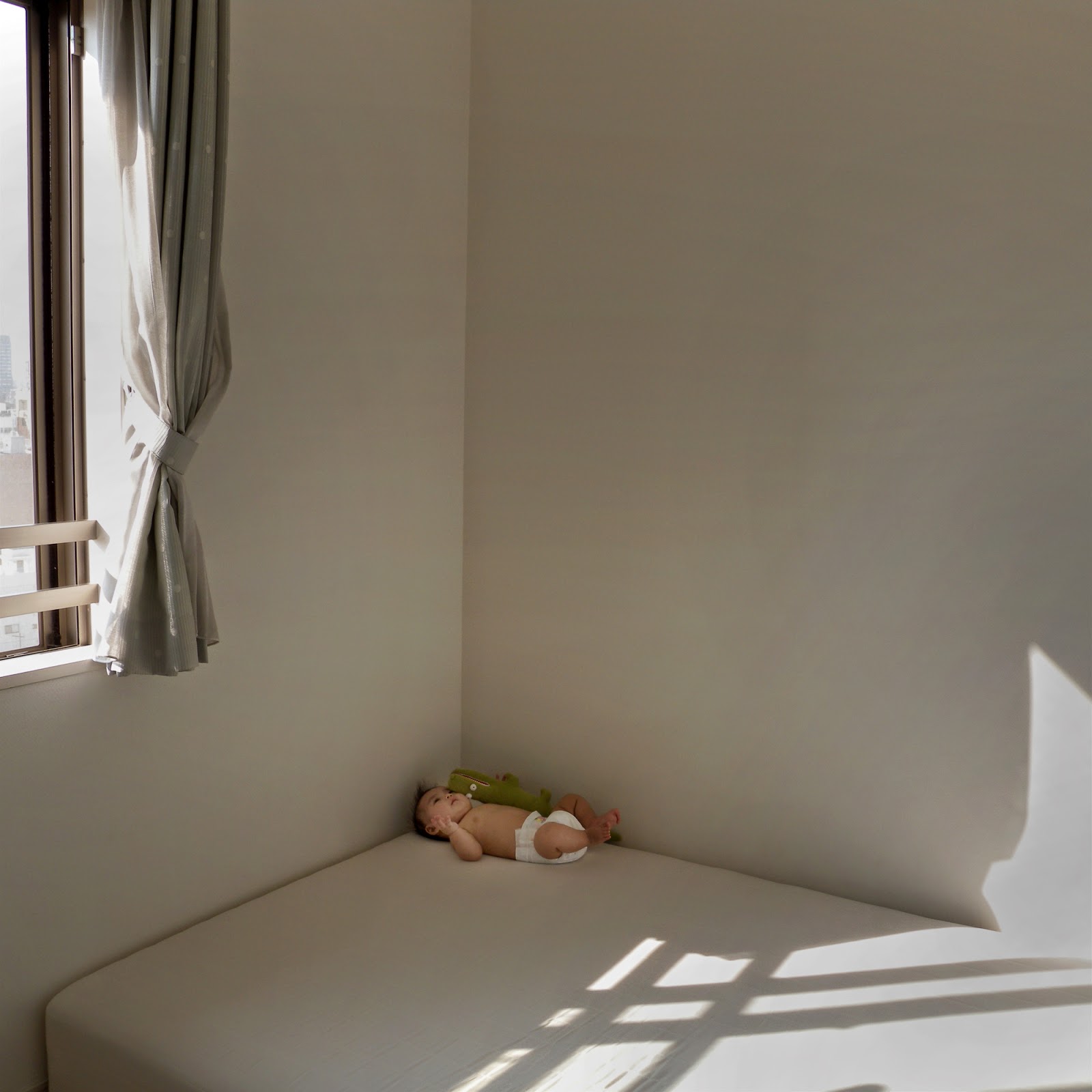
HW: I am almost hesitant to say this because it is such a cliché, but it is true that children teach parents much more than parents do children. Children are curious about everything around them and they see small details that we don't see. This morning, my son stopped on the way to school, squatted down, and kept staring at a half-dried dying worm on the sidewalk until I told him that we had to go. I would never have noticed it if he didn't make me stop and look. This sort of things happens all the time. In my book, there are many small lives dead or dying. I think I started noticing them because he opened my eyes.

EA: How did this book - as a whole - come about?

HW: Initially I did not mean to start this body of work. After my son was born 6 years ago, I could not carry my usual camera, a Hasselblad.  Instead, I had to carry the baby along with diapers and bottles when we went out. I was also asked to take family pictures. So, I started to carry a small digital camera. And I stopped looking around for some time. But then I started to see things and I could not resist to photograph them.  So, I used what I had--a small digital camera to record what I saw. For five years, I took pictures of things, without much intention, that I could not ignore.  I saw and photographed many small lives, dead or dying.  Later I found these images on my computer in between my happy pictures of my happy life. I gathered them and I started to think why I took those pictures. That was how it came about.

EA: You once told me over the phone when I worked at photo-eye Gallery that you were either inspired by or influenced by Richard Avedon's photographs. 

HW: I remember talking about Richard Avedon with you. I’m not exaggerating if I say he is the biggest reason I got into photography. When I was in high school I saw the movie "Blow up" by Michelangelo Antonioni. The photographer in that movie was supposed to be modeled after David Bailey. I was young and I thought it was "cool" to be a fashion photographer. With that reason and with my way of avoiding the rigor of studying, I told my parents that I wanted to study photography in a university in Tokyo.

Richard Avedon was the most famous and coolest fashion photographer at that time, and I dreamed to be someone like him. That is why I came to U.S. (although I went to L.A. instead of N.Y.). Years passed and I happened to be in N.Y. around the year 2000 when the Whitney Museum was doing a big exhibition of Richard Avedon's work. There I saw his portrait work very closely and was amazed by the impact of those photographs. For the first time I felt like I was facing and staring at those famous people in person, as if I was just an inch away. Skin, wrinkles, eyeballs, hair, and expressions were there to see.

Strangely we always try not to see people's faces much when we stand in front of them. It is not nice to stare at people. That is what we were taught. So, being able to stare at faces for a long time was a big surprise for me. With photography we can do that. Photography helps us to find, look, and study.

EA: Hiroshi, once again it was great talking with you. Thank you for your time. 

All the best, Elizabeth.

 Photograph © Hiroshi Watanabe

 Photograph © Hiroshi Watanabe
 
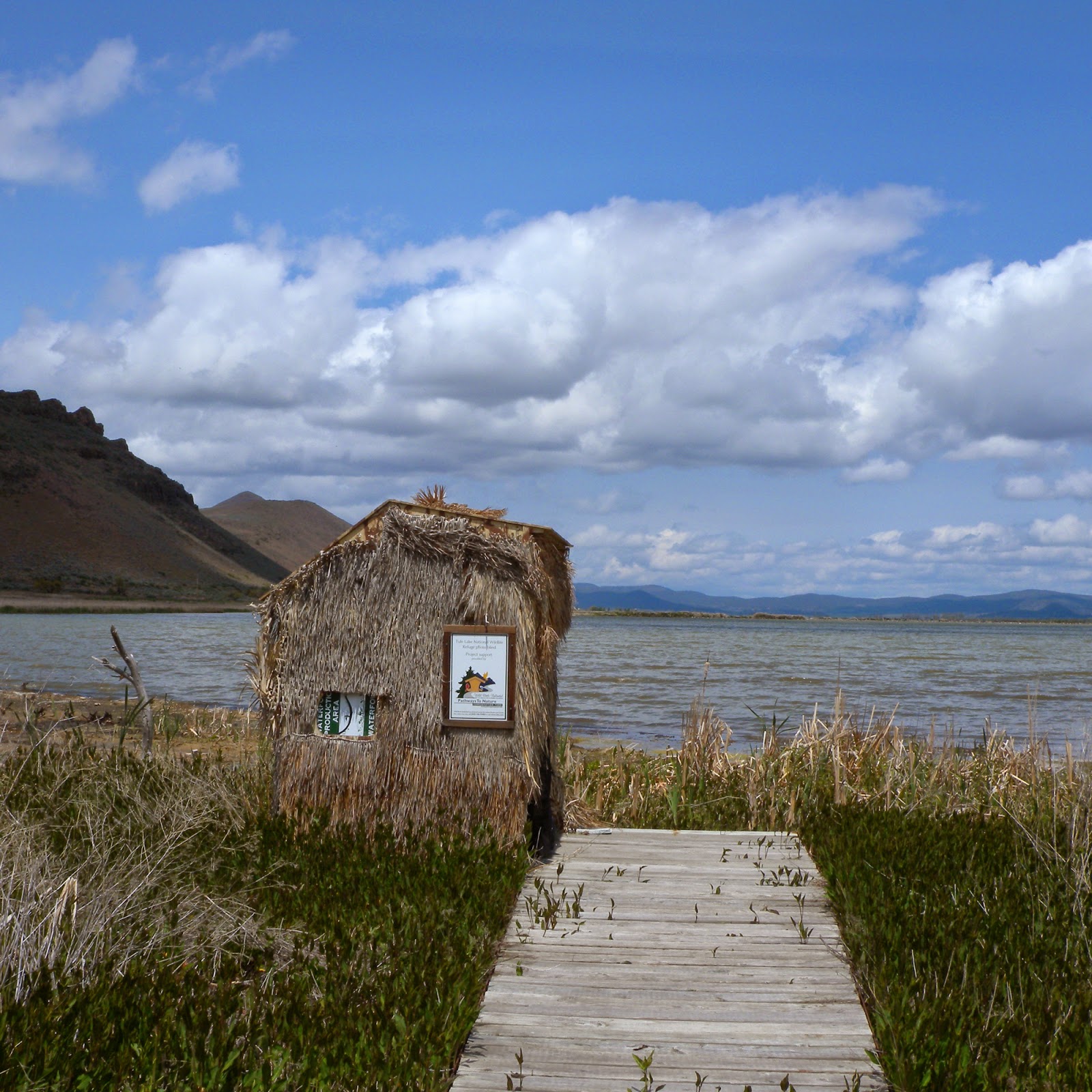
 Photograph © Hiroshi Watanabe

Photograph © Hiroshi Watanabe

  The Day the Dam Collapses by Hiroshi Watanabe

Daylight Books / Tosei-sha, Japan


Photograph © Hiroshi Watanabe

Photograph © Hiroshi Watanabe

Photograph © Hiroshi Watanabe

The Day the Dam Collapses, By Hiroshi Watanabe
Daylight Books, 2014. 88 pp., 66 color illustrations, 7½x9½"
Published in conjunction with Tosei-sha Publishing Co., Japan