Showing posts with label Art News. Show all posts

6.15.2010

CAIO FERNANDES: Aterces Adiv

reductive a new Blurb book
Self Portrait of Artist Caio Fernandes

Paintings (c) Caio Fernandes /All Rights Reserved

1995 while writing a poem named Vida Secreta (Secret Life) in my notebook, on the opposite page the ink left the opposite written–Aterces Adiv. This was just perfect for all I was trying to say...Aterces Adiv, nothing can be hidden in life and as consequence in art.
–Caio Fernandes

Brazilian artist Caio Fernandes explains the history of the four phases of his work while showing us his "best painting among the best". Support the Arts, only $14.00 U.S. BLURB Books "Staff Pick"

4.21.2010

RIJKSMUSEUM: Radiant Madonnas April 21

A restorer works on the painting Ariadne on Naxos (16th century), by the Italian painter Girolamo dai Libri, in the studio of the Rijksmuseum in Amsterdam, the Netherlands. Photograph©EPA/MARCEL ANTONISSE.

The photograph above isn't part of any photo contest or fine art exhibition, but I love the whole scene. It arrived via the artdaily blog where you can read the entire piece.

"The Rijksmuseum, in Amsterdam, has launched an ambitious restoration program. Masterpieces specially selected from their collection will undergo an intensive restoration process to ensure that they shine like never before by the time the museum’s main building re-opens in 2013...The initial results of this work go on display April 21, 2010 in the Philips Wing where the Rijksmuseum will be exhibiting the Radiant Madonnas – three round Italian Renaissance paintings that have been restored with the help of the latest research methods and will be presented as ‘reborn acquisitions from the museum’s own collection’."

The Rijksmuseum, Amsterdam

4.02.2010

WOMEN IN PHOTOGRAPHY: Panel Discussion 4.3.10

Photograph (c) Justine Reyes /All Rights Reserved

Tower, 2006
Photograph (c)
Robin Schwartz /All Rights Reserved

Photograph (c) Sasha Rudensky /All Rights Reserved

Women in Art Photography: Past, Perspective and Projections
April 3, 2010 2PM Affirmation Arts, 523 West 37th Street, NYC

Moderator: Marla Goldwasser, Director, Affirmation Arts. Panelists: Charlotte Cotton/Co-curator, 31 Women in Art Photography, Creative Director, National Media Museum; Jon Feinstein/Co-curator, 31 Women in Art Photography, Co-founder and Curatorial Director, Humble Arts Foundation; Vanessa Kramer/Director of Photographs, Phillips de Pury & Company; Justine Reyes/Exhibiting artist, 31 Women in Art Photography; Sasha Rudensky/Exhibiting artist, 31 Women in Art Photography

Presented by Humble Arts Foundation and Affirmation Arts, in conjunction with 31 Women in Art Photography
/ Gallery

3.20.2010

SCULPTOGRAPHS: Eugene van Lamsweerde, Inez van Lamsweerde and Vinoodh Matadin

Artists Eugene van Lamsweerde,Inez van Lamsweerde and Vinoodh Matadin

Guests Stefano Tonchi, the newly appointed Editor-in-Chief of W Magazine and Alexander Vreeland, Founder of Kids For Kids, the Elizabeth Glaser Pediatric Aids Foundation fundraiser (President and COO, Slane + Slane).

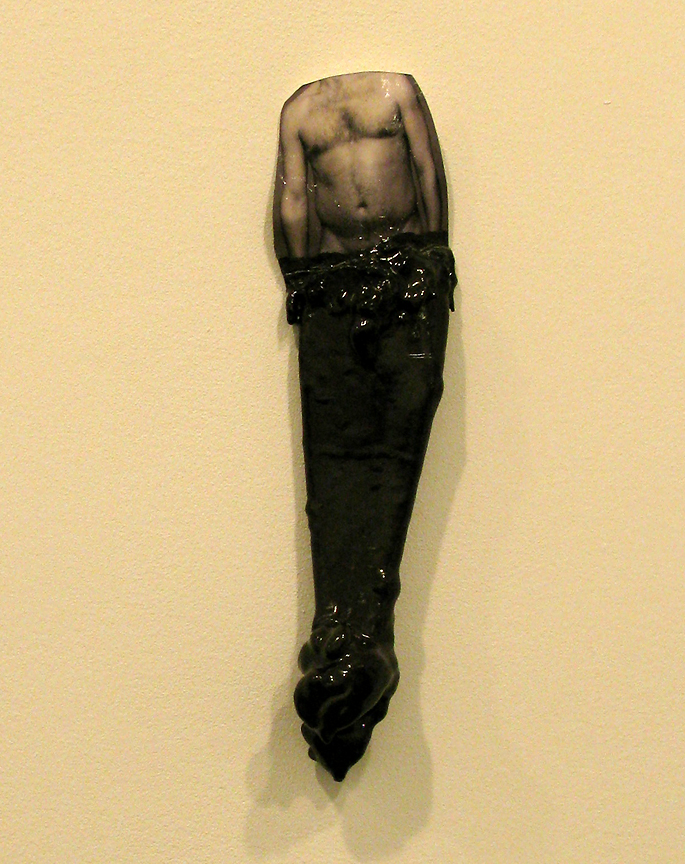
Vinoodh 2010 Photograph, wax, enamel

Root 2009 Photograph, wax, enamel

Bird of Paradise 2005
Silkscreen on canvas, mercury ball, gold and silver metal

Detail close-up of wings in Bird of Paradise 2005 (above)

Painter and sculptor, EUGENE VAN LAMSWEERDE, one of The Netherlands’ most celebrated artists, collaborated with artist/top fashion photography power couple, INEZ VAN LAMSWEERDE and VINOODH MATADIN, combining sculpture and photography in their latest exhibition of work now showing at the Andrea Rosen Gallery, NY.

SCULPTOGRAPHS
Andrea Rosen Gallery 525 W.24th St. NYC

2.13.2010

ROBERT RAUSCHENBERG INTERVIEW: Guggenheim Museum Bilbao "Gluts"

An Interview With Robert Rauschenberg Book Cover
Elizabeth Avedon Editions | Vintage Contemporary Artists Series
Back Cover: Robert Rauschenberg. Metal Assemblage, Swaddle Glut, 1986
Front Cover: Photograph (c) Richard Avedon /All Rights Reserved


Robert Rauschenberg, Greek Toy Glut (Neapolitan), 1987
Metallo Asemblato (c) Estate of Robert Rauschenberg


Robert Rauschenberg, West-Ho Glut, 1986, Metallo Asemblato
(c) Estate of Robert Rauschenberg

I think of the "Gluts" series as souvenirs without nostalgia. What they are really meant to do is give people an experience of looking at everything in terms of what its possibility might be. –Robert Rauschenberg

+ + +

The following text is from An Interview With Robert Rauschenberg by American Art Critic, Barbara Rose, published under the imprint "Elizabeth Avedon Editions | Vintage Contemporary Artists" by Random House (Here):

BR: There's a lot of recycling and reuse in your work. You believe that you don't have to throw something away just because it's old. There's always a possibility for a use. This isn't a common idea. People are really into "new" today.

RR: The only thing I like to keep out of a work, no matter what the materials are, is the history of the process of putting it together. I don't bring that into it. I think of the "Gluts" series as souvenirs without nostalgia. What they are really meant to do is give people an experience of looking at everything in terms of what its possibility might be.

BR: Your art has certainly always been available. You don't need to have an enormous background on Rauschenberg's history to relate to his work. There is always something there to which anybody can relate. That's why it's popular. You may not contrive to be popular, but you are.

RR: When I see the sorts of things you are referring to, I try to destroy them. I'm sure that I haven't been able to avoid developing some "classic" qualities, and I don't mind them being hidden. I just object to their being the subject.

BR: You prefer a composition that is not obviously a composition.

RR: I prefer not to brag about it's sophisticated anatomy.

+ + +

BR: I have watched you work, and it is an interaction–it is your encounter, and you interact with this material or this image or whatever, but you never plan your work. There is no plan or sketch. It's absolutely pure process. Which comes, I believe, from abstract expressionism. It's the process. You don't know until it's finished what it is, and it's done when you've decided that that's it–I think that's an aspect of your work.

RR: Actually, when I'm painting, I think that my mental attitude is to drive with the brakes on, and when I sense a funny smell, then I turn off the ignition.
+ + +

RR: For me, Tibet was a living relationship with people. It was a reaffirmation of the fact no matter what the language is or the customs are, there is a general love between human beings. I know it sounds simplistic, but you could see it in Tibet. Some places it's harder to break through that. These people–perhaps because the air is so thin, or their life is so hard, or because they are so religiously rich–have love all over the place. I mean, every step, no matter how cold it is or how hot or how muddy, is still part of the palette of friendship.
+ + +

1.17.2010

FRANCESCO CLEMENTE: Vintage Interview

Click Image to Enlarge
An Interview With Francesco Clemente. Front Cover Photograph (c) Richard Avedon /All Rights Reserved. "She and She" Back Cover Painting (c) Francesco Clemente /All Rights Reserved.

Sky and Water, Watercolour on paper
Painting by Francesco Clemente /All Rights Reserved

The following quotes by artist Francesco Clemente were excerpted from An Interview With Francesco Clemente by Rainer Crone and Georgia Marsh, published under the imprint "Elizabeth Avedon Editions | Vintage Contemporary Artists | Random House:" (Here)
+ + +

"...about the publication of your book of poems, Castelli di Sabbia. (Naples: L’Arte Tipografica, 1964) "I had been reciting it to my mother since I was five or six, and it was published against my better judgment. It was enormously embarrassing, and it made me into a painter, actually, because I decided that to be a poet was too embarrassing; it was too revealing, and I wanted something more obscure to deal with. I thought of painting that way. That was when I was eleven or twelve years old."

"Paintings are simple things. They are important not so much for what is in them as for what is not there. When we talk of the Renaissance we talk of something fragile; the surprise is that at a certain point, after a thousand years of Christianity, Renaissance artists looked at their bodies again, and looked at their faces, and looked at the world as a sensual place. This feeling of surprise happens again in Tiepolo's skies, and even down to de Chirico's earliest painting. If we talk of Piero della Francesca, what comes to mind is the light. There are two lineages of light in painting. One is a secular light: from Caravaggio to de Kooning. The light is outside; it comes down on things, and makes them what they are. But if we talk of Piero, or talk of Roman paintings, or of the Pompeian paintings, we talk of a light that comes from within and that has nothing to do with the history of man. It is a light that is before the history of man. Giotto is unique because you don't know exactly which way the light goes: his is already a completely secular point of view, but still the light is treated as an inner flow. There is really no one else like him; that degree of mystery is nowhere else. We have to talk in terms of light, because if we talk in terms of formalities, what can we get out of it?"

"It could be a step forward to realize that the rational picture of the world is also an imagination; it has the same reality as a myth. It is the product of the mind; it is not more substantial than the mind. When we talk about mythology we are talking about questions of history, of rational thought and rationalized memory of our past. History is the most tragic product of the rational mind–a picture from which there is no way to escape. The picture of the world that history gives us is the picture of a dead person who looks over his own life. It is as if we are all dead, and we are looking at the world in a glass case. How can we get away from this? I have no answer for it."

1.15.2010

CAIO FERNANDES: My World

Untitled, acrylic on canvas
Painting (c) Caio Fernandes /All Rights Reserved

Bianca Conducting Souls, 2009 series
Copyright (c) Caio Fernandes
/All Rights Reserved


Untitled, acrylic on canvas
Painting (c) Caio Fernandes /All Rights Reserved

Untitled, acrylic on canvas
Painting (c) Caio Fernandes
/All Rights Reserved


Bianca Conducting Souls, 2009 series
Copyright (c) (c) Caio Fernandes /All Rights Reserved

Bianca Conducting Souls, 2009 series
Copyright (c) Caio Fernandes /All Rights Reserved

When I was 13, the year I fell in love with photography, I also discovered North American realism in painting, literature and photography. Here in São Paulo, we are sons and grandsons of Europeans that came here after the wars. The European sensibility and aesthetics are still very strong among us. I was taught all the "isms" of the 20th Century that came from the old continent, along with the most popular work from the USA, such as Abstract Expressionism, Pop Art...but after "In The American West", I saw that art could be very mature, even sober, without losing the power of expression. Today it sounds obvious, but at the time it really blew my mind.

+ + +

CAIO FERNANDES, born in São Paulo, Brazil in 1975, studied Psychology, Art and Photography at both the University of São Paulo and at Brazil's most prestigious school for Art and Architecture, the Fundação Armando Alvares Penteado (FAAP). Studying under artists Evandro Carlos Jardim, Claudo Mubarack and Elisa Bracher, he worked as studio assistant to Ms. Bracher for a short period preparing exhibits for Germany and Rio de Janiero.

Fernandes' work is sometimes described as Realist, "though the sheer intensity of his work sets him apart from most contemporary Realist painters. With a highly individualistic style of painting, Caio reveals the raw physical characteristics and inner tensions of his subjects. A strong interest in Kardecist Spiritism, which proposes an intricate set of perspectives of the "self", is apparent in his self-portraits. Though Caio affirms that a self-portrait can only be considered as a visual reflection of himself, "There is no conceptual speech behind it," he believes strongly that the only important thing is the painting itself."

Order Caio's Book: THE PICTORIAL CONSEQUENCE

12.05.2009

RUSSELL SIMMONS AND BROTHERS: Rush Philanthropic Arts Foundation

Nicky Enright, It's Gon' Rain, 2008

Noelle Lorraine Williams, Hijacked, 2006

Hong Seon Jang, Zip City, 2009

Art allows people a way to dream their way out of their struggle.
–Russell Simmons

RUSH PHILANTHROPIC ARTS FOUNDATION was founded in 1995 by brothers Russell, Danny and Joseph "Rev.Run" Simmons. The Foundation is dedicated to providing disadvantaged urban youth with significant arts exposure, access and education as well as providing exhibition opportunities to early and mid-career artists and artists of color. "As art has been such a pivotal aspect in my life, I want the youth of today to realize that art can transform lives and bring people together by unleashing the imagination," said Russell Simmons, chairman and co-founder of Rush Philanthropic Arts Foundation and entertainment mogul. Russell Simmons Global Grind

A core program of the Foundation is the Rush Arts Gallery which supports the diverse creative practices of the emerging artistic community and promotes experimental ventures in visual production, curatorial work, performance and community involvement. Rush Arts Gallery (RAG) current multimedia group exhibition Borderline includes artists Carla Aspenberg, Andrew Demirjian, Nicky Enright, Hong Seon Jang, Yeni Mao and Noelle Lorraine Williams.

Borderline Dec 24-Jan 16, 2010
Rush Arts Gallery 526 West 26 St NYC

Russell Simmons Global Grind

11.07.2009

WILLIAM R WILSON: Auto Immune Response


CLICK ON IMAGES TO ENLARGE!


Auto Immune Response
Photograph (c) William R Wilson /All Rights Reserved

Auto Immune Response #2
Photograph (c) William R Wilson /All Rights Reserved

Auto Immune Response #4
Photograph (c) William R Wilson /All Rights Reserved

Auto Immune Response #5
Photograph (c) William R Wilson /All Rights Reserved

Auto Immune Response #6
Photograph (c) William R Wilson /All Rights Reserved

Auto Immune Response #10
Photograph (c) William R Wilson /All Rights Reserved

"Throughout my work I have focused on photographing Navajo People and our relationship to the land. While portraying this relationship I have always been aware of how our representation has never been without consequence."

The Museum of Contemporary Native Arts, Santa Fe, N.M., announced William R Wilson (Navajo) has been selected to oversee the Vision Project, a Ford Foundation grant initiative. Wilson's first undertaking will be to oversee the history of the Contemporary Native American Art Movement in a book featuring Native artists from the U.S. 15 scholars will write up to four essays each on living artists who have made considerable contributions who vary in age and media.

+ + +

WILLIAM WILSON, Dine’ (Navajo), born in San Francisco, CA, moved permanently to the Navajo Reservation when he was 10. He earned a MFA in Photography, with a focus on the History of Photography, at the University of New Mexico and a BA in art history and studio art from Oberlin College, OH.

In Wilson's Auto-Immune Response Series (above), he set out to photograph the Navajo people in relationship to the land, including figures to represent his people and himself. In the photographs, a luminal figure or pair of figures wearing gas masks appear in different dramatic natural places; in the area of the Grand Canyon and in upstate New York near the Finger Lakes. This post-apocalyptic man survey’s what appears to be a pristine and expansive landscape and wonders what has gone wrong. For the Auto-Immune Response Series Wilson received the prestigious Eiteljorg Fellowship for Native American Fine Art. The Series was a solo exhibition at the National Museum of the American Indian, Smithsonian Institute, New York, NY and the Heard Museum, Phoenix, AZ. His work is in the Collections of the National Museum of the American Indian, Smithsonian Institute, Washington D.C., the Heard Museum, Phoenix, AZ, the University of New Mexico Art Museum, Albuquerque, NM, the Juane Quick To See Smith Private Collection, Corrales, NM among others.

Wilson, an artist, photographer, and arts educator, has taught sculpture at the Institute of American Indian Arts in Santa Fe, N.M., photography at Oberlin College and the University of Arizona and served two years as a photojournalist in Central America for the Associated Press. From 2000-2005, Wilson was the co-director of the Barrio Anita Community Mural Project, the largest public art commission in Tucson, Arizona's history. BAMP features a 12,000-square-foot mural alongside the Interstate 10 sound barrier wall. The project involved the creation of a multi-media Arts Center for the community. The Arts Center features digital photography, Venetian glass tile photo-mosaic, metal work and more.
View the BAMP Murals:
North Contzen Street Mural and Ouray Park Mural
Will Wilson Creates Indianapolis Mural video


William R Wilson Website

11.02.2009

DUMBO GALLERY WALK: Gallery List

Sara & Justin, 2009 / Randall Scott Gallery
Photograph (c) Nadine Rovner /All Rights Reserved
www.nadinerover.com

Dreamboats Collective at Umbrage Gallery
Photograph (c) Adam Golfer /All Rights Reserved
www.adamgolfer.com

DUMBO 1st THURSDAY GALLERY WALK
Thursday Nov 5th Participating Gallerie
s:

A.I.R. GALLERY 111 Front St.
AMOS ENO GALLERY 11 Front St.
BOSE PACIA 163 Plymouth St.
BROOKLYN ART PROJECT 5 Front St.
BROOKLYN ARTS COUNCIL 111 Front St.
CAPTION GALLERY 55 Washington St.
CENTRAL BOOKING 111 Front St.
DUMBO ARTS CENTER 30 Washington St.
FARMANI GALLERY 111 Front St.
GIACOBETTI-PAUL GALLERY 111Front St.
HENRY GREGG GALLERY 111 Front St.
KLOMPCHING GALLERY 111 Front St.

KRIS GRAVES PROJECTS 111 Front St.
MAGASIN TOTALE 10 Jay St.
POWERHOUSE ARENA 37 Main St.
RANDALL SCOTT GALLERY 111 Front St.
SMACK MELLON 92 Plymouth St.
SPRING 126A Front St.
UMBRAGE GALLERY 111 Front St.
VII PHOTO 28 Jay St.

WATERMILL BROOKLYN GALLERY 111 Front St.

VIEW FROM DUMBO
DUMBO 411

DUMBO GALLERY WALK: Photo District

View of the Empire State Building from DUMBO
Photograph (c) Mary Virginia Swanson /All Rights Reserved

DUMBO is an acronym for Down Under the Manhattan Bridge Overpass. This historic Brooklyn waterfront neighborhood, located just across the East River from Manhattan, is one of New York's leading Arts Districts, AKA the "new" NY Photo District.

DUMBO 1st Thursday Gallery Walk • November 5th • 5:30-8:30 PM. Begin at 111 Front Street's 14 Galleries • View Participating Galleries + Walking Map (click on red titles) • Subway Directions: A/C to High St/Brooklyn Bridge. Cadman Plz West Exit F to York St

Mary Virginia Swanson: Photography Marketing Consultant Website

11.01.2009

ERIC FISCHL: An Interview

Fred, 1998. Oil On Linen. 72" x 68"
(Portrait of Fischl's friend novelist/art critic Frederick Tuten)
Painting (c) Eric Fischl /All Rights Reserved

Joan and John, 2002. Oil On Linen. 70" x 75"
(Portrait of writer's Joan Didion and the late John Dunne)
Painting (c) Eric Fischl /All Rights Reserved

Untitled (Brice In Pink Shirt), 2006. Oil On Linen. 50" x 60"
Painting (c) Eric Fischl /All Rights Reserved

ERIC FISCHL, born in New York City, grew up in the suburbs of Long Island and Phoenix, Arizona. He received a BFA from the California Institute for the Arts in 1972. His work has been the subject of numerous important exhibitions including: the Institute of Contemporary Art, Boston; the Whitney Museum of American Art, New York; the Walker Art Center, Minneapolis; the Milwaukee Art Museum, Milwaukee; and the Museum of Contemparary Art, Chicago. Fischl lives and works in New York City and Sag Harbor with artist April Gornik. Read his full bio here


Front Cover right: Photograph by Richard Avedon. Back Cover left: Painting "Portrait of the Artist As An Old Man" by Eric Fischl

The following is an excert from An Interview With Eric Fischl by Donald Kuspit, Elizabeth Avedon Editions / Vintage Contemporary Artists / Random House (Buy a vintage copy here):

DK: I see you want to live dangerously: you've critically introduced your contemporaries. Let's pursue your gambit. Within the context of the understanding you've set up, who are the artists you find interesting? Why do they make a difference to us?
EF: In the mid-seventies, when sincerity and/or meaning became important again, after pop art and minimalism and conceptual art, some artists found it either in direct expression of meaningfulness, or they found meaningfulness in the direct expression of meaninglessness, and that's how the lines were drawn. When I came to New York in the late seventies, the greatest risk was sincerity. The German artists–Keifer, Baselitz, Polke, Lupertz, Immendorff, Penck–became noteworthy because they were working with a historical event that was guaranteed to be meaningful. It was the worst thing that had happened, they were the descendants of its perpetrators, and they were trying to figure out who they were in relation to it. The whole struggle for meaning since the 1970's has been a struggle for identity. It's pervasive, but most of us can't identify what happened except in personal terms. By what happened, I mean what went wrong, what gave us this sense of collapse or disappointment. The Germans were hurt not just personally but culturally as well. It's very hard for us in America to complain or to feel that our complaint is justified, because, after all, what are we complaining about? That objects we surround ourselves with are disappointing? I mean, it's a joke, we're more embarrassed about having believed in the superficial qualities of America, and it's hard to see yourself in that light. But because the Germans were so devastated culturally, you can identify with their struggle for renewal. Baselitz made a formal decision to turn his images upside down. Before that he had been making traditional realist pictures, often genre and figure scenes. So he decided to turn history upside down. He distanced himself from history, almost as a kind of penitence, a kind of self-ostracism.


+ + +

Fischl's latest paintings are of the Corrida Goyesca held each September in the Andalusian town of Ronda. The toreros, or bullfighters, dress in 18th century attire as in the era of the Spanish painter Goya, who designed their distinctive costume. The bull fight has captivated artists from Goya to Hemingway and Picasso.

Corrida in Ronda / ERIC FISCHL / EXHIBITION
Mary Boone Gallery • Oct 21-Dec 2009 • 541 West 24 Street, NYC