Shiva and Jean-Jacques
Jean-Jacques Naudet Talks To Elizabeth Avedon
“Photography has never been as fashionable as now. In fact Photography IS the communication now.” – Jean-Jacques Naudet
Jean-Jacques
Naudet has championed the careers of countless photographers
throughout decades, first as Editor-in-Chief of French PHOTO Magazine
during it’s heyday in the 1970′s and ’80′s and later as editor at large
for American PHOTO, working for Hachette Filipacchi Media for forty
years. A prominent figure in the overall History of Photography, Naudet moved
on to found his own publications, starting with the former “Le Journal de
la Photographie," and currently with the new “L’Oeil de laPhotographie," promoting legendary icons of the past along side a generation of emerging photographers.
Elizabeth Avedon: How did you first become involved in photography?
Jean-Jacques Naudet: Totally by pure coincidence. When I was a young journalist I started working at Vogue on movie reviews. It was very very badly paid. One day Shiva announced she was pregnant. We wanted to stop being extremely poor. Vogue was great because although I was not very well paid, we were invited everywhere, from cocktails to receptions, all kinds of social events. But it was not possible to bring a small baby to openings and cocktails, so I had to decide to work in another magazine and by pure coincidence I was at French PHOTO.
I didn’t know anything about photography when I started. I discovered photography and photography became a passion. Roger Thérond - who was, who is my mentor, and was the Director of Match, the Director of PHOTO, in fact he was the Director of the Hachette Filipacchi Publishing Company; for the second piece I had to write for PHOTO, Roger sent me to go and meet Romeo Martinez and make an issue about the History of Photography. So I went to see Romeo. I was really really impressed and Romeo gave me all the information I wanted and then he said, “What do you know about Atget?” I said, ”Atget. Great photographer, loved by the Surrealists and the one who made us remember the old Paris.”
He said, “Tell me about Atget and the prostitutes?” and I didn’t know anything about Atget and the prostitutes. “So, maybe one day we will meet again, but next time try to know better about Atget and the prostitutes. If you don’t know about Atget and the prostitutes, you will never know anything about photography. During the next five years I never met Romeo, then one day by chance I bumped into him at an opening and I said, “You know, I know better about Atget and the prostitutes.” So I gave him proof and that was the beginning of a beautiful friendship. After Roger, he was my second mentor in photography.
EA: What progression took you to be Editor-in-Chief of French PHOTO?
JJN: I arrived at the French PHOTO in ’71 and I took the magazine in 1977. I discovered a totally new world. Remember in the ‘70’s very little was known about photography and photographers. We had the extreme formidable luck to discover and at the same time to make discovery of all these people.
I discovered the power of photography, but I discovered what I liked even better than photography, were photographers. Photographers are really the last cowboys of the art scene in the 20th century. After photography, all the art experience or all these communication was collective - there were movies, there was television - but the last individual adventure was photography.
EA: It was a very exciting time for photojournalism at Paris MATCH and French PHOTO. Would you talk about some of the photographers from that period?
JJN: Of course I remember the giants. Henri Cartier-Bresson. Robert Doisneau. The first time I met Henri, he said you have to tell me “tu”. Can you imagine you meet Henri Cartier-Bresson for the first time and he’s forty years older than you, and he asks, “Tu dois me dire tu.” Oh, God!
All these dinosaurs, these mythical legends were alive at this time. There was of course Dick Avedon, Irving Penn and in fashion there was Guy Bourdin. I remember my first trip in America in 1975. The city was in bad shape. There was the famous New York Daily News headline from President Gerald Ford to New York City, "Ford to City: Drop Dead." On that first trip I met Avedon, Penn, Lee Friedlander, Garry Winogrand, all these people. Every day there was a discovery.
Every day in France, every day in Europe, every day in America we were able to discover someone we didn’t know or someone who was totally unknown. There was the discovery of Jacques Henri Lartigue, there was the discovery of Jeanloup Sieff, and there was even the discovery of W. Eugene Smith. There was the discovery of the History of Photography, the discovery of the 19th century and the discovery of the beginning of the 20th century with all these prolific photographers from Martin Munkácsi to Man Ray. That’s why the French PHOTO was magical at this time, because not only did we enjoy our daily profession, but also we made other people enjoy, and for this we were well paid.
EA: Tell us about Roger Thérond and working with him.
JJN: Roger was the boss of everything and everyone. He was even more than a mentor. I was spending every day with someone who has an incredible eye, an incredible sense of journalism, who was also hugely passionate about photography. At that time, he started to collect 19th century and the beginning of the 20th century photography, so he was everything in one.
In ’74, Roger sent me to London for a charity auction for The Photographers Gallery. So I arrive in Sotheby’s Belgravia. The auctioneer was Philippe Garner, who I didn’t know at that time, and there were probably fifty or sixty people inside the room. In the middle of this crowd, an incredible good looking guy, dressed all in black, kept his hand above his head for the entire auction. He won half of the auction. Suddenly the last lot was an Irving Penn huge vintage print of Colette. And this guy in black won the bid at £ 700 and everyone booed him at this time. What is this jerk buying a Penn for £ 700? And the guy was Sam Wagstaff.
That night we had dinner with Sam and Philippe. It was the beginning of a beautiful friendship. That was the kind of encounter you could have in this time.
EA: What was it like for you when you first arrived in NY?
JJN:
The first time I arrived in New York was in 1975, but I remember the
day I decided to live in New York. It was Halloween 1984; I decided New
York was my dream. MATCH at this time had a marvelous small penthouse
apartment on 77th Street, just in front of the Mark Hotel. I arrived on
the day of Halloween; I put my suitcase in the apartment, and went back
out to the street. Just when I opened the gate, I saw this incredibly
gorgeous looking Upper East Side girl, so I stopped to watch her. At the
same time a police car came and stopped in front of her. I was 10
meters from the girl. The car swerved off the road onto the sidewalk and
stopped the girl. After one or two seconds, this girl is starting to
laugh. I thought, what’s going on? So I approach step by step, and guess
what? The policemen were wearing pig’s masks! I said, “I definitely
want to live here.”
My idea was for Roger to decide to send me
to New York, and after 5 years I succeeded, so I arrived and for me it’s
still the same magical thing. I just spent seven months in Paris due to
the problem with Le Journal. I am as happy as Paradise when I returned
two weeks ago. I have the same magical feeling as when I first came to
the city.
EA: Did your wife move to New York at that time?
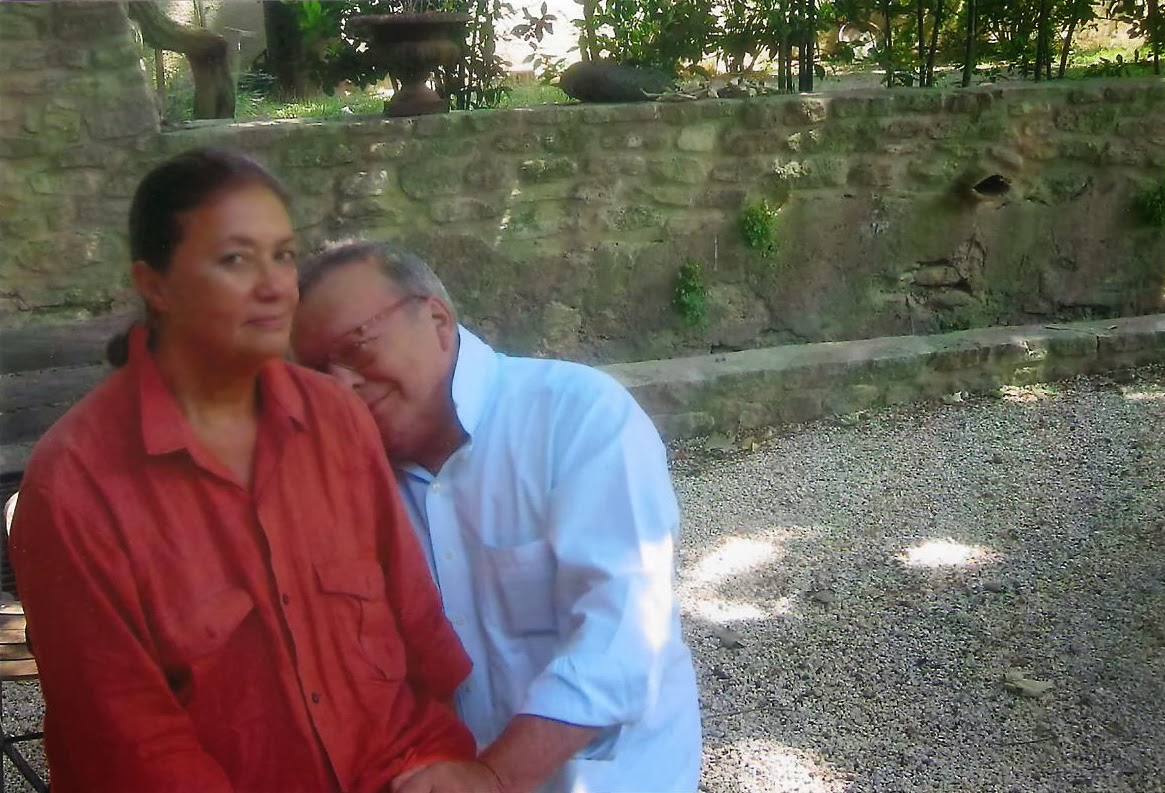
JJN: My wife, Shiva, let’s say we’ve been living together for 48 years now. Let’s say without her I’m nothing. She’s really - what is that expression - the cement between the stones. She has been the glue of this family.
She was quite a successful stylist and fashion designer. She was at the top when I decided, quite egoist of me, to come and live in New York. For five years she was commuting from Paris to New York every two weeks. After five years, life was quite miserable, so she quit.
EA: You are the author of several books: Marilyn (Assouline, 2003); Marlene Dietrich: Photographs and Memories (Thames & Hudson Ltd, 2001); and Icons of the 20th Century: 200 Men and Women Who Have Made a Difference (Overlook, 1998). What inspired you to interview Marilyn Monroe's most trusted photographers - including Henri Cartier-Bresson, Andre de Dienes, Cecil Beaton, Richard Avedon and Milton Greene - about what it was like to photograph this legend?
JJN: The “
Marilyn” was quite exciting. I had just finished a special issue of American PHOTO where I spent two months all around the United States to find all these old guys who photographed Marilyn; Ossie Leviness, George Barris and all of them were in fact still in love with her. The one I remember the most was André De Dienes who showed me his diary and especially the page where he talks about his sexual relationship with Marilyn. That was so surreal to see this very very old guy being the lover of Marilyn Monroe.
Probably one of my best memories is when I discovered that all the Milton Greene pictures had at this time been bought by this kind of strange Greek guy with the complicity of the last Milton mistress; and everything was deeply hidden in storage in Pasadena. So I went there for Match to meet the guy. He called me at the Chateau Marmont and he said, “You have to find a way to come to Pasadena. Let’s meet in a bar.” So I went to the bar and he said, “Are you sure you aren’t followed?” I said, “Of course.” I arrived in the storage and discovered thousands of vintage prints by Milton Greene and probably all the dresses and all the personal objects of Marilyn. Later, Joshua Greene and the family sued the guy and they recuperated everything.
EA: In "Marlene Dietrich: Photographs and Memories" there were almost 300 photographs from her collection. How did you get involved?
JJN: The beautiful souvenir I have of the Marlene Dietrich book - I’m quite friendly with Peter Riva, the son of Marlene Dietrich’s daughter Maria Riva, the grandson of Marlene. Peter called me and said, “Jean-Jacques, are you interested in spending one week in Berlin, the east part of Berlin (this was after ’89) and you will select in the archives of Marlene what you want for a book?” I spent one week, probably 18 hours a day, looking at all the personal archives of Marlene.
The thing I must confess, if the work of looking through archives, digging for pictures was very well paid, I would have preferred to look for pictures, than to publish pictures.
EA: You created a list for American PHOTO of over 30 photographers that had not received recognition or had been underrated. Would you describe that era of Photography?
JJN: I’m always fascinated by how quick some great great photographers disappear. More and more frequently the disappearance is quick now. Almost everyone forgot about people like Chris von Wangenheim, Bill King, and Mike Reinhardt (grandson of the famous film Director Max Reinhardt). Plus all these very famous French guys from the ‘70’s who were the Kings of Fashion: Alex Chatelain, Pierre Houles, Guy Le Baube. Who knows about all these guys?
That is the one thing I’m trying to restore with
L’Oeill, is to bring together these two worlds of photography; the world of the dinosaur like you and me - people who are passionate and have the knowledge and the culture of photography - and the world of these millions and millions of young kids addicted to photography through Flickr, Instagram and Facebook, but maybe lacking the background, the culture and the knowledge.
Jean-Jacques with Grandchildren, Chloe and Julien
EA: You’ve written a few controversial pieces now and then.
JJN: It’s not really controversy. But one thing I have noticed, in fact I made an issue of American PHOTO about; that the’70’s and 80’s were far more permissive than today. Being
"politically correct" at this present time is absolutely boring. For someone who loves New York as I do, to see New York so totally sanitized - the meat market looking like Avenue Montaigne in Paris - it’s boring. If I can dare to say it, I miss the transvestites, I miss the prostitutes, I miss the peep shows in Times Sq. I remember when Jean-Paul Goode met Grace Jones. Grace was absolutely fascinated by all the Times Sq. shops. One night we went from peep show to peep show because Grace wanted to make a private thing for Jean-Paul.
EA: What pieces were of notable success for you in the past?
JJN: I’m particularly proud of a couple of things. Avedon’s Interview’s were quite strong. Avedon was not really fond of French PHOTO and same for Penn. They found it was a girly magazine. The magazine was important enough so they wanted to be in it in a way, so each time I wanted to have a portfolio, he would say, “Yes, but who is going to do the text?” So I would suggest a couple of names. Each time he said, “No, no. Naudet, if you want my portfolio, I want Roland Barthes.” And because of Richard Avedon I became quite friends with Roland Barthes. Three times I call Barthes and say, “Avedon is giving us a huge gorgeous portfolio, but you have to write the text.” So we used to meet with Barthes at his favorite place at the bar of the Hotel Port-Royal.
The fourth time, Avedon was publishing the fashion book (
AVEDON: Photographs 1947-1977. Farrar, Straus, Giroux). I called Barthes and said, “Roland, I have a new Avedon portfolio,” and the day after I received a beautiful note from Roland Barthes. He said, “Dear Naudet, I received the book. The book is gorgeous. Avedon is gorgeous, as usual. This book is full of women and you know women are not my cup of tea.”
Then around ‘95, Roger called me one night. “Jean Jacques, Catherine Deneuve has been elected the most gorgeous French woman. Call Avedon and ask him about the pictures of Catherine because he photographed her like no one? We need this picture. “ I said, “Remember Roger, our relationship with Avedon is not so good. Last time with MATCH they didn’t respect the contract.” He said, “Don’t worry, don’t worry Jean-Jacques, this time we are going to respect.”
So I called Avedon, it was probably 8pm. At 7AM, Avedon called and said, “Come to the Studio, I have something for you.” He gave me four spreads, eight pages he designed himself, plus the cover with his written indication “Avedon as big as Deneuve.” Of course, Roger did not respect the contract and of course he changed the layout. Avedon was absolutely furious.
Six months later arrived one of the most important fashion pieces that I have seen in the History of Fashion in the New Yorker, 32 pages of incredible pictures. Roger called and said, “Jean-Jacques, we need to publish these pictures in MATCH.” I say, “Roger, don’t forget last time. Avedon is not going to forgive you.“ He said, “I don’t care. Try.”
I called Avedon, and it was great. He said, “Ah, Roger is interested. If MATCH publishes these 32 pictures, it’s free. If MATCH publishes 24 pages, it’s $30,000. If they publish 16 pages, it’s $40,000. If Match publishes 8 pages, it’s $50,000.” MATCH was not able to publish 32 pictures. They published 8 pages and they paid $50,000. That was his sweet revenge.
And in terms of things that I published and I wouldn’t have published – I’m not going to answer to that. Probably a lot.
EA: In 2010, you started the very successful "Le Journal de la Photographie." Did you imagine Le Journal would be so well received with so many followers?
JJN: No. No. I was deeply surprised. Of course I was proud. People say behind a success you always have a concept. That’s true, but that’s not so true. Behind a success you always have a team and that’s the most important.
EA: What was your original intent and what happened with Le Journal?
JJN: As you know, I worked for the same company for almost forty years. In 2009, Hachette Filipacchi was sold to Hearst. I was too young to retire or too passionate to retire. I really wanted to continue in photography because it’s the only thing I know. I was totally fascinated by this new technology, this new form of expression, so I had this idea to make a daily publication talking about of all the things that were going on in photography all around the world. I was lucky enough to find a capitalist business angel who was extremely successful at this time, who didn’t ask anything and didn’t want a business model, just the opportunity to have this Journal.
But after two years, his business had quite difficult financial problems and, what can I say, he was less and less an angel. Things started to be extremely complicated especially because he never explained, never talked, payments were late; you know because you were there during this time. One day as an excuse he told me that the team was not good, I was not very good, we have to rethink about everything.
You can do what you want, but you never never accuse the people who are working with you. The following day I skyped with all the team. I said, “I’ve made my decision. I’m going to quit. I’m going to announce it Friday August 30. They all told me, “OK, we will do the same, we stay with you.”
EA: And in November 2013 you began your new publication, "L'Oeil de la Photographie." 34 of the original 36 Le Journal correspondents followed with you.
JJN: The thing I’m really proud of is the team now working, writing and collaborating. All of these 34 people coming from all different places, young and old, male and female, from all over the world, each of them different.
EA: You’ve always been ahead of many in understanding the value of using the latest technology.
JJN: Elizabeth, I’m a fraud. I don’t know anything about new technology. I just realized a couple of facts. Photography has never been as fashionable as now. Photography now has replaced the verb in communication. In fact photography IS the communication now.
When all these kids during editorial meetings talk about the technology, they are charming when they explain, but after 2 minutes I’m outside smoking a cigarette because I don’t understand one word. You will see during the next ten days,
L’Oeil de la Photographie is reopening the archive, but I don’t understand when they explain how they do this. When you have a team, you have to delegate this kind of thing and you have to trust them.
As I said, success is not only a concept, success is always a team.
 Joel-Peter Witkin and Son, Albuquerque 1988
 “Witkin is a photographer who has been mistaken for a grave robber, whose works were described by Marina Isola as “Part Hieronymus Bosch, part ‘Texas Chainsaw Massacre.’" – Cindra Wilson, Salon.com







 Posts
Posts


