Showing posts with label Twin Palms. Show all posts

10.12.2023

JOEL-PETER WITKIN DAY: Heaven or Hell

Joel-Peter Witkin and Son, Albuquerque 1988
Photograph © Herb Ritts Foundation


La Lettre de la Photographie Editor-in-Chief Jean-Jacques Naudet wrote, "Today is dedicated to Joel-Peter Witkin. To the amazing exhibition opening at the Bibliothèque Nationale in Paris, the two books of his work published for the exhibition and to the recent works on display at the Gallery Baudoin Lebon. Four articles were written by Bernard Perrine, and with these a fantastic Interview of Joel by Elizabeth Avedon."

"A flamboyant creator, incredible story-teller and irresistible liar (his awakening to photography during a car accident that decapitated a little girl whose head fell into his arms probably didn't exist, but never mind)' a hallucinating culture, Joel, who lives in an Albuquerque ghetto (on a farm no less) has for 30 years been exploring the relationship between sacred and profane."

Naudet refers to the story Witkin wrote in his monograph, The Bone House (Twin Palms Publishers), “It begins with my first conscious recollection, I was six years old. It happened on a Sunday, my mother was escorting my brother and myself down the stairs of the tenement where we lived. We were going to church. Walking through the hallway to the entrance of the building, we heard an incredible crash mixed with screams and cries for help. The accident involved three cars, all with families in them. Somehow in the confusion, I was no longer holding my mother’s hand. I could see something rolling from one of the over-turned cars. It stopped at the curb where I stood. It was the head of a little girl. I reached down to touch the face, to ask it, but before I did, someone carried me away. It could have defeated me, and I would have become insensible. Instead I chose to accept the injury and go on; because my will is stronger than death, stronger than the lostness of these times. This, my first conscious visual experience, left it’s mark.”


“Witkin is a photographer who has been mistaken for a grave robber, whose works were described by Marina Isola as “Part Hieronymus Bosch, part ‘Texas Chainsaw Massacre.’" – Cindra Wilson, Salon.com

+ + +

JPW: “I’m a really happy person, but I think most people think I’m some sort of a monster. I’m intensely poetic, intensely sincere. I want to make a contribution to life and the quality of life, because I want to diminish evil and raise the possibility of goodness. I think that’s what every artist wants to do whether they’re totally conscious of that or not.”


+ + +

JPW: I make ‘History Photographs’ much like the 18th and 19th century painters would make ‘History Paintings’ (Wiki: a genre in painting defined by subject matter rather than an artistic style, depicting a moment in a narrative story, rather than a static subject such as a portrait), but in my case I just did one photograph in Bogotá that’s about the history of the cross as a tri-pod and a history of photography all in one. I like that kind of stretch. It’s called Poet and Muse. The Muse, I found identical twins, women in their forties, who are just spitting images of each other. In Albuquerque, before I left for Bogotá, I drew this bridge that connects them at the hip, so they are Siamese identical twins in the drawing and in the photograph. They are talking to the Poet, who turns out to be a man who is the Laurence Olivier of Bogotánian actors. The guy is terrific. He looks like an ancient Christ figure. He has arthritis. He was perfect, perfect. I put a wreath on his head that was a kind of Christmas wreath I got in Albuquerque at a flea market where I shop all the time; and I made this kind of prosthesis for his arm in Bogotá."
+ + +

JPW: This was my fourth trip to Bogotá...I’ve gone there three times to photograph, but it’s gotten more and more dangerous, so that last time I was there I was robbed. I went out in the morning to buy underwear for a subject of my work of Jesus.

EA: You were robbed on the way to buying underwear for Jesus?

JPW: Yes! (great laughter) I was very despondent...I travel a great deal, so this doesn’t represent an event that occurs often; luckily I’ve never been harmed. But this time I’m in a nice area, but a block away is “fermenting and evil,” let’s say.
+ + +

JPW: I saw Mr. Steichen come in. He took the slides. I saw him shuffling around looking at them on the light box and then he came out and he said, “Whose work is this?” I said, “It’s mine.” He said, “I thought you are a messenger.” I said, “Well maybe I am a kind of messenger, but it’s my work.” He chose an image that was an abstraction I shot in Boston. He said, “I’m having a show and it’s called Masterpieces of Photography from the Museum Collection. He always had these grandiose names. He then had my photograph printed. I went with my brother to the opening. It was a terrific event.

EA: And you were still just 16 years old? JPW: Yes. I was sixteen and a half.


6.13.2014

SEAN PERRY: Sheila Metzner. Color

Sheila Metzner, Color

Beautiful printing, fine photographs and exquisite publishing. There is a trifecta of mastery at play that make this a unique and desirable title. I am moved by each and believe you will find them worthy of your time.

The Fresson print is a lush, secretive and exclusive process akin to the carbon print, first shared with the French Photographic Society in 1899 by Théodore-Henri Fresson. In the 1950s two of his sons opened a shop in Paris and evolved the process to render color. They continue today with the inventors' grandson and great-grandson now producing these distinctive prints. Rich and tactile with a soft elegant palette, they feature grain and texture that echoes the atmosphere of a pointillist painting.

I am so not kidding when I say rare! It is a proprietary process and only produced for artists in small quantities by this French family. Extraordinarily stable and perhaps the most archival of all color printing processes, they are highly prized by collectors. I have a deep love of these exquisite objects, introduced to me by photography icon Sheila Metzner.

 by Doug Beach

Born in Brooklyn, New York in 1939, Ms. Metzner is an immensely collected artist known for her work featuring Fresson prints. She attended Pratt Institute and began a career in advertising, rising to the first ever female art-director at Doyle Dane Bernbach. She left after the birth of her first child (of five) and continued to make pictures relatively unknown for years. Critical mass arrived as the preeminent curator John Szarkowski (Museum of Modern Art), included one of her images in the notable exhibition "Mirrors and Windows: American Photography since 1960." It would be the catalyst to launch editorial, fashion and commercial clients as well as her work being acquired for significant permanent collections including The Metropolitan Museum of Art, The International Center of Photography and the Museum of Modern Art.

Her retrospective monograph Color, was masterfully produced by Jack Woody in 1991. It covers the first 20 years of her career – a broad range of fashion, still life, portraits and landscape work. It's truly a beautiful title produced by one of my favorite publishers, Twin Palms. The book is 9 by 12 inches with 76 four-color plates over 172 pages. Lush green cloth boards with titles stamped in black on spine and cover. This copy is in near-fine condition, with only the lightest shelf wear to the dust jacket. Binding is tight with crisp and bright pages, no remainder marks and no clippings. Publisher postcard is still tucked inside end-paper and front cover. Likely never read, my guess overstock to a bookstore somewhere. First Edition, First Printing.

Twin Palms Publisher, Jack Woody
Photograph by Duane Michals

The book is on hold at the HPB Parmer location in Austin, Texas until Sunday at close under the name, Mr. Fresson. Originally available at $60.00, I suggest you partake, it is offered exclusively for $5.00 to the first to ask for it at the checkout counter – a sumptuous feast for your senses for a few pennies and pluck.

Internet friends may find copies online. I found a decent list at AbeBooks to survey here. And a signed limited edition is available directly from Twin Palms Publishers.

Until next time – Sean Perry

12.28.2013

BOOKS 2013: My Top Ten and More

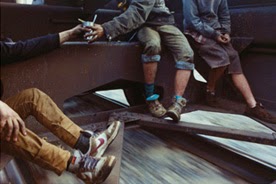
Photographs by Mike Brodie
Published by Twin Palms

A Period of Juvenile Prosperity Published by Twin Palms
Photographs by Mike Brodie

Now in its third printing...

At 17 Mike Brodie hopped his first train close to his home in Pensacola, FL thinking he would visit a friend in Mobile, AL. Instead the train went in the opposite direction to Jacksonville, FL. Days later, Brodie rode the same train home, arriving back where he started. Nonetheless, it sparked something and Brodie began to wander across the U.S. by any means that were free - walking, hitchhiking and train hopping. Shortly after, Brodie found a Polaroid camera stuffed behind a carseat. With no training in photography, the instant camera was an opening for Brodie to document his experiences. read more....
 
 Vivian Maier: Self-Portraits
Photographs by Vivian Maier, Edited by John Maloof
Essay by Elizabeth Avedon. Published by powerHouse Books

"For the first time, Vivian Maier: Self-Portraits reveals the fullest and most intimate portrait of the artist to date with approximately 60 never-before-seen black-and-white and four-color self-portraits culled from the extensive Maloof archive, the preeminent collector of the work of Vivian Maier." –powerHouse Books

Vivian Maier: Self-Portraits. Courtesy of John Maloof

 “The work sings with photographic purity, the love for physically making pictures. There is no place or use for a witness or collaborator, remaining uncluttered and free from the pursuits of acceptance, notoriety, and celebrity.” –Elizabeth Avedon

Don't Miss:
VIVIAN MAIER | SELF PORTRAIT: Exhibition
at the Howard Greenberg Gallery to January 4, 2014
The Fuller Building, 41 East 57 Street, NY 10022

 The Big Book. Volumes One and Two.
Photographs by W. Eugene Smith
University Of Texas Press, Austin, 2013

Photograph by W. Eugene Smith
 University Of Texas Press, Austin, 2013

W. Eugene Smith, an icon in the field of twentieth-century photography, is best known as the master of the humanistic photographic essay. In 1959, Smith became obsessed with creating an extended photo-essay that he called “The Big Book,” a complex retrospective of his work that would reflect his philosophy of art and critique of the world. Smith’s layout grouped photographs out of context and chronological order to form a series of connected “visual chapters and sub-chapters” that were intended to have a Joycean or Faulknerian literary quality. After three years of intense labor, Smith completed two handmade folio-sized maquettes to send to publishers. With 380 pages and 450 images, The Big Book was universally rejected as non-commercial, and it was never published. read more... 


Photograph by Rinko Kawauchi

Rinko Kawauchi has gained international recognition for her nuanced, lushly colored images that offer closely observed fragments of everyday life. In her latest work, she shifts her attention from the micro to the macro. The title, Ametsuchi, is comprised of two Japanese characters meaning “heaven and earth,” and is taken from the title of one of the oldest pangrams in Japanese—a chant in which each character of the Japanese syllabary is used. In Ametsuchi, Kawauchi brings together images of distant constellations and tiny figures lost within landscapes, as well as photographs of a traditional style of controlled-burn farming (yakihata) in which the cycles of cultivation and recovery span decades and generations. Punctuating the series are images of Buddhist rituals and other religious ceremonies—a suggestion of other means by which humankind has traditionally attempted to transcend time and memory. (Publisher)

Photographs by Reed Brockway Bontecou, MD
 Burns Archive Press

Stanley B. Burns, MD in front of his Reed Bontecou Collection of medical Civil War Photography at the "Photography and the American Civil War" exhibition at the Metropolitan Museum of Art, Summer 2013. (Photo: EA)

Shooting Soldiers: Civil War Medical Photography by R.B. Bontecou, is a revealing exposé of the war-time clinical photographs of Reed Bontecou. This is the first volume of a series showcasing the Civil War carte de visite (CdV) photographs of Reed Brockway Bontecou, MD, Surgeon-in-Charge of Harewood U.S. Army General Hospital, Washington DC. The book contains 102 plates of wounded soldiers and 50 other medical photographs that vividly document the distinction between clinical photographs taken during the war and the post war images made for pension purposes. Also included are discussions of death and sacrifice as well as listings of the soldiers presented with their units, battle, and official accounts of their wounds. read more...

Dorothea Lange. Grab a Hunk of Lightning.
Photographs by Dorothea Lange.
Chronicle Books, San Francisco, 2013


Dorothea Lange. Grab a Hunk of Lightning celebrates one of the twentieth century's most important documentary photographers, Dorothea Lange. Led off by an authoritative biographical essay by Elizabeth Partridge (Lange's goddaughter), the book goes on to showcase Lange's work in over a hundred glorious plates. Dorothea Lange is the only career-spanning monograph of this major photographer's oeuvre in print, and features images ranging from her iconic Depression-era photograph 'Migrant Mother' to lesser-known images from her global travels later in life. read more....

Saul Leiter: Here's More, Why Not
Photographs by Saul Leiter
Fifty One Publications, 2013

"Saul Leiter's apartment is filled with memories, photographs and paintings of people he knew and the people he lived with but Saul hasn't found the answers yet to questions as to why he has done what he did. Probably because he enjoyed doing it and that's about it. Every time I enter his place this is what strikes me: this apartment filled with his life. It moves me and touches me just the like man living there does." -Fifty One Publications

Henri Cartier-Bresson (French Ed.) by Clement Cheroux 
Published by Centre Georges Pompidou, 2013

"Born in 1908 in France, Henri Cartier-Bresson is considered to be the father of modern photojournalism. Early on he adopted the versatile 35mm format and helped develop the popular “street photography” style, influencing generations of photographers that followed. In his own words, he expressed that “the camera is a sketch book, an instrument of intuition and spontaneity, the master of the instant which, in visual terms, questions and decides simultaneously. . . . It is by economy of means that one arrives at simplicity of expression.” Clément Chéroux is a photographic historian and curator of the photographic collection at the Centre Pompidou in Paris. He has worked on many exhibitions as well publications on photography." This book was originally published by Harry N. Abrams, 2009

Radius Books, 2013

 GROUND 5. Barcelona, Radius Books, 2013
 Photographs by Janelle Lynch

From 2007 to 2011, while living in Spain, Janelle Lynch explored the fallow landscape outside of Barcelona. With her 8×10-inch camera and a portrait lens, the artist photographed pylons, puddles, leaves, and litter as metaphors for themes of absence and presence, mourning and remembrance. Following the success of Los Jardines de México (Radius Books, 2011), Barcelona continues Lynch’s long-term interest in representations of the life cycle in the landscape. read more....

Across the Ravaged Land (Abrams, 2013)
Nick Brandt's final book in his trilogy documenting
the disappearing natural world and animals of East Africa

 Calcified Fish Eagle, Lake Natron 2012
Photograph © 2012 Nick Brandt

Lion and Wildebeest, Amboseli 2012
Photograph © 2012 Nick Brandt

Months on Photo-Eye BestSeller List

Now in his third book, Across the Ravaged Land, Brandt has taken his stately images to the next level, exposing a darker vision. These extraordinary photographs, shot between 2010 and 2012, are haunting. Through the series of dried and calcified animals out on a weathered and ravaged land, elephants watching protectively over an elephant skull, or lion and buffalo heads mounted on posts as trophies overlooking the Chyulu Hills of Kenya, Brandt brings us full circle back to a solemn close to his trilogy of books documenting the disappearing natural world and animals of East Africa." – Elizabeth Avedon (photo-eye)

Janet Russek: The Tenuous Stem (Radius Books)
Photographs by Janet Russek. Essay by MaLin Wilson Powell

The poignancy and promise of the life cycle informs Janet Russek’s long term photographic project, The Tenuous Stem. She began this work expressing sadness over loss, while noting the possibility of new life carried by a seed or a stem. In 1989, Eliot Porter—her mentor and friend—gave her a monorail camera which was too unwieldy for anything but studio work, and although she has always worked with 4 x 5 cameras, she set up still lifes for the first time. read more....

 Respecting My Elders (Magcloud, 2013)
Portraits by Ellen Wallenstein
David Vestal, 1924-2013, Photographer
Photograph © Ellen Wallenstein

Respecting My Elders - Age and the Creative Spirit is Ellen Wallenstein's self-published book of beautiful portraits of artists over 80 years old who have affected the American culture. Read my Interview with Ellen Wallenstein here

Yonkeros. Photographs by Jaime Permuth
La Fabrica, 2013

 Photograph © Jaime Permuth, 2013

In Yonkeros, Guatemalan photographer Jaime Permuth (born 1968) documents “The Iron Triangle”: Willets Point, a small and often overlooked enclave of New York City that is home to junkyards and scrap metal businesses. Permuth’s beautiful black-and-white photographs highlight local workers, and their tools and materials.

Hip Hop. Portraits of an Urban Hymn.
Photographs by David Scheinbaum 
Damiani, 2013

David Scheinbaum's portraits of Erykah Badu, Chuck D., George Clinton, Common, Mos Def, Del-Tha Funkee Homosapien, Sage Francis, Professor Griff, KRS One, Mike Relm, Tajai, Wu-Tang Clan and Yelawolf (among others) approach hip hop as a positive cultural influence akin to the youth movement of the 1960s. Scheinbaum’s photographs are accompanied by essays by Gaye Theresa Johnson and Michael Eric Dyson, an artist conversation with Frank H. Goodyear III and an introduction by Brian Hardgroove of Public Enemy.

The Last Roll
Photographs by Jeff Jacobson
Daylight Books, 2013. Printed in Iceland by Oddi Press

Faux Desert, Kearney, Nebraska
Photograph © Jeff Jacobson

“A few days before Christmas, 2004, I was diagnosed with lymphoma,” writes photographer Jeff Jacobson (born 1946) in his preface to The Last Roll. “After each chemotherapy session I retreated to our home in the Catskills to recuperate. I began photographing around the house as I was too sick to go anywhere else. As my strength returned, my photographic universe slowly expanded.” Shortly thereafter, Kodak discontinued production of Kodachrome, the stock that had shaped Jacobson’s vision as a photographer. He bought up as much remaining Kodachrome film as he could, and exposed his last roll a few days before Christmas, 2010. The compelling body of photographs made on Kodachrome provides a nuanced, first-person depiction of a cancer patient’s changing perspectives on life, death, art and the world at-large. read more....

Most titles above are available at photo-eye Books

+   +   +   +

Also View:

View Lauren Henkin's Handmade Books here


SELF PUBLISH, BE HAPPY
Book Club, SPBH Editions, Shop Books
Director: Bruno Ceschel

Self Publish, Be Happy is an organisation founded by Bruno Ceschel in 2010 with the aim of celebrating, studying and promoting self-published photo books through events (such as exhibitions, displays and talks), publications and online exposure. Self Publish, Be Happy also organises workshops that help artists and photographers make and publish their own books.


PAU WAU PUBLICATIONS
Publishers: Andreas Laszlo Konrath and Brian Paul Lamotte

Pau Wau Publications is an independent publishing collective dedicated to the production of small run & limited edition publications of contemporary photography. Our handmade process invokes a craft-based tradition that employs modern technology to create publications that we hope engage and inspire a dialogue on form, display and image.

1.23.2013

GALLERY STOPS: New York and Atlanta

Schoolchildren
Amy Stein and Stacy Arezou Mehrfar | Tall Poppy Syndrome


"In 2010, American photographers Amy Stein and Stacy Arezou Mehrfar embarked on a month-long road trip throughout New South Wales—Australia’s most populous state. They were interested in investigating “Tall Poppy Syndrome.” Is the syndrome even real? Can it be documented or observed? Stein and Mehrfar set out to explore quintessential Australian life and find what evidence they could of the existence of this phenomenon."From the photo editors at Time Magazine

January 10 – February 16  
 Untitled (Boy with Ball)
Evžen Sobek | Life in Blue

Czech photographer Evžen Sobek has been documenting life on the banks of the Nové Mlýny reservoirs in the southern region of the Czech Republic since 2007.
January 10 – February 16  

 Magdalena Sole | Mississippi Delta

"Award winning photographer Magdalena Sole spent a year interviewing and photographing hundreds of residents in the Mississippi Delta, called "the most southern place on earth."

January 11 - February 23
LEICA Gallery, NY
 
 Starlings (2009) by Randi Lynn Beach
SOAR: Group Exhibition

SOAR featuring the photographs of Randi Lynn Beach, Tom Chambers, Jason Houston, Kat Kiernan, Clay Lipsky, Kerry Mansfield, Michael J. Marshall, Dorothy O’Connor, Emma Powell, Kathleen Robbins, Heather Evans Smith, Gordon Stettinius, Marisol Villanueva and Rebecca Norris Webb


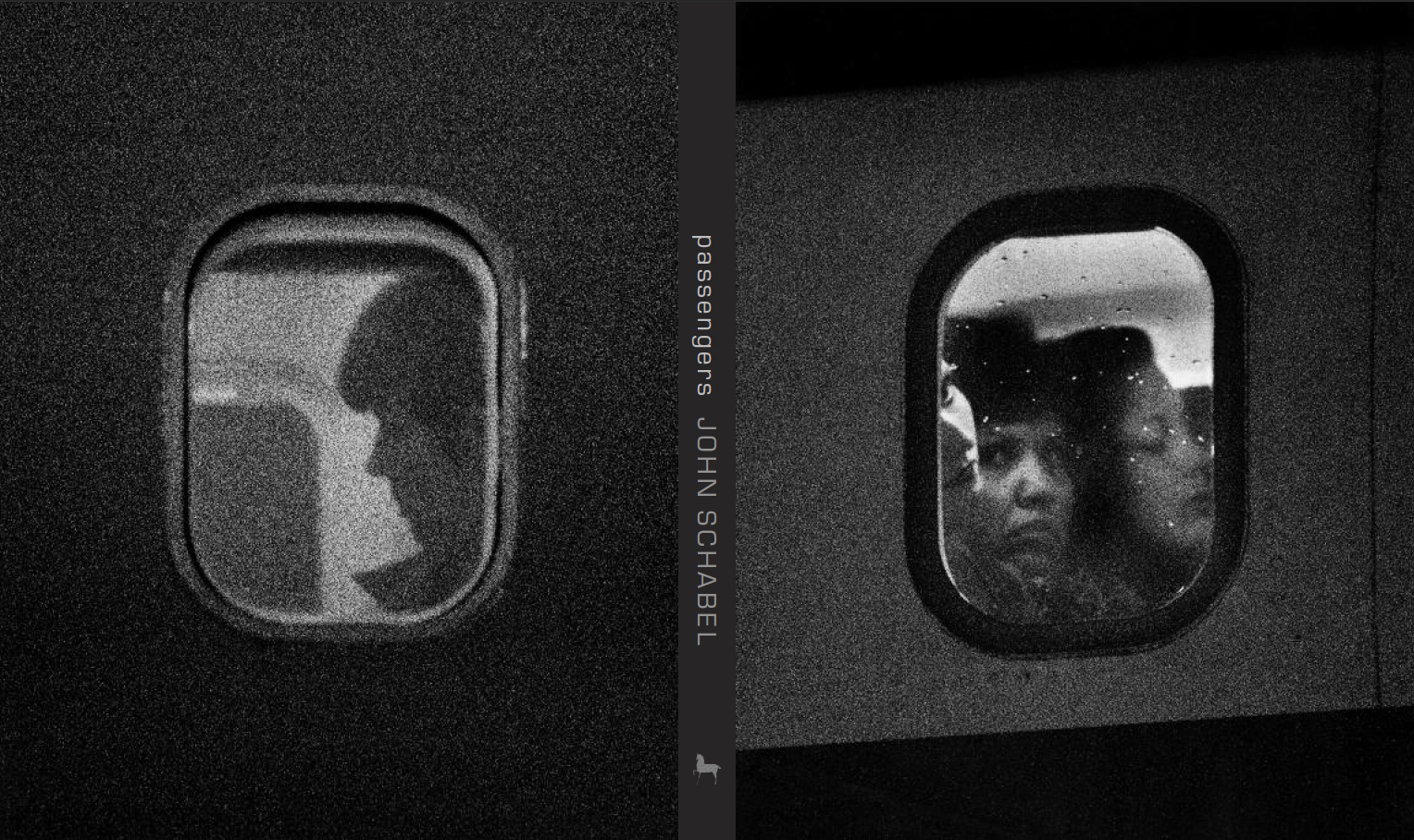
 John Schabel | Passengers
Twin Palms Publishers, 2013

"John Schabel's series of photographs depicting anonymous airline passengers effectively captures the curious blend of impersonal efficiency and poignant humanity that pervades the experience of contemporary commercial air travel."
 
International Center of Photography
Book Signing: John Schabel's Passengers
Friday, February 8, 6:00pm–7:30pm

 Brown River, 2011. Paper Collage
Casey Ruble Disarmed


"These intimate collages of interior and exterior worlds introduce to us a scene where the description of the main event is absent, but filled in by the supporting details or evidence, suggesting a deeper, often unsettling narrative."
January 16 - February 24
 FOLEY Gallery, NY

12.15.2012

2012 HOLIDAY BOOKS: A Few New Favorites I

 Saul Leiter
With Vince Aletti and Margit Erb, and others
Kehrer Verlag; First Edition (2012)
 
"Painter and Photographer Saul Leiter (b. 1923) exhibited alongside abstract expressionists like Willem de Kooning before beginning in the late 1940s to take photographs. Like Robert Frank or Helen Levitt, he found his motifs on the streets of New York, but at the same time was visibly interested in abstraction. Edward Steichen was one of the first to discover Leiter's photography, showing it in the 1950s in two important exhibitions at New York's Museum of Modern Art. This book, published to mark the first major retrospective of Leiter's work anywhere in the world, features his early black and white and color images, his fashion photography, the over painted nudes, as well as his paintings and sketchbooks."


Delpire; First Edition (2012)

"In addition to the 89 photographs published, there are 68 details, 24 pages of sketch and preparatory drawings and a text, Crazy About Christ by Eugenia Parry, who aims to give clues, if not guidelines to his work." Read the books review by Bernard Perrine here + Interview with Joel Peter-Witkin here


 Howard Greenberg: An American Gallery,  
Twenty-Five Years of Photography

"...my 25th Anniversary show and book, “An American Gallery, Twenty-Five Years of Photography” (although published by Lumiere Press in 2007, this Collection is timeless). I labored for a couple of years about the 25th anniversary, I want to do a publication, I want to  do a show, I didn’t know what to do. Part of the problem was I’ve worked with so many photographers and estates and I have so many friends out there that I didn’t feel I could be politically correct. So I just took twenty-five pictures from my own collection and spoke about them and about my involvement in photography." –Read the Interview with Howard Greenberg here
 

 "It’s a document of documents spanning 30 years of time – actually fairly important times with important people in important places – all touched by Vanity Fair." –Jonathan Becker

As one of the great visual storytellers of our time, Becker has worked in an exclusive world of aristocrats, artists, and heads of state most would never observe except through the lens of his Rollei. He’s documented for Vanity Fair HRH The Prince of Wales and Camilla Parker-Bowles at their first public appearance together in Buckingham Palace, "Dr. Death" Jack Kevorkian, China’s outspoken human rights activist Ai Weiwei, the mother of modern dance Martha Graham, as well as countless other fascinating characters from the rarefied worlds of art, literature, politics, pop culture, and society.
Read more in my Interview with Jonathan Becker...


forthcoming from Twin Palms

"John Schabel’s series of photographs depicting anonymous airline passengers effectively captures the curious blend of impersonal efficiency and poignant humanity that pervades the experience of contemporary commercial air travel. Like products on an assembly line, the planes carrying Schabel’s subjects churn down the runway; and with the same regularity the individual passengers emerge, identically framed, from his camera and onto the gallery wall. Interestingly, it is precisely this mechanized process that lays bare the active, but often overlooked, emotional and intellectual relationship between human beings and flight.” — Laura M. Andre
 

Gary Briechle Twin Palms, 2012


The rocky coast of Maine is where Briechle found himself driven to make pictures, using the wet-plate collodion process, of the individuals who constitute his stand-in family. “I've been in Maine close to eight years now and there are some people I've photographed for the entire time. A few have died and I've shot their likenesses tattooed on the chests of those they've left behind.”

 Sailboats and Swans

Michal Chelbin, text by novelist A.M. Homes Twin Palms, 2012


There is nothing easy about it. It is a constructed moment, a scene within a scene, the real within the unreal. They are moments, lunga fermata, suspensions of time in the midst of what might otherwise be unbearable.

The images are about a kind of discomfort—theirs, hers, mine and ours. It is like an old fashioned staring contest—one guy looks at the other and the first one who blinks is the loser, except Michal Chelbin never blinks. Instead she captures with the click of a shutter. Chelbin is always looking, drawing what is hidden to the surface. She captures—we shudder. — A.M. Homes

+