Showing posts with label MoMA. Show all posts

12.17.2014

FINDING VIVIAN MAIER: Academy Award Best Documentary Feature Shortlist / MoMA Screening


FINDING VIVIAN MAIER
Academy Award Best Documentary Feature Shortlist!
Directors: John Maloof, Charlie Siskel. Producer: Jeff Garlin

The Academy's documentary shortlist includes FINDING VIVIAN MAIER, directed by John Maloof and  Charlie Siskel, now considered a competitive frontrunner in this race! 

"In FINDING VIVIAN MAIER, the film unfolds like a detective story, Maloof and filmmaker Charlie Siskel reveal Maier’s mysterious life as a nanny and a loner through the recollections of her various employers and their children, and as other details of her past come to light. Through the reconstruction of a large portion of Maier’s collection of over 100,000 photographs and interviews with other well-known American street photographers and collectors, the film challenges our notions of the artist and the creative act, and how art is made and marketed. This is Maloof's and Siskel's remarkable directorial debut.
The Roy and Niuta Titus Theater 1
Tuesday, December 30, 2014, 7:30 p.m.

The Museum of Modern Art
11 West 53 Street, NYC


Photograph © Vivian Maier/Maloof Collection

Photograph © Vivian Maier/Maloof Collection

Vivian Maier: Self Portrait
Photograph © Vivian Maier/Maloof Collection

Directors Charlie Siskel and John Maloof

Charlie Siskel is a television and film producer. His producing credits include the Academy Award-winning Bowling for Columbine, and Religulous. Finding Vivian Maier is his directorial debut.

John Maloof discovered the first negatives of Vivian Maier's work in 2007. Author of Vivian Maier: Street Photographer, Vivian Maier: Self-Portraits and Vivian Maier: A Photographer Found, Finding Vivian Maier is his directorial debut.


The Roy and Niuta Titus Theater 1
Tuesday, December 30, 2014, 7:30 p.m.

The Museum of Modern Art
11 West 53 Street, NYC

11.29.2013

AMY ARBUS: Tintype Portrait Evening Dec 13

One 8" x 10" portrait with Amy Arbus - $600

Penumbra Foundation brings you the exclusive opportunity to have your own 8" x 10" tintype made by renown portrait photographer Amy Arbus. For more details and to book your appointment visit their Website. 
 +  +  +

AMY ARBUS
Tintype Portrait Evening
December 13th | Friday
3:00 PM - 9:00 PM

+  +  +

Photographer Amy Arbus has published five books, including the award winning On the Street 1980-1990 and The Inconvenience of Being Born. The New Yorker called The Fourth Wall her masterpiece. Her most recent, After Images, is an homage to modernism's most iconic avant-garde paintings. Her photographs have appeared in over one hundred periodicals around the world, including New York Magazine, People, Aperture and The New York Times Magazine. She teaches portraiture at the International Center of Photography, NORDphotography, Anderson Ranch and The Fine Arts Work Center. Amy Arbus is represented by The Schoolhouse Gallery in Massachusetts. She has had twenty-five solo exhibitions worldwide, and her photographs are a part of the collection of The National Theater in Norway, The New York Public Library and The Museum of Modern Art in New York.View more of Amy Arbus's work.

12.15.2012

2012 HOLIDAY BOOKS: A Few New Favorites I

 Saul Leiter
With Vince Aletti and Margit Erb, and others
Kehrer Verlag; First Edition (2012)
 
"Painter and Photographer Saul Leiter (b. 1923) exhibited alongside abstract expressionists like Willem de Kooning before beginning in the late 1940s to take photographs. Like Robert Frank or Helen Levitt, he found his motifs on the streets of New York, but at the same time was visibly interested in abstraction. Edward Steichen was one of the first to discover Leiter's photography, showing it in the 1950s in two important exhibitions at New York's Museum of Modern Art. This book, published to mark the first major retrospective of Leiter's work anywhere in the world, features his early black and white and color images, his fashion photography, the over painted nudes, as well as his paintings and sketchbooks."


Delpire; First Edition (2012)

"In addition to the 89 photographs published, there are 68 details, 24 pages of sketch and preparatory drawings and a text, Crazy About Christ by Eugenia Parry, who aims to give clues, if not guidelines to his work." Read the books review by Bernard Perrine here + Interview with Joel Peter-Witkin here


 Howard Greenberg: An American Gallery,  
Twenty-Five Years of Photography

"...my 25th Anniversary show and book, “An American Gallery, Twenty-Five Years of Photography” (although published by Lumiere Press in 2007, this Collection is timeless). I labored for a couple of years about the 25th anniversary, I want to do a publication, I want to  do a show, I didn’t know what to do. Part of the problem was I’ve worked with so many photographers and estates and I have so many friends out there that I didn’t feel I could be politically correct. So I just took twenty-five pictures from my own collection and spoke about them and about my involvement in photography." –Read the Interview with Howard Greenberg here
 

 "It’s a document of documents spanning 30 years of time – actually fairly important times with important people in important places – all touched by Vanity Fair." –Jonathan Becker

As one of the great visual storytellers of our time, Becker has worked in an exclusive world of aristocrats, artists, and heads of state most would never observe except through the lens of his Rollei. He’s documented for Vanity Fair HRH The Prince of Wales and Camilla Parker-Bowles at their first public appearance together in Buckingham Palace, "Dr. Death" Jack Kevorkian, China’s outspoken human rights activist Ai Weiwei, the mother of modern dance Martha Graham, as well as countless other fascinating characters from the rarefied worlds of art, literature, politics, pop culture, and society.
Read more in my Interview with Jonathan Becker...


forthcoming from Twin Palms

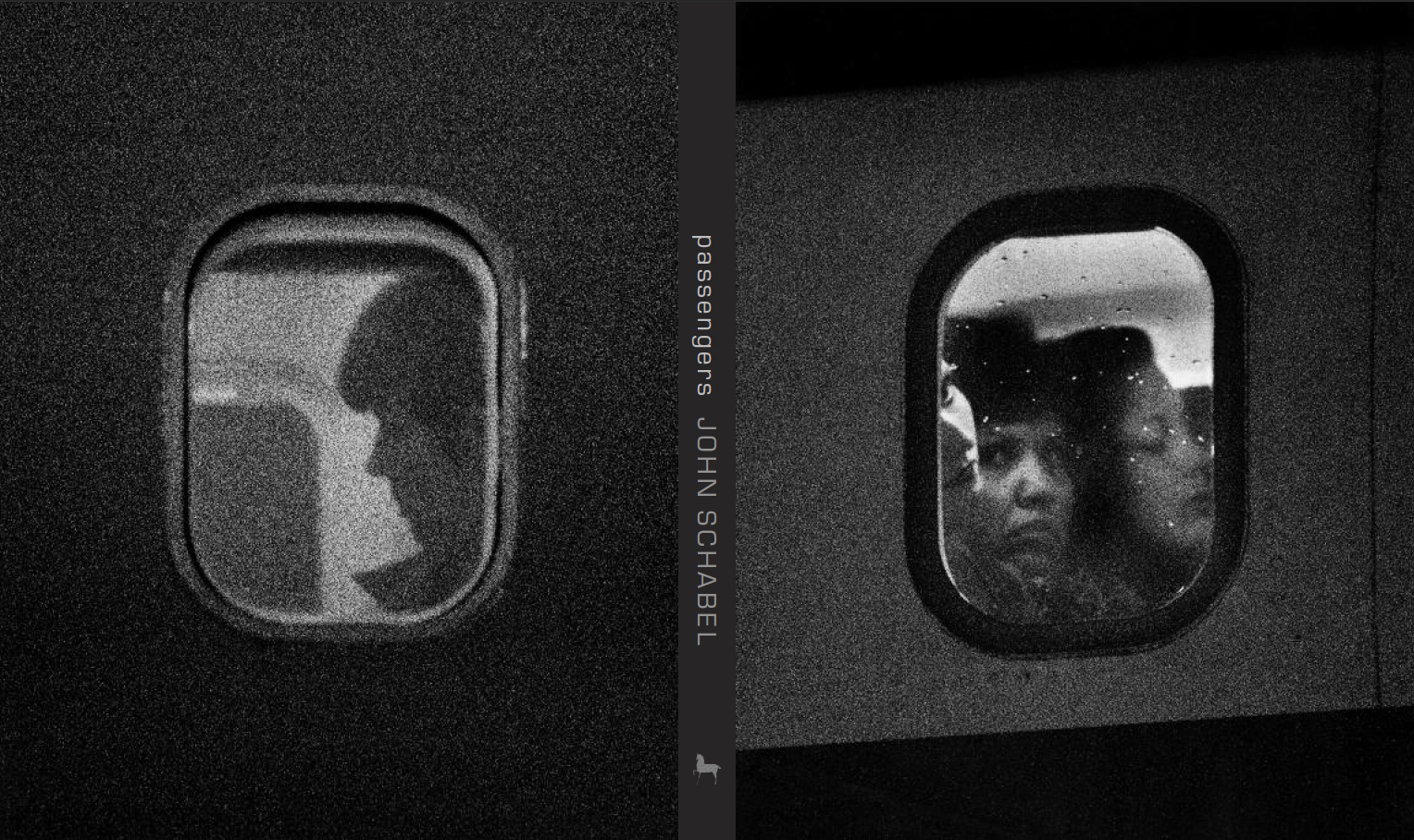
"John Schabel’s series of photographs depicting anonymous airline passengers effectively captures the curious blend of impersonal efficiency and poignant humanity that pervades the experience of contemporary commercial air travel. Like products on an assembly line, the planes carrying Schabel’s subjects churn down the runway; and with the same regularity the individual passengers emerge, identically framed, from his camera and onto the gallery wall. Interestingly, it is precisely this mechanized process that lays bare the active, but often overlooked, emotional and intellectual relationship between human beings and flight.” — Laura M. Andre
 

Gary Briechle Twin Palms, 2012


The rocky coast of Maine is where Briechle found himself driven to make pictures, using the wet-plate collodion process, of the individuals who constitute his stand-in family. “I've been in Maine close to eight years now and there are some people I've photographed for the entire time. A few have died and I've shot their likenesses tattooed on the chests of those they've left behind.”

 Sailboats and Swans

Michal Chelbin, text by novelist A.M. Homes Twin Palms, 2012


There is nothing easy about it. It is a constructed moment, a scene within a scene, the real within the unreal. They are moments, lunga fermata, suspensions of time in the midst of what might otherwise be unbearable.

The images are about a kind of discomfort—theirs, hers, mine and ours. It is like an old fashioned staring contest—one guy looks at the other and the first one who blinks is the loser, except Michal Chelbin never blinks. Instead she captures with the click of a shutter. Chelbin is always looking, drawing what is hidden to the surface. She captures—we shudder. — A.M. Homes

+


4.18.2012

LOUISE BOURGEOIS: At Auction +Interview

Maman, by Artist Louise Bourgeois
Guggenheim Museum, Bilbao, Spain

At Auction
Spider III, by Artist Louise Bourgeois
Christies Auction, New York, May 8, 2012
Expected $2-3 million

(Elizabeth Avedon Editions | Vintage Contemporary Artists)
Cover Photograph (c) Richard Avedon

The following excerpts are from AN INTERVIEW WITH LOUISE BOURGEOIS by American Art Critic Donald Kuspit (Elizabeth Avedon Editions|Vintage Contemporary Artists, Random House):

Donald Kuspit: You have spoken of (your art) as encompassing the whole history of art, but I wonder if you have any special consciousness of modern art. What do you think about modern art in general? How do you see yourself in the history of modern art?

Louise Bourgeois: I am not interested in art history, in the academies of styles, a succession of fads. Art is not about art. Art is about life, and that sums it up. This remark is made to the whole academy of artists who have attempted to derive the art of the late eighties, to try to relate it to the study of the history of art, which has nothing to do with art. It has to do with appropriation. It has to do with the attempt to prove that you can do better than the next one, and that a famous art history teacher is better than the common artist. If you are a historian, you have to have the dignity of a historian. You don't have to prove that you are better than the artist.

But I can say this. I studied in Paris in the thirties at a time when artists had the ateliers that were open to students. My favorite teachers among many were Fernand Léger, Othon Friesz, and Paul Colin. Michèle Leiris and André Breton were also part of my education. Also, I taught for a long time and was given many honorary doctorates. Flattering as it is, it has little to do with my ongoing self-expression. Also, I valued my friendships with Corbusier, Duchamp, and Miró, Arp, Brancusi and Franz Kline and Warhol. Today I value my friendships with Robert Mapplethorp and Gary Indiana.

DK: Which artists do you like?

LB: I like Francis Bacon best, because Francis Bacon has terrific problems, and he knows that he is not going to solve them, but he knows also that he can escape from day to day and stay alive, and he does that because his work gives him a kick. And also, Bacon is not self-indulgent. Some people will say, "What do you mean by that? He always paints the same picture." That's true–he always paints the same picture, because he is driven. But he is not self-indulgent. Never.
+ + +

LB: I think I know why the Museum of Modern Art did not buy my work. The truth is very difficult to speak of. There was a certain style of collecting at the Modern which had to do with...I think I should watch my words.

DK: Why? Don't watch your words. You have lived long enough to tell the truth.

LB: Well, it had to do with the trustees, with pleasing the trustees. Alfred Barr was not a trustee; he was an employee, like all the rest. The trustees had real buying power. Alfred Barr had special skills, but he was not part of the Board of Trustees. He was on the other side. The artists who succeeded in selling at the time–Calder, Mark Rothko, Ben Shahn, they were the three–pleased the trustees. You had to entertain the Board, and these Three Stooges knew how to do that, knew how to socially entertain these important people, these trustees. I did not mind that, as a woman, but I could not do it.

Women had to work like slaves in the art world, but a lot of men got to the top through their charm. And it hurt them. To be young and pretty didn't help a woman in the art world, because the social scene, and the buying scene, was in the hands of women–women who had money. They wanted to be entertained–they were lazy and sometimes stupid, and they wanted to be entertained by men of a certain age. So these charmers were what was called in the eighteenth century a pique-assiette in French, somebody who picks at your plate, who will come entertain for dinner, like a buffoon–it is a kind of profession that interests me very much. And they are picked from among artists because there is a certain prestige to being an artist, but from a professional point of view they are more entertainers than artists. They relate to the storyteller, which was a profession. The storytellers of the Middle Ages were men who went from place to place, telling their tales, and sometimes reached the top because of their acting and verbal abilities.

Because of the profession of my husband, I lived among these people. It was interesting. And because I was French and kind of discreet, they tolerated me–with my accent I was a little strange, I was not competition–and I was cute, I guess. They took me seriously on a certain level, but they refused to help me professionally. The trustees of the Museum of Modern Art were not interested in a young woman coming from Paris. They were not flattered by her attention. They were not interested in her three children. I was definitely not socially needed then. They wanted male artists, and they wanted male artists who did not say they were married. They wanted male artists who would come alone and be their charming guests. Rothko could be charming. It was a court. And the artist buffoons came to court to entertain, to charm. Now it has changed, now the younger men are in–older women and younger men.
+ + +

DK: Why do you think the Museum of Modern Art finally gave you a retrospective exhibition?


LB: It had to do with one person, that wonderful, wonderful woman, Deborah Wye. She worked very, very hard. She convinced them, she got all the information...she convinced them that I was important.

+ + +

In 1982, The Museum of Modern Art, NY, exhibited a retrospective exhibition organized by Deborah Wye. Bourgeois was 70 years old. In 2008, The Tate Modern Museum, London, organized and exhibited a major retrospective of Bourgeois’s work which traveled to the Centre Georges Pompidou, Paris and the Solomon R. Guggenheim Museum, New York. In 2009, the retrospective traveled to the Museum of Contemporary Art, Los Angeles and the Hirshhorn Museum and Sculpture Garden, Washington DC.

AN INTERVIEW WITH LOUISE BOURGEOIS by American Art Critic Donald Kuspit (Elizabeth Avedon Editions|Vintage Contemporary Artists, Random House) Vintage copies available on Amazon

7.03.2011

ANNE WILKES TUCKER: Curator of Photography The Museum of Fine Arts Houston


+ + +
Anne Wilkes Tucker was named “America’s Best Curator,” by Time Magazine a decade ago. Tucker, the Gus and Lyndall Wortham Curator of Photography at the Museum of Fine Arts Houston, may now be one of the foremost Curator’s of Photography in the world. Thanks to her curatorial wisdom, curiosity and scholarly research, she has built the Museum of Fine Arts Houston Photography Collection from virtually no photographs when she started in 1976, to one of the finest collections in the world. With over 26,000 images, including masters Andre Kertesz, Josef Sudek, Edward Steichen, Robert Frank and Diane Arbus, Tucker has also had the foresight to collect many lesser known international and emerging artists on the cusp of success whose careers have since taken off in the public eye.

This week, the first large-scale U.S. exhibition of Helmut Newton’s photographs will premiere at the Museum of Fine Arts Houston on July 3rd. The exhibition features the entire contents from Helmut Newton´s first three groundbreaking books: White Women (1976), Sleepless Nights (1978), and Big Nudes (1981). I spoke with Ms. Tucker just before she began hanging the upcoming Newton show.

Elizabeth Avedon: How did the Helmut Newton show originate?

Anne Wilkes Tucker: The Museum has a very close working relationship with Manfred Heiting. We purchased his Collection of photographs in 2002 and have continued to work with him since then. Heiting and Helmut Newton were close friends. In discussion with Helmut’s wife, June Newton, June came up with the idea of showing all the photographs in Newton’s first three books, which were really the beginning of his fame in the photo world. He had certainly been a fashion photographer before that, but White Women, Sleepless Nights and Big Nudes really cemented his influence and status, so that’s what we are showing. Manfred had organized a big show of Newton’s work in Berlin before that traveled all over Europe, but Newton had never really had a large show of his work in the U.S. ICP had had a smaller show, but this will be the first major exhibition of his work. Of the two hundred and six photographs in this show, some of them are very large at 6.5’ x 4.75’ feet. It will be a very full exhibition.

EA: What Newton images stand out for you in this exhibition?

Anne Wilkes Tucker: One of the things I thought was interesting that I enjoyed learning when I did the research for my essay in the show, was how Newton, not always, but frequently took the setting and models from a fashion shoot, and then after he’d done the work for the magazine, either disrobed the model or altered the dress, like slit it all the way up to the hip or something, how the boundary between those two lines kept shifting for him. Less in Big Nudes, as Big Nudes was a specific project that he did not for the fashion magazines, but something he conceived and carried out. But for Sleepless Nights and White Women they would sometimes start as fashion and he would take photographs for himself out of the same material, and how he redirected one in one direction, and one in the other, but knowing it’s market. (read more)

Beaumont Newhall, Hollis Frampton, Estelle Jussim, John Szarkowski, Anne Wilkes Tucker and Peter Bunnell: panelists for Ruth K. Shartle Memorial Symposium, October 26–28, 1979. Courtesy of The Museum of Fine Arts, Houston

EA: What was your professional history before the Museum of Fine Arts Houston?

Anne Wilkes Tucker: I majored in art history in college. I got interested in photography, so I was the photographer for the yearbook and the newspaper in college, and then got a second undergraduate degree as a photographer at the Rochester Institute of Technology. I didn’t think I was a very good photographer when I got around other photographers, so I moved across town where Nathan Lyons was beginning what became the Visual Studies Workshop in Rochester. I got an MFA in photo history studying with Nathan and Beaumont Newhall at the George Eastman House (Newhall founded the Photography Department at the Museum of Modern Art, New York in 1935; and was Curator and Director of the International Museum of Photography at George Eastman House, Rochester), and then I had an internship at the Modern (MoMA, the Museum of Modern Art) working with John Szarkowski and Peter Bunnell, so I was really lucky. And in the summers I was in graduate school, I worked in the Gernsheim Collection at the University of Texas. So in a very short period of time, I had access to the Collections at the Eastman House, at the Museum of Modern Art, and at the Gernsheim Collection. I really had an extraordinary exposure to the history of photography in those three Collections.

EA: In creating the Museum of Fine Arts Houston Photography Collection, were you influenced by your work with Newhall, who built the early MoMA Photography Collection?

Anne Wilkes Tucker: You just can’t separate the influence of Beaumont, Nathan and John. I learned such different approaches from all three. Beaumont was the historian. There’s so much more written about photography now than there was then. Back then it was a matter of spending hours and hours and hours going through original documents just to track down people. I learned from Beaumont how to do that and to organize it coherently and think about it and place it in context.

John, who was certainly one of the great writers, was not a researcher, he was not an historian the way Beaumont was, but John was such a disciplined thinker and he had such clear ideas about what was and what was not a photographer, or good photography.

Nathan was much more willing to look at a broad range of expressions in photography and embrace them. The kinds of shows that Nathan did were much more varied and much more universal than the kind of photographers that John embraced, so in a way working for the three of them so early forced me to find my own path. (read more)

Two of Tucker's over 40 books and essays
(left) Robert Frank: New York to Nova Scotia. (Museum of Fine Arts, Houston and New York Graphic Society books/Little, Brown and Co, 1986). Editor: Anne Tucker. Associate Editor: Phillip Brookman. (right) Louis Faurer. (Merrell Publishers in association with The Museum of Fine Arts, Houston, 2002). Authors: Anne Wilkes Tucker with Lisa Hostetler and Kathleen V. Jameson

EA: How did your Robert Frank Exhibition in 1986 come about?

Anne Wilkes Tucker: In 1983-84 we were able to make some rather extraordinary acquisitions. We purchased Bill Larson’s Collection of Maholy-Nagy, and we purchased a private Collection of work around the Bauhaus, and we purchased the Collection of John Heartfield AIZ Magazines, and we purchased the complete set of Robert Frank’s The Americans. Part of the agreement with Robert Frank was in purchasing The Americans we’d be able to do a show. Robert asked I do the show with Philip Brookman, which I was happy to do, that began a friendship that continues today. He’s the Chief Curator at the Corcoran Gallery of Art, Washington, D.C. now. That show, and the film we did on Robert too, all came out of being able to purchase the set of The Americans. (read more)

Dr. Peter Marzio, Director of MFAH 1982-2010
Courtesy of The Museum of Fine Arts, Houston

The Museum of Fine Arts Houston, Audrey Jones Beck Building, North & West Facades. Architect: José Rafael Moneo. Photo: © MFAH

Anne Wilkes Tucker: Two things I would add. If I’m going to talk about mentors, and I’ve mentioned John and Nathan, I really have to mention Peter Marzio, who was my Director from 1982 to last Fall 2010 when he died suddenly.

When he came in 1982, the endowment was one million dollars, and when he died, the endowment was one billion. And that doesn’t include building two new buildings, finishing the Cullen Sculpture Garden (
designed by Isamu Noguchi), all the art we bought, or all the exhibitions that we did. So if I’m going to mention mentors, I’m going to mention Peter, because he was major. He understood the importance of Photography to the 20th century. He was just so supportive, there is no way I could have done research on Brassai for four years and research on Japanese Photography for five years without the generous support of the Museum. I got the credit, but he’s the one who stood behind us all and made it possible. He understood and he got it.

I had plenty of invitations to leave the Museum, but I always told Peter, “You stay, I’ll stay,” because he was such an extraordinary man and visionary Director, incredibly supportive of his staff and of all of us in terms of staying with us. Some of these projects had really up and down rides, not all of them came easily, and Peter stayed with us. If we were in it for the haul, then he was in it for the haul. He was such a brilliant man that he was really great to go to when you were struggling conceptually with something, to bounce ideas off of him.

The other was Director here, William Agee. Bill was the one who hired me. The delightful part is he was so supportive of photography. He grew up next door to Barbara Morgan (American photographer and co-founder of Aperture Magazine) and had seen photographs on the wall, and knew people who regarded themselves as artists who were photographers, from his early age. Before he came here, Bill was at the Pasadena Museum of Art where he also acquired photography.

Both men were wonderful; it’s just that Peter was here so much longer.
–La Lettre de la Photographie
+ + +

5.06.2009

NANCY NEWHALL: Photography Review

"Hands of Ann and Ansel Adams". Photograph (c) Nancy Newhall
Courtesy of Scheinbaum & Russek Ltd

"Buckminster Fuller". Photograph (c) Nancy Newhall
Courtesy of Scheinbaum & Russek Ltd

"When I married Beaumont, I married photography"

+ + +

NANCY NEWHALL played a major role in legitimizing photography as a fine art. She worked closely with her husband Beaumont Newhall and well known photographers Ansel Adams, Paul Strand, Henri Cartier-Bresson, Edward Weston and Minor White. It was only after her death in 1974, her own photographs were revealed.

Beaumont Newhall founded the photography department at the Museum of Modern Art in 1935, and was curator and director of George Eastman House in Rochester, New York, from 1948 to 1971. Nancy assisted her husband (she assumed the role of MoMA's curator of photography during Beaumont's wartime service), was a founding member of Aperture magazine, wrote extensively about photography and curated independantly.

Newhall's photographs were recently shown in the exhibition "Nancy & Beaumont Newhall: A Centennial Celebration" presented by Scheinbaum & Russek Ltd in Santa Fe, New Mexico. In his current review in Art News, Tom Collins writes, "Beaumont Newhall's part in bringing photography to prominence in America is well known. This show, titled "A Centennial Celebration," convincingly places the contributions of Beaumont's wife, Nancy, on the same level as his. Born in 1908 and married in 1936, they both devoted their lives, in tandum and individually, to curating shows, charting and commenting on the evolution of photography, and making pictures themselves." Read the entire Art News Review

View
"Nancy & Beaumont Newhall" Exhibition On-line
Nancy Newhall Bio
Scheinbaum & Russek Ltd